
29th_June_2010: Three results
Charlie suffered a bit in the last round and wondered if he could fight harder when he was losing. IM Douglas Bryson once said that in every game he wins there is one point where he loses control and the likely result of the game wobbles for a moment. That should tell us that in our games there may be opportunities to strike back: we can still hope for a draw or even a win when we are losing. This is part of a more general problem of getting the right result for you in a game. Jonathan Rowson talks about playing for two results as opposed to three, or even one… If you aim at a win and miss, you might draw, but if you aim for a draw and miss?
We often talk about winning a won game, or indeed losing one. I thought about making some notes on
| Winning… | …won | ||
| Drawing… | a | …drawn | …game. |
| Losing… | …lost |
Things are rarely so identifiable: I know when I’m worse, but the transitions between worse and losing and lost may pass me by.
Let’s consider:
| Winning | Drawing | Losing | |
| Won | |||
| Better | |||
| Drawn | |||
| Worse | |||
| Lost |
And putting a bit of meat on the bones, some advice, some good examples, some horrible examples, some master games, some club games:
| Winning | Drawing | Losing | |
| Won | EG:
Botvinnik-Szilyagi Regis-Dale Regis-Anderson
|
EG:
Regis-Knox
|
EG:
Regis-Walton Regis-Paulden Royle-Marsh
|
| Better | EG:
Botvinnik-Kann Ditmas-Regis Brusey-Regis
|
EG:
Regis-Greet Blackmore-Isaac
|
EG:
Regis-Lubrook Brusey-Regis
|
| Drawn | EG:
Miles-Webb Regis-Hewson Gurevich-Short
|
EG:
Richmond-Regis
|
EG:
Regis-Jamieson Capablanca-Menchik
|
| Worse | EG:
Gosling-Regis Pope-Regis
|
EG:
Regis-Sedgwick Waley-Keen
|
EG:
Waley-Keen Regis-Anderson
|
| Lost | EG:
Annetts-Regis Stean-Webb The Swindle:
|
EG:
Regis-Greet Waters-Regis
|
EG:
Brusey-Regis
|
Several of these squares complement each other (highlighted): if you are trying to win a better game, your opponent should be at least trying to avoid losing!
Let’s start with Charlie’s initial bleat: how to avoid losing. EG:
Waley-Keen.
Well, there was certainly the moment when White lost control, right at the end, and perhaps the way to find the best line for Black was the process of elimination (41…Kb5?? loses to two fairly obvious checks, so that’s a hint to play 41…Kb7).
Working backwards, and with the help of Fritz, we can find some improvements for Black.
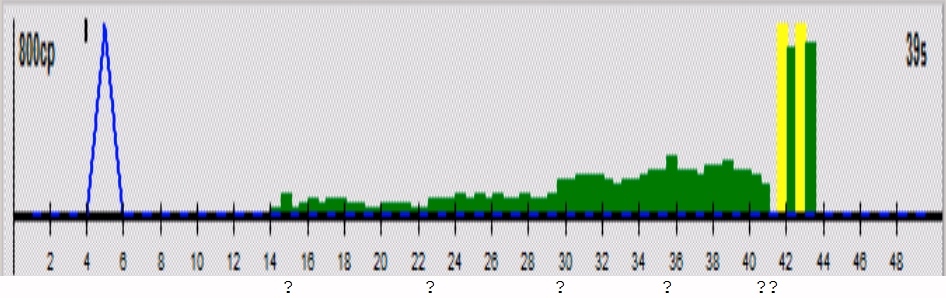
However, I can’t find a move that gives Black any counterplay. In fact, Black’s attempts at getting some play (22…f5? and 36…b5) just make things worse!
So this was one of those unpleasant games where Black just has to avoid making the situation worse, and find small ways to make things better (22…f6 and 23…Kf7 doesn’t save the game for Black, but improves the position a little). Karpov was the master at this sort of thing, whether he was better or worse!
However, that is a pretty miserable way to play chess, so I’m going to point the finger at 8…exd4?!, making a concession for no good reason, and also 3…Be7, which rather says that Black is making things up as they go along — which I had a lot to say about last time.
Click […] for list of games