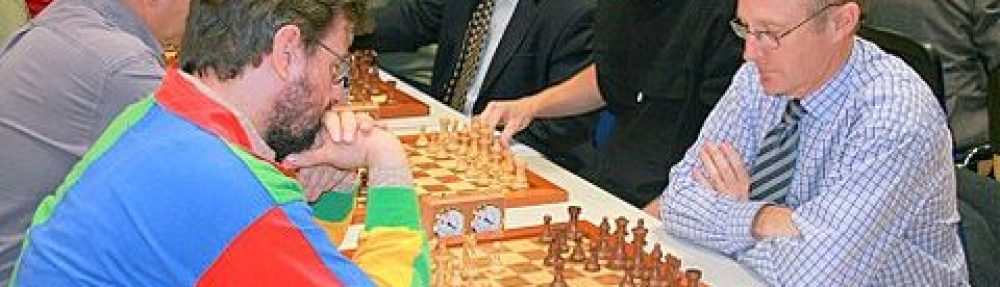
A gift to blitz players

I had a nice email last week from Jonathan of the Norwald chess set makers from Denmark, who has offered us a guide to get better at blitz chess.  It’s long and thorough — thank you Jonathan!
The original is here https://norwald.dk/en-intl/blogs/artikler/how-to-get-better-at-blitz-chess, a copy is given below, and their other articles are here https://norwald.dk/en-intl/blogs/artikler


How to Get Better at Blitz Chess – The Complete Guide

If you have walked through the Luxembourg Gardens in Paris, you may have seen them. A couple of chess tables under the trees. Usually older men, a clock beside the board and a small group of spectators standing with their hands in their pockets. Challengers come and go. The man on one side of the table looks as if he has been sitting there since 1987.

Maybe you stood and watched for a while. Maybe you considered sitting down.

And maybe it was just as well that you did not.

Because a player who has played thousands of blitz games at a table like that is not just a friendly pensioner with a chessboard. He recognises the positions before you have seen them. He plays quickly without rushing. He knows when to stop and think, and he knows how to give an opponent problems while the clock is running. It looks like improvisation. It is not.

This guide has two aims. The first is to make you concretely better at blitz chess – online, at the club or in the park. The second is less measurable: to give you a little more courage to one day actually sit down in the empty chair.

The guide is long. It is written to be read in sections and returned to. Some parts are for you if you know the rules and play a little online. Others are for you if your rating is well above 1600 and you still want to know why you lose winning positions on time. Skip around freely.


What do you actually need to get better at?

FIDE, the international chess federation, defines a blitz game as a game in which each player has no more than 10 minutes for all their moves – or where the starting time plus 60 times the increment adds up to no more than 10 minutes. The increment is the number of seconds added to the clock after each move. So 3+2 means three minutes plus two seconds per move, and the calculation is 3 minutes + 60 × 2 seconds = 5 minutes. That is blitz chess.

The other terms you will come across:

  • Bullet: under roughly three minutes per player. “Bullet” is an internet term, not a category in the FIDE Laws of Chess.
  • Blitz: typically 3+0, 3+2, 5+0 or 5+3.
  • Rapid: more than 10 and less than 60 minutes. 15+10 is a classic rapid time control.
  • Classical: 60 minutes or more per player.

Chess platforms draw the boundaries slightly differently. Chess.com and Lichess, for example, both classify 10+0 as rapid even though under FIDE rules it is formally blitz. In practice, that does not matter much. What matters is the time control you are actually playing.

Good chess – quickly

There are two different skills involved. One is to play good chess: understand positions, calculate variations and choose good moves. The other is to play good chess quickly and consistently, move after move, while the clock is running.

The two are closely connected, but they are not the same. The American grandmaster Daniel Naroditsky (1995–2025), who for years was among the world’s best blitz and bullet players and one of the most popular chess educators online, wrote about exactly this in his article series The Blitz Chess Manifesto on chess.com. His point was that the gap between blitz and classical chess is smaller than many people think – but the relationship is far from linear. Not every strong tournament player is equally good at blitz, and vice versa. Blitz requires you to look at the game through slightly different lenses.

The research points in the same direction. In 2004, psychologist Bruce Burns studied results from blitz tournaments and found that up to 81 percent of the variation in playing strength could be explained by how players performed with less than five percent of normal thinking time. In other words, a strong blitz player is, to a large extent, simply a strong chess player.

But a Dutch study from 2007 (van Harreveld, Wagenmakers and van der Maas) adds an important nuance. The shorter the time control, the less accurately the rating difference predicts the result. As thinking time decreases, stronger players lose some of their advantage. The authors conclude that the slower part of thinking – calculation and search – is at least as important to strong players as it is to weaker ones.

That is the starting point of this guide. Blitz chess is not a different sport in which bad tricks suddenly become good. Good blitz is built on good chess. But the time limit changes the conditions under which decisions are made, and there are skills you can train specifically.

Strong blitz players do not simply think faster. They:

  • recognise more positions and patterns without having to calculate them from scratch
  • know which positions actually require calculation
  • use time unevenly and deliberately
  • often reach positions they understand and can play quickly
  • set the opponent practical problems
  • adjust their play to both the position on the board and the position on the clock
  • learn systematically from many fast games

If this guide has to be reduced to one sentence, it is this:

You do not become good at blitz by rushing every move. You become good by being able to play many moves quickly, so that you have time for the few moves that should not be played quickly.


See more, calculate less

An experienced player does not go through every variation ten times faster than a beginner. They simply see fewer irrelevant possibilities. The position immediately looks familiar: a back-rank motif, a fork, an overloaded defender, a typical pawn break, a familiar mating pattern, an elementary endgame. They spend almost no time working out the solution from scratch.

This is well documented in research. As early as the 1940s, Dutch psychologist and chess master Adriaan de Groot showed that grandmasters often find the right move in their first impression of a position. William Chase and Herbert Simon later explained this by showing that experienced players store recognisable patterns and groups of pieces in long-term memory, and therefore see a position as a small number of meaningful units rather than 25 individual pieces.

There is also brain research on the subject. A Spanish EEG study from 2019 compared chess players’ brain activity in rapid chess (15+10) and one-minute games. In the fastest games, the researchers observed a pattern they interpret as increased retrieval of familiar patterns from memory. The study is small (14 players), and the interpretation is cautious. But it fits what most blitz players know from experience: when time disappears, you live on what you already know.

The point is not that intuition replaces calculation. In a 2026 study, Michael Vidulich and Pamela Tsang analysed games by 20 grandmasters and seven world champions. Even the very best players made more serious errors under severe time pressure. What distinguished them was that they were strategic with their time: they played intuitively when it was safe to do so, and thought when it was necessary. That is exactly the skill this guide is about.

Solving a difficult problem and recognising an easy one

The two skills look similar, but they are trained differently:

  • Solving a difficult problem: You have time, the position is complicated, and you have to calculate your way through it.
  • Recognising a simple problem instantly: You see the position and the solution is simply there. No calculation, or only a brief check.

Both are necessary. But blitz especially rewards the latter. If you need 20 seconds to find a fork you could have seen in two, you have spent 18 seconds that you will miss later.

White to move. You have 10 seconds.

Solution: 1.Qd8+! Rxd8 2.Rxd8#. The rook on c8 is the only defender of Black’s back rank. The queen forces it away. Black has no alternative: the king can go to neither f8 nor h8 because the queen controls the entire eighth rank.

Why it matters in blitz: The position requires no calculation if you know the pattern. Black king behind three unmoved pawns, one defender of the back rank and two heavy pieces on the d-file. It is one of the most common mating patterns in amateur chess, and it should take a second to see. If you only spot it after calculating, you have not automated it yet.

What should you train?

If pattern recognition is the core skill, the training is easy to describe. You need to have seen the typical situations so many times that you no longer have to think about them: tactical motifs, simple mating patterns, elementary endgames, the structures from your own openings – and your own recurring mistakes, because those are the ones you are most likely to meet again.

For tactical training, one simple rule applies: many easy problems solved quickly build recognition. A few difficult problems solved slowly build calculation. You need both, but if you want to improve at blitz, a significant part of your training should consist of problems you can solve in under ten seconds – and repeat until you can.


Time is part of the position

In a blitz game you have two positions: the one on the board and the one on the clock. A winning position with four seconds left against an opponent with a minute is not necessarily winning in practice. A slightly worse position with twice as much time may be the better one to have.

Daniel Naroditsky opened his article The Art of Time Management with a joke: many people think time management in blitz is based on three principles. You have to be fast. You have to be fast. And you have to be fast. His point was that of course the aim is to be fast, but telling someone to play faster is useless. The question is not whether to be fast, but how.

His answer was simple: some decisions deserve more time than others.

Critical moments

Not all moves are equally important. Some moves should almost never cost much time:

  • a standard developing move in an opening you know
  • a recapture that is forced
  • a simple king move after a check
  • a move in a plan you have already formed

Other moves deserve time because they determine the direction of the game:

  • a possible sacrifice
  • an irreversible change in the pawn structure
  • a choice between a queen trade and continuing the attack
  • a tactical complication
  • the transition into an endgame

It may sound obvious. But look at your own games. How many times have you spent 25 seconds on move ten because you were not quite sure whether the knight belonged on d2 or f3, and then played move 30 – the move where the position actually collapsed – in three?

The main principle is:

Play the easy moves quickly enough that you have time for the difficult ones.

How long is “a long time”?

Naroditsky carried out an unscientific but instructive experiment. He recorded how long Hikaru Nakamura spent on each move in three of his blitz wins on Chess.com. Across all three games, Nakamura spent ten seconds or more on a move only three times – and those were the moments that decided the game.

On that basis, Naroditsky proposed a rule of thumb: only spend 15 seconds or more on a move if you believe the position is critical. He stressed that it is not a fixed rule, but a way of monitoring how you use your time. If you have spent a minute on three moves without improving your position or solving a concrete problem, you have probably spent too much time.

The number should be treated with caution. What is right in 3+0 for a 2400 player is not necessarily right in 5+3 for a 1300 player. But the idea works at every level: long thinks should be exceptions, and they should be used where they make a difference.

Slow down when you are winning – and when you are losing

One of Naroditsky’s principles runs counter to what most people do. He recommended slowing down in two situations: when you are winning, and when you are losing.

The first part is easy to understand. When the win is close, it is tempting to get carried away and play everything too quickly – until you hang your queen or stalemate your opponent. If you have time, spend a few extra seconds checking for traps.

The second part is less obvious. If you are losing, conventional wisdom says to play quickly and try to pressure your opponent on the clock. But if the opponent has plenty of time because you made the mistake early, you are only going to lose faster. Then it is better to concentrate on the position and find the defensive moves and traps that actually have a chance.

Use your opponent’s time too

The time your opponent spends thinking is not a break. It is thinking time that does not come off your own clock.

While your opponent is thinking, you can:

  • understand why the last move was played
  • guess the likely next move
  • find your natural replies to the two or three most likely moves
  • judge whether the position is approaching a critical decision

Naroditsky wrote that anticipation had saved him more often than all his premoves combined. He also explained why anticipation matters more in blitz than in classical chess. In a long game you can take time to regroup after an unexpected move. In blitz, an unexpected move can be fatal because you do not have time to start again from scratch.

Anticipation and premoves are not the same thing

Online there are also premoves. You choose your move while it is your opponent’s turn, and the server executes it as soon as the opponent has moved. On Chess.com it costs only 0.1 seconds.

But Chess.com’s own help pages are clear: a premove is executed even if the opponent plays something unexpected. It is only cancelled if it has become illegal – for example because you are in check.

So distinguish clearly between two things:

  • Anticipation: “If they play X, I will probably reply Y.” You still have the chance to see what actually happened.
  • Premove: “Whatever they play, the computer executes Y.”

The first is a fundamental chess skill. The second exists only online.

Premoves are safe when the move is practically forced: a recapture where the opponent has no meaningful alternative, or a sequence in a winning endgame where no reply changes anything. They are dangerous in every other type of position. The classic example is premoving a recapture when the opponent instead plays an in-between move – for example attacking your queen. The recapture is still legal, so the server executes it and the queen is lost. If you often lose that way, the answer is not to avoid premoves entirely, but to use them more selectively.


A simple decision system

Traditional chess books often give long checklists for every move. You do not have time for that in blitz. But you do have time for five short questions, and most of them take a second once they have become a habit:

  1. What did my opponent’s last move change? Which squares does the piece attack now? What has it stopped defending?
  2. Is there a concrete threat or tactic for either side?
  3. Do I have a natural move? A move that fits the plan and does not require calculation.
  4. Is the position critical? Then calculate. Otherwise play the natural move.
  5. Before you release the piece: What is my opponent’s strongest reply?

The fifth question is the most important and the one most often skipped. Many serious blunders in blitz happen not because the player could not see the problem, but because the player did not look.

Checks, captures and threats – as a search method

In tactical positions it is useful to look at forcing moves first: checks, captures and threats. It is a quick and systematic way to find moves that can change the position in a single move – both yours and your opponent’s.

But it is a search method, not a rule for choosing moves. A check is not better than a quiet improving move just because it is a check. Often the opposite is true: a pointless check drives the king where it wants to go and wastes a tempo. The aim is to make sure you do not miss something forcing, not to play it automatically.

Black has just captured your queen on d1. White to move. You have 8 seconds.

Most players automatically recapture with one of the rooks. It is a perfectly good move – afterwards you are a rook up.

Solution: 1.Rxe8#. The black king cannot escape the back rank, and the queen on d1 can neither capture on e8 nor interpose on f8.

Why it matters in blitz: the recapture feels forced, and those are exactly the moves people premove or play by reflex. Question 2 – is there a concrete tactic? – takes one second and may reveal mate instead of a routine recapture. Notice, by the way, that the king is on g2. If it were on g1, the rook on e1 would be pinned by the queen on d1 and Rxe8 would be illegal. Details matter, even when you are in a hurry.

When the system becomes automatic

The aim is not to sit there reciting five questions. The aim is for the questions to become part of the way you see the board. That only happens through repetition. A good place to start is to choose one question – usually the first or the fifth – and focus on it for an entire training session.


Openings and simple plans

There is no list of “the five best blitz openings” that applies to everyone. What works is a personal repertoire with the right characteristics. A good blitz repertoire:

  • often leads to structures you know
  • has plans you understand
  • lets you play a large part of the opening without using much time
  • contains tactical motifs you have seen many times
  • is not so broad that all your training becomes superficial
  • does not necessarily give your opponent 15 free moves from memory

The last point is worth thinking about. If you play the most theoretical main line, there is a good chance your opponent has seen it just as many times as you have. You both spend two seconds on the first fifteen moves, and the game only really begins after that.

An example from a specialist

American grandmaster Maxim Dlugy, whom Chess.com presents as one of the world’s best blitz players, made an instructional series for Chess.com called Best Blitz Openings. He covered, among other things, the London System, the Vienna Game, the Sicilian with 3.Bb5, the Leningrad Dutch and Alekhine’s Defence.

The reasons are practical, not theoretical. The London is described as solid and flexible. The Vienna is presented as a quick route to a good, playable position. On the Leningrad Dutch, the series itself notes that some consider it positionally dubious – but that it works as a weapon in blitz.

Use the list as an illustration, not as a prescription. The right repertoire for you is the one you understand and enjoy playing.

Know the ideas, not just the moves

If your repertoire ends the moment your opponent plays a move that was not in the video, you have not learned the opening. You have learned a sequence of moves.

For every opening you play, you should know:

  • the natural squares for your pieces
  • the typical pawn breaks
  • which pieces are usually good and which are bad
  • which exchanges you want
  • which endgames the structure typically leads to

That makes you faster even when your opponent leaves theory. You do not need to remember the next move. You need to know where the pieces belong.

A practical test: take a position from your opening after 12–15 moves. Can you say within ten seconds what the plan is for both sides? If not, that is the part of the repertoire you need to work on – not move 16 of the main line.

Simple plans are fast plans

A simple plan is one of the most underrated time-saving tools in blitz. If you know what you are trying to achieve, the next decisions become easier and faster.

Imagine two ways of playing a middlegame. In the first, you start from scratch on every move. In the second, you have decided:

I want to control the c-file, exchange my bad bishop and then attack the isolated pawn.

Several of the next moves become almost automatic. The rook goes to c1. The bishop heads for a square where it can be exchanged. The knight finds a route towards the isolated pawn. You still need to check for tactics on every move – questions 2 and 5 from the decision system – but you do not have to rethink the position from scratch.

This is the bridge between ordinary positional chess and time management. A plan is not only a strategic idea. It is also a way of saving time.

A plan must of course be abandoned when necessary. If your opponent suddenly attacks on the kingside, that is not the moment to cling to the c-file. But that is precisely a critical moment: the position has changed character, and now you should use time.

Make the game easy for yourself and difficult for your opponent

Imagine two moves that are roughly equally good.

Move A gives your opponent one obvious reply. They play it in a second, and the position is clear.

Move B leaves three or four reasonable options with different plans and a couple of tactical details that have to be checked.

In a classical game the difference is small. Your opponent has time to find the right answer. In blitz, B can have greater practical value because it forces them to spend time – and because every extra decision is another chance for a mistake.

But there is an important condition: B must also be a good chess move.

This is where many blitz guides go wrong. They recommend traps and tricks that work against weak opponents but are objectively bad. That is not practical chess. It is simply bad chess with an excuse.

A better formulation:

When several moves are objectively acceptable, the best practical choice in blitz may be the one you understand well, can follow up quickly, and that gives your opponent more difficult choices to make.

Practical ways to do that:

  • Keep the tension if it forces your opponent to choose. An exchange often solves your opponent’s problems for them. Do not exchange without a reason.
  • Create small, concrete threats. A threat demands a response. It costs time even if the response is easy.
  • Avoid simplifying when the position is equal and your opponent has less time. Complex positions demand the most from the player with the least time.
  • Choose structures you know and your opponent may not. That is the whole point of a personal repertoire.

It is not manipulation. It is part of chess. Strong players have always chosen between equally good moves based on which positions their opponent is least comfortable in.

When you’re winning

A surprisingly large number of blitz games are lost from clearly winning positions. The reason is rarely that the player did not know how to win. The problem is that they were looking for the wrong thing: mate, a beautiful combination, more material or “the most precise” move. Often the most important thing is something else entirely: removing your opponent’s counterplay.

Principles:

  • Exchange your opponent’s active pieces. Not every piece – the ones creating problems for you.
  • A queen trade is often attractive when you are materially ahead. Without queens, most perpetual checks and sudden mating attacks disappear.
  • Reduce tactical complexity. A position with fewer loose pieces is easier to play quickly.
  • Be careful about automatically exchanging everything. A drawn pawn endgame, or the wrong-coloured bishop with a rook pawn, can throw away a winning position.

The aim is not to find the move that gives the highest engine evaluation. It is:

Keep the position clearly winning – and easy to play.

White is a rook up. The black queen on b2 attacks a2 and f2. White to move. You have 15 seconds.

Solution: 1.Qe5+! The queen is on the same diagonal as both the black king and the black queen.

  • If Black captures with 1…Qxe5, 2.Rxe5 follows, and White is a clean rook up with the queens off the board.
  • If Black moves the king (Kg8, Kf8 or Kh6), White takes the queen on b2 (a skewer).
  • 1…f6 blocks the check, but White still takes the queen on b2 – and at the same time escapes the attack from the f-pawn.

Why it matters in blitz: there are other moves that also preserve the advantage. But 1.Qe5+ removes the entire problem that could make the game difficult: the black queen’s ability to pick off pawns and give checks. What remains is an endgame with an extra rook that can be played at two seconds per move.

When you’re losing

The logic often reverses. If quiet simplification leads to an easy loss, it is usually better to keep pieces on the board, create imbalances, open lines towards the enemy king, make concrete threats – and avoid voluntary exchanges that make the win straightforward.

That does not mean sacrificing pieces without a reason. A sacrifice that threatens nothing merely gives your opponent an easier game. Good practical defence is still chess: find the moves that actually create problems.

And remember Naroditsky’s point from the time-management section: if your opponent has plenty of time, you gain nothing by playing quickly. It is better to use your time to find the best defensive moves.

White is two rooks down. White to move. You have 10 seconds.

Solution: 1.Qg6+! Kh8 2.Qh6+ Kg8 3.Qg6+ and perpetual check. After 1.Qg6+, Kh8 is the only legal move: f7, g7 and h7 are covered by the queen, f8 is occupied by Black’s own rook, and no black piece can interpose on g7. After 2.Qh6+, Kg8 is the only move. Black cannot escape the loop.

Why it matters in blitz: players who are losing often stop looking for checks. Perpetual check is one of the most common saving patterns in blitz, and a king without a pawn shield is the signal you should react to.

When should you resign?

As a rule, you should resign later in blitz than in classical chess. Not because etiquette does not matter, but because time, tactical mistakes and stalemate possibilities can change a position that would otherwise be lost.

A simple rule of thumb: if your opponent has plenty of time and the position is trivially winning – queen against nothing, for example – there is no reason to play on. If your opponent has only a few seconds, or if the win still requires technique, it is entirely legitimate to make them prove it.


60 seconds, 30 seconds, 10 seconds

Your strategy has to change as your clock runs down. It sounds obvious, but many players do the opposite: they keep playing as if they had three minutes until they suddenly have five seconds and panic.

The numbers below are guidelines. The point is not the exact numbers, but that your behaviour should change in stages.

With about one minute

You can still play relatively normal chess. But long calculations become dangerous. A single 20-second think costs a third of your remaining time.

  • Rely on plans and patterns. Save calculation for positions where there is a concrete tactical decision.
  • Start steering towards positions you can play quickly.
  • Check your opponent’s clock. If they have less time than you, a complex position is your friend. If they have more, a simple position is your friend.

With about 30 seconds

It becomes increasingly important to find good moves that are also easy to follow up quickly.

  • Avoid lines where every move requires fresh calculation unless it is necessary.
  • Prefer moves that reduce your opponent’s options: exchanges when you are better, safe king positions, locked structures.
  • Use your opponent’s time actively. If you know how you will reply to their likely moves, you can save several seconds per move.

With about 10 seconds

Here the time control matters enormously.

With increment you can keep your clock steady. If you play every move in under two seconds in 3+2, your time stays constant or increases. That requires safe, simple moves – and no panic.

Without increment you rely much more heavily on pattern recognition. Choose moves that do not require difficult follow-ups: avoid positions where your opponent has many checks and where one missed capture ruins everything.

Be very careful not to treat 3+0 and 3+2 as the same game. A two-second increment radically changes the end of a game. In 3+2, ten seconds can be many moves. In 3+0, ten seconds can be almost nothing.

When you are winning with only seconds left

One of the most frustrating ways to throw away a winning position in time trouble is not to lose on time. It is to stalemate your opponent.
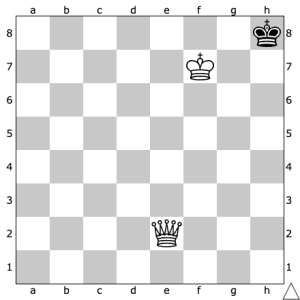
White to move. You have 5 seconds. Which moves are checkmate – and which lead to stalemate?

Solution: 1.Qh5# and 1.Qh2# are both checkmate. The white king on f7 covers g8 and g7, so the black king has only h7 as an escape square. Both moves give check on the h-file while also taking away h7.

But 1.Qe4, 1.Qd3 and 1.Qc2 – moves that look as though they “box the king in” by covering h7 along the diagonal – are all stalemate. Black has no legal moves and is not in check.

Why it matters in blitz: with only a few seconds left, many players make the move that “feels right”: take away the final escape square. Here that is the wrong move. The simple rule is: when your opponent has only the king left, check whether he still has a legal move after your move. It takes one second.

3+0, 3+2, 5+0, 5+3

The four most common blitz time controls reward slightly different behaviour. It is not a mathematical formula; it is a question of what the clock rewards.

Time control What the clock rewards What you should do differently
3+0 Speed and simple positions. Time is a scarce resource and does not come back. Play the opening quickly. Avoid long thinks in the middlegame. Expect endgames to be decided by the clock.
3+2 Endgame technique. It becomes harder to win on time alone. You can recover from only a few seconds by playing safe moves. Elementary endgame knowledge pays off.
5+0 Time for a few longer thinks. You can spend 30–40 seconds on a truly critical move. But perfectionism across many moves is still punished heavily.
5+3 Closer to “real” chess in the endgame. Correct technique matters more than raw speed. A technical advantage should often be converted on the board.

In 3+0, a player with twice as much time as the opponent can often win an equal position simply by playing quickly and safely. In 5+3 this works less often because the increment allows your opponent to keep the clock alive by playing quickly.

If you want to improve at blitz, rather than merely win as many games as possible today, it is worth training with increment. You are more likely to have to play out the endgame on the board rather than simply win on time. That is where you learn the most. The FIDE World Blitz Championship, incidentally, is played at 3+2.


Tactics – but the useful kind

Blitz is not only about tactics. But tactics matter a great deal because many games are decided there, and because tactical patterns are among the easiest things to turn into reflexes.

The diagrams below were chosen because they train recognition rather than calculation. Try to solve them within the stated time. If you cannot, that is not a failure. It is a problem you should see again in a week. Every example in this guide was constructed for the purpose.

White to move. You have 5 seconds.

Solution: 1.Ne7+ and 2.Nxc6. The knight gives check and attacks the queen at the same time. A knight check cannot be blocked, so Black has to move the king.

Why it matters in blitz: knight forks are among the easiest patterns to miss in fast play because a knight does not move along lines. Train yourself to see squares from which a knight attacks the king and queen at the same time.
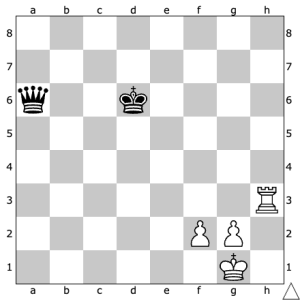
White to move. You have 8 seconds.

Solution: 1.Rh6+! Check along the sixth rank. The king is in front, the queen behind it on a6. The king has to leave the rank – c6 and e6 are still in check – and then the rook takes the queen. Black cannot interpose because the queen cannot reach any of the squares between the rook and king.

Why it matters in blitz: a skewer is the mirror image of a pin. The more valuable piece is in front and has to move. King and queen on the same rank, file or diagonal is a pattern you should react to immediately – both when they are your opponent’s pieces and when they are your own.

Black’s queen attacks your bishop on e4. White to move. You have 8 seconds.

Solution: 1.Bxb7+ (discovered check). The bishop captures the queen while the rook on e1 gives check at the same time. 1.Bc6+ also wins the queen: it is double check from bishop and rook, so Black has to move the king, and after 1…Kf8, 2.Re8 is even checkmate.

Why it matters in blitz: the natural response to an attack is to move the attacked piece to safety. But when that piece stands in front of a rook or queen on an open line, ask whether it can move with gain.
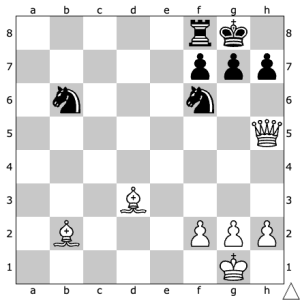
Your queen on h5 is attacked by the knight on f6. White to move. You have 15 seconds.

Solution: 1.Bxf6! Remove the defender. The knight on f6 attacked the queen and was also the only piece apart from the king defending h7. White now threatens 2.Qxh7#: the king cannot capture the queen because the bishop on d3 covers h7.

  • 1…gxf6 2.Qxh7#
  • Most other replies, for example 1…Nd5, also lose to 2.Qxh7#.
  • Black can try 1…g6 or 1…h6 to stop the immediate mate. White has won a knight in any case.

Why it matters in blitz: the natural reaction is to move the queen because it is under attack. But instead of defending, you can often capture the attacking piece. The queen-and-bishop battery against h7 is one of the most common attacking patterns against a castled king – and the knight on f6 is the classic defender.
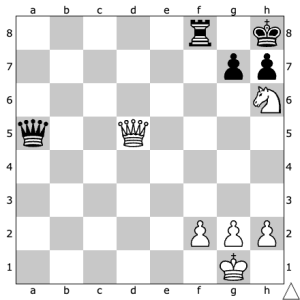
White to move. You have 10 seconds.

Solution: 1.Qg8+! Rxg8 2.Nf7#. Smothered mate. The king cannot capture the queen because the knight on h6 covers g8, so the rook has to capture. The king is then surrounded by its own pieces.

Why it matters in blitz: smothered mate is rare, but it is built on a very common position: a castled king that has moved into the corner to avoid checks, and a rook beside it. The picture – king on h8, rook on f8, pawns on g7 and h7, a knight able to reach f7 – is something you should recognise immediately.

The same applies to the other side of the board. Most of the patterns above can be prevented with a single move: an escape square for the king, a defended piece, a king moving away from an open line. In blitz, that is rarely a wasted tempo.


Endgames you do not have time to calculate

In classical chess you can spend ten minutes working out whether a pawn ending is won. In blitz you have ten seconds. That is why elementary endgame knowledge is worth more in blitz than almost anything else. It saves thinking.

If you know whether an endgame is won, you do not have to work it out with 17 seconds left.

That is why the positions below are included. Not so that you can explain them, but so that you can play them without thinking. The aim is automatic recall: you should know the position so well that you do not have to work out the solution again with 20 seconds left.

Level Endgames you should know in your sleep
Beginner Mate with a queen. Mate with a rook. King and pawn versus king. The rule of the square.
Intermediate Opposition and key squares. Pawn races. The active king. Basic rook endgames.
Advanced Lucena and Philidor. Typical fortresses and theoretical draws, such as the wrong-coloured bishop with a rook pawn.

The quick mate

Naroditsky included a principle he almost thought was too obvious to mention: optimise your basic mating technique. There are many ways to mate with a queen or rook, and some are far quicker and safer than others. He wrote that he only properly learned the fastest method for mating with a rook after he had become a grandmaster.

His recommendation is boring, but it works: play a few games against a computer or a friend where you practise only the elementary mates against the clock.

King and pawn versus king

White to move. Is the position won?

Solution: yes – and it would also be won with Black to move. A king on the sixth rank in front of its pawn always wins, except with a rook pawn. For example 1.Ke6 Ke8 2.d6 Kd8 3.d7 Kc7 4.Ke7, and the pawn promotes.

Why it matters in blitz: it is the rule, not the calculation, that makes you fast. If you know it, you immediately know whether you can trade down into a pawn ending.
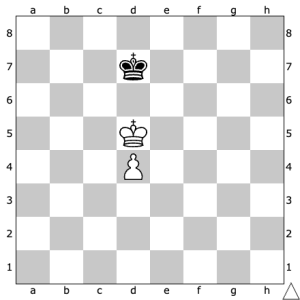
White to move. Is the position won? What if Black is to move?

Solution: with White to move it is a draw because Black has the opposition: the kings face each other with one square in between, and the player who has to move must give way. With Black to move, White wins because the black king has to step aside and the white king reaches one of the key squares c6, d6 or e6.

Why it matters in blitz: key squares make the concept usable under time pressure. For a pawn on the fourth rank, the key squares are the three squares two ranks in front of the pawn. Once your king reaches one of them, the endgame is won. You do not need to calculate. You need to count squares.

White to move. Can the black king catch the pawn?

Solution: no. After 1.a5, the pawn’s square is a5–d5–d8–a8. The black king on f4 cannot enter the square on its next move, so the pawn promotes, for example 1…Ke5 2.a6 Kd6 3.a7 Kc7 4.a8Q.

Why it matters in blitz: the rule of the square replaces move-by-move calculation with one glance. If the king can enter the square when it is to move, it catches the pawn. If not, it does not. Remember that a pawn on its starting rank can move two squares, so the square is counted from the third rank.

Lucena and Philidor

The two most important positions in rook endgames. One shows how to win. The other shows how to draw. Both are methods that you can either execute in ten seconds – or fail to execute in a minute.

White to move. How does White win?

Solution: by “building a bridge”. 1.Rd1+ Ke7 2.Rd4! Ra1 3.Kc7 Rc1+ 4.Kb6 Rb1+ 5.Kc6 Rc1+ 6.Kb5 Rb1+ 7.Rb4. The rook on the fourth rank blocks the checks and the pawn promotes.

Why it matters in blitz: without the method, you can spend a minute checking back and forth and end up losing on time. With the method, every move is known in advance.

Black to move. How does Black hold the draw?

Solution: Black keeps the rook on the sixth rank – here a6, b6 or c6 – so that the white king cannot advance. When White plays e6 to give the king shelter, the rook drops down the file and checks from behind as soon as the king moves forward. The pawn is now in front of the king and no longer provides shelter.

Why it matters in blitz: Philidor is one of the most common drawing techniques in rook endgames. If you know it, you can save half a point in many 3+2 and 5+3 games, where the increment gives enough time to defend correctly – but only if you do not have to discover the method along the way.


Psychology

Blitz is not only a test of chess. It also tests how you handle losing, stress and time pressure. Most of the problems are familiar, and most of the solutions are simple. The hard part is using them.

Tilt

One loss becomes three because the next game starts three seconds later. Online it is especially easy: the button for a new game is right there.

The solution is a rule you set in advance. For example: after two losses in a row, I take a five-minute break. Or: after three losses in a row, I stop for the day. The rule has to be decided before you need it, because you do not make good decisions while you are angry.

Revenge chess

You immediately want to win the rating points back. It is a form of tilt with a specific objective, which can make it even more damaging. The games become faster, more aggressive and less thoughtful. You are not winning the rating back. You are simply losing more.

When your opponent’s pace is contagious

Your opponent moves instantly, and you start doing the same even when the position requires thought. It is a natural reaction, but it is your opponent’s pace, not the position’s demand.

Remember: if your opponent is playing quickly, you have more time than they do. That is an advantage you can use. Do not let their pace determine yours.

Panic after a mistake

You hang a pawn or a piece and then spend half a minute trying to “fix” the mistake immediately. Often you find nothing, and now you have lost both material and time.

The most important principle:

A mistake creates a new position. Play the position in front of you.

The position you had one move ago no longer exists. The question is not how to get the lost material back. The question is what the best move is now. It may be to put your opponent under pressure. It may be to get the position under control. But it is a new decision, not a repair job.

Your surroundings

Naroditsky wrote that playing good blitz requires the right conditions: a stable internet connection, a place without distractions and a reasonably calm mind. He described playing blitz in cafés, lecture halls and airports, while eating or talking on the phone – and said it never worked. He showed two of his own games, one played in a noisy student lounge with an unstable connection, the other in a quiet library. It was hard to believe they had been played by the same person.

If you are particularly stressed or irritated one day, his advice was to skip blitz. It is harder to play well and resist tilt when your emotions are already running high. Five games played with full concentration are worth more than 30 played on your phone on the bus.


How to actually train blitz chess

The most common advice is to solve puzzles and play lots of games. It is not wrong, but it is not enough. Many players have played 10,000 blitz games without improving for years. They have made the same mistakes 10,000 times.

The difference is whether you learn from the games. That requires a simple workflow:

Play → find the critical moment → analyse it yourself → check with an engine → identify the pattern → train it → play again.

The most important step is the third: analyse the position yourself before you turn on the engine. If you go straight to the computer, you learn the computer’s answer. You do not learn why you chose the wrong move. And it is the mistake in your own thinking that is likely to recur in the next game.

A 45–60 minute training session

  1. 5–10 minutes: tactical warm-up. Easy puzzles, quickly. The aim is to get your eyes working, not to be challenged.
  2. Play 4–6 focused games at 5+3 or 3+2. The increment gives you games that are decided on the board and are worth analysing.
  3. After the session: find the first truly critical moment in each game. Not every mistake. The first place where the game took a decisive turn.
  4. Analyse it without an engine. What were you thinking? What did you miss? How much time did you have?
  5. Then use an engine. Was your analysis right? What did you overlook?
  6. Classify the mistake: tactics, opening, time management, positional understanding, endgame or a simple oversight.
  7. Choose one thing to work on in your next session. One. Not five.

If you want to be slightly more systematic, keep a simple mistake log: date, time control, type of mistake and one sentence about what happened. After a month you will see patterns. Maybe you lose half your games on time despite being better. Maybe you always miss knight forks. That is where your training should go. It should not feel like schoolwork – but five minutes of reflection after a training session is worth more than five extra games.

Use your clock as data

Both Chess.com and Lichess store how much time was left after every move. It is an underused source of information. Look at three or four of your games and ask:

  • Where did I spend the most time? Were those the critical moments?
  • How much time did I use in the opening?
  • How many of my mistakes were played in under two seconds?

The answers tell you more about your time management than any guide.

Training by level

The rating ranges below are guidelines, not scientific boundaries. They roughly correspond to online blitz ratings.

If you are a beginner

The biggest gains come from stopping hanging pieces, developing your pieces, getting your king safe, and learning the basic tactical patterns and simple mates. Do not spend months on deep opening theory, exotic gambits or subtle endgames. Those are not what decide your games.

About 800–1200

  • tactical awareness, especially your opponent’s threats
  • questions 1 and 5 from the decision system
  • a small repertoire you know well
  • simple endgames
  • having enough time for critical positions

About 1200–1600

  • pattern recognition
  • positional plans and pawn structures from your openings
  • critical moments
  • consistent post-game analysis

In this range, time management starts to matter more. Many players have enough chess skill for the next level but lose games on the clock.

About 1600–2000

  • repertoire depth: know your structures better than your variations
  • practical decisions: the difficult choices between equally good moves
  • Lucena, Philidor and typical rook endgames
  • your own recurring mistakes

Over 2000

At this level, general advice is less useful. You probably know most of what is in this guide. What separates players is individual: specific gaps in the repertoire, patterns in how you use your time, particular structures you struggle with, and tactical accuracy under pressure.

The best training is often to find the 10–20 games you lost from a good position and see what keeps recurring.


Online and over the board

Chess.com and Lichess are excellent for blitz. You can find an opponent in seconds, play hundreds of games, track your rating, analyse with a strong engine and train puzzles. Most of the training described in this guide is easiest to do online.

But if you have only played blitz on a screen, you should try playing over the board. It is a different experience:

  • You have to move the pieces by hand and press the clock with the same hand.
  • The board is three-dimensional and looks different from a screen. Diagonals are harder to see at first.
  • There are no premoves. You have to anticipate your opponent’s moves yourself.
  • Your opponent is sitting in front of you. You see their reactions, and they see yours.
  • Time trouble becomes physical. You feel it in your hands.

And, quite simply, it is fun.

Our completely unbiased recommendation is, naturally, that you do it on a Norwald board.

Two rules you should know

Press the clock with the hand you use to move. The FIDE Laws of Chess require it.

Illegal moves have consequences. Online you cannot make an illegal move. Over the board you can, and in time trouble it happens. Under the current FIDE rules, the following applies in blitz:

  • An illegal move is completed when the player presses the clock.
  • For the first completed illegal move, the position is restored to the position before the move and the opponent receives one extra minute.
  • For the second completed illegal move by the same player, that player loses the game – unless the opponent cannot checkmate by any sequence of legal moves. In that case the game is drawn.

In practice, that means an illegal move in time trouble can cost you both time and – the second time – the game. Better to play a legal move half a second slower. In tournaments where an arbiter is not watching every game, the penalty only takes effect if the arbiter sees it or if the opponent claims it before making their own move. Otherwise the move stands.


25 rules for better blitz chess

If you have read the whole guide, it can be reduced to these sentences. If you have not, you can use them as a short summary.

On time

  1. Play the easy moves quickly so that you have time for the difficult ones.
  2. Use time when the position changes character – not when you are unsure about a developing move.
  3. Use your opponent’s thinking time. It is free.
  4. Anticipation is a chess skill. Premoves are a tool that exists only online. Do not confuse the two.
  5. Do not let your opponent’s pace determine yours.
  6. With increment, five seconds can last for many moves. Without increment, they can be almost nothing.
  7. Slow down when you are winning. That is when you risk stalemating your opponent.

On seeing

  1. Ask what your opponent’s last move changed before looking for your own.
  2. Before you release the piece: what is your opponent’s strongest reply?
  3. Checks, captures and threats are a search method, not a rule for choosing moves.
  4. A recapture that feels forced is exactly the move you should check.
  5. Many easy problems build recognition. A few difficult problems build calculation. You need both.

On plans and openings

  1. Know your structures better than your variations.
  2. A simple plan saves time on every one of the next moves.
  3. A move you understand is often more valuable in practice than a computer line you do not understand.
  4. When several moves are good, choose the one that gives your opponent the most problems.
  5. Bad traps are not practical chess. They are simply bad chess.

On advantages and disadvantages

  1. When you are clearly ahead, make the position easier.
  2. When you are losing, give your opponent problems – real problems.
  3. When your opponent’s king lacks a pawn shield, look for perpetual check.
  4. Resign later in blitz than in classical chess.

On learning

  1. Know elementary endgames so well that you do not have to work them out again each time.
  2. A mistake creates a new position. Play the position in front of you.
  3. Decide your tilt rule before you need it.
  4. Do not just play more blitz. Learn from the games you play.

Back to the park

You never finish learning blitz chess. As you get better, the problems move. You become faster at the things that once cost you time, and discover new decisions that still require it. That is what makes it fun to keep going.

We hope the guide has made you a little better – or at least given you some specific things to work on in your next game.

The guide is not finished. If you have advice, experience or corrections, write to us. It gets better because of it.

And the next time you walk through the Luxembourg Gardens, or another park where people are playing, and you see the empty chair on the other side of the board:

Sit down.

You may lose.

But now you know a little more about what you are getting into.


Sources and further reading

Hopes and fears

I’m going to have to wind into this one from a distance…

Mostly I play chess, but I know how to play some other games, and I’m
sort of generally interested in games in general.

Game theory was much discussed from a mathematical angle when I was in
college, but what interests me more is the thoughts and feelings of game
players, which are usually far from mathematical.

“It seems to us that the theories associated with board reconstruction
experiments represent an idealised picture of master chess which may be
misleading. … So often, as any player will agree, it is hopes and
fears which seem to influence the choice of a move.”
— Hartston and
Wason

So I was more than interested to be sent a link by our former tyrannical
landlord Steven Crane of Clifton Road Games ( http://cliftonroadgames.co.uk/ ):
https://www.wizards.com/Magic/Magazine/Article.aspx?x=mtg%2Fdaily%2Fli%2…

Have a read of that first and see what you think.

Steven commented to me at the time:

“Probably doesn’t apply directly to chess, due to the lack of “hidden” information, but there might be something in the general idea…”

Oh, if only there was nothing hidden in chess!

“You see, but you do not observe. The distinction is clear.” Sherlock Holmes, in A Scandal in Bohemia

What is so limited in chess, is a firm grasp of what is actually there,
and what is so often present, is a paralysing fear of what our opponent
might have seen that we cannot see.

It should all be there laid on the chessboard – indeed, I often say
that’s what I like about the game – but what lies even a short way ahead
is shrouded in mist, if not fog, if not a dense curtain… and our history
of being surprised by our opponents’ replies makes us fearful of what
might happen next.

And even when we see things, we may be also be justly admonished as
was Watson on another occasion:

“Watson, you can see everything. You fail, however, to reason from what you see. ” Sherlock Holmes, The Adventure of the Blue Carbuncle.

I found the discussion of Magic card-counting had parallels with two
discussions I had with young people who had agreed draws in these two
positions. See what you think first, then I’ll tell you what I told
them.

Black offers a draw to White: do you accept?

White offers a draw to Black: do you accept?

To put the question at all to you, suggests that there is something
better to do than shake hands and find the snack stand. An indeed there
was:


I guess I hope there might be some general sort of logic or way of feeling
about the position that would make these promising young players look a
bit harder and longer next time. I certainly found the language used
about the Magic game very familiar, even if the rules and elements were
foreign.

Don’t be afraid of ghosts, look to see what is real.

The trebuchet

In an all-parent encounter last week, the players stumbled upon this position, known as the Trebuchet. A trebuchet is a big wooden catapult, and its connection with this position is not known, except that it may catapult a player from joy to despair…

Normally, it’s an advantage for it to be your turn so you can get on with your plan, but in this position, whoever has to move next, loses! Can you see how?

The situation of an unhappy forced move is called Zugzwang; it’s not ever so common but more unusual is this situation where BOTH sides are in Zugzwang.

P.S. Interested in this sort of thing? Here are some more:
http://exeterchessclub.org.uk/content/simplest-mutual-full-point-zugzwangs

Think twice … at least!

As part of a chess program on television an extract from Kotov’s book ‘The White and the Black’ was shown. The scene depicts Alekhin giving a simultaneous display against 30 German officers of the General staff in occupied Prague in 1943. The last game to finish is against Obersturbannfuhrer Spak. ‘I resign’, declares the German officer:


Alekhin turns the board round, and takes the Black pieces himself, and says ‘Play on!’ Two moves follow and the German again declares that, believe it or not, he must resign as White’s game is hopeless.

Alekhin again turns the board around and now announces mate in three on White’s behalf.

Clearly apocryphal in my view but sincere H/T Red October and Benzol on chessgames.com

http://www.chessgames.com/perl/chessplayer?pid=10240%3Ekpage=20

Queen sacrifices

Meanwhile, here are three games from Gandalf which explore the
wilder shores of compensation for a Queen (83,84,85)

Click […] for list of games

Tartakower on the English

A fine addition to my collection of wonderful annotations (H/T Edward Winter)

Click […] for list of games

Tartakower annotated White’s first move as follows (H/T Edward Winter):

“An opening which the master from Bremen has been playing, almost without exception, for about 30 years.

Just recently, however, I learned that in annotating the game Eliskases v L. Steiner, which Black won prettily …, the German master and journalist Leonhardt expressed his joy that this tortuous opening, which comes from the Eastern Jews (Ost-Juden) Nimzowitsch and Tartakower, will lose some of its worth.

With such remarks, Leonhardt is certainly doing his homeland a disservice. His hope of flattering official circles may well backfire and he may well be “corrected” for publishing assertions which are:

1. untrue, since the opening was introduced by the Englishman Staunton;

2. maladroit, since the system was developed by the German Carls;

3. ridiculous, since in the game in question, Eliskases v L. Steiner, the move 1.c4 was played by a good Tyrolean, whereas it was refuted by a Semitic player;

4. preposterous, since in chess we take pleasure in seeking truth, without players’ personalities playing any role;

5. unhealthy, since in chess we prefer to be rid of political, ethnological, etc. discussions; and finally;

6. harmful, since the German authorities recommend their citizens not to make attacks on foreigners.”

Material imbalance: Queen for Two Rooks

I have to say, if this is the aspect of your game most in need of fixing, then count yourself lucky, but there are some general lessons to be learned.

Example games:

Ish follows some theory:

Ramdewar I. – Edney R. [B76]

Kramnik wins with the Rooks:

Leko P. – Kramnik V. [C42]

Fischer wins with the Queen:

Portisch L. – Fischer R. [E45]

The Queen on the attack:

Janowsky – Lasker

The Rooks make a team:

Euwe – Rubinstein [D05]

So, what features favour the Rooks, which the Queen?

Yusupov loses to the Queen:

Jussupow A. – Shaked T. [E81]

Yusupov has another go with the Rooks:

Jussupow A. – Marjanovic S. [D34]

Chernin finds an improvement:

Chernin A. – Marjanovic S. [D34]

Ish’s game in hindsight:

Ramdewar I. – Edney R. [B76]

Click on […] to see games list.

Spanish Torture? The Ruy Lopez

+-----------------+
|r+b1kgn4|
|0p0p+p0p|
|.+n+.+.+|
|+B+.0.+.|
|.+.+P+.+|
|+.+.+N+.|
|P)P).)P)|
|$NGQI.+R|
+-----------------+

Introduction

The Spanish priest Ruy Lopez, who was the strongest
player of his day, described in
the 1500s the opening which now bears his name. At least, the British
and Americans know it as the Ruy
Lopez: in Europe they are more likely to call it the Spanish Game,
and Tartakower wryly referred to it as Spanish Torture. (Because I
was brought up in East Anglia and not Spain, I described it for
years as the “Royal Opez”, but I believe it is properly pronounced more
like
“Ree Lop’eth”.)

It remains the most important of the King’s-side openings, and
is still generally considered the best way to keep White’s
initiative going after 1…e5. It is no accident that most
of the games in Bronstein’s book “200 Open Games” begin with
the Ruy Lopez opening.

The ideas for each side in the Ruy Lopez are very many and
varied; I hope below to introduce some of the basic concepts and
give you some landmarks for your own exploration of this fine
opening.

The first few moves of the Ruy Lopez opening are easy to follow:
1. e4 e5 2. Nf3 Nc6 is very natural. The moves often played
by juniors here, 3. Bc4 and 3. d4, are also easy to
understand, but may not be the strongest. 3.d4, the Scotch
Opening, leads to an early clash but perhaps also an early
simplification, with a loss of tension and thus winning chances for
both sides. The Italian game with 3. Bc4, hitting f7 and
hoping to deter …d5, paradoxically rather invites …d7-d5 and an
early exchange in the centre, with equality. This is because the
logical follow-up 3. Bc4 Bc5 4. c3 Nf6, results in Black
regaining control of the d5 point.

The Ruy Lopez move, 3. Bb5, keeps the idea of taking over
the centre with d2-d4 (or with c2-c3 and d2-d4), but first does a
number of important other jobs. Like in the Italian Game, the
Bishop clears the way for White to castle, and then play Rf1-e1.
But on b5 rather than c4 the Bishop cannot be hit by …d7-d5. If
Black does ever move the d-Pawn, the half-pin of the Knight on c6
becomes a full pin, undermining Black’s control of e5 and d4.

In the short term there is an immediate threat: the Bishop
attacks the Knight that defends the pawn attacked by the Knight
(the house that Ruy built). It would be great for White if it
worked so simply, but after 3…(pass); 4 Bxc6, dxc6! 5 Nxe5?!
Qd4!
Black will regain his pawn through the double
attack
. So, the immediate threat to the Pawn isn’t quite so
deadly, but once White has castled and/or protected the e-Pawn the
threat will become real. Also, the Pawn on e5 is a lot easier to
get at than the one on f7, and Black can get badly tied up or just
stiff and cramped trying to hold on to a share of the centre.

The other tactical point to note is that the counterattack by
Black on e4 by …Nf6 can be met by White castling, since after
…Nf6xe4 White has Rf1-e1: if White does not win a piece, it is at
least often awkward for Black to get the King’s-side sorted. So :
1. e4 e5 2. Nf3 Nc6 3. Bb5 Nf6 4. O-O! Nxe4 5. d4! and White
has an edge.

The most natural sequence of moves trying to hold onto e5 leads
to trouble for Black: after 1 e4, e5; 2 Nf3, Nc6; 3 Bb5, d6; 4
d4, Bd7; 5 Nc3, Nf6; 6 0-0, Be7; 7 Re1, exd4; 8 Nxd4, O-O; 9
Bf1!
(to stop the exchanges threatened by 9…Nxd4) when Black
has lots of pieces but not enough space.

Why does Black play 7…exd4 when I said the idea is to
hold on in the centre? Tarrasch’s famous trap showed that Black
cannot play 7…0-0 because of the forcing continuation
8.Bxc6 Bxc6 9.dxe5 dxe5 10.Qxd8 Raxd8 [10…Rfxd8 allows 15 Kf1
– see later 11.Nxe5 Bxe4 12.Nxe4 Nxe4 13.Nd3 f5 14.f3 Bc5+ 15.Kf1]
11.Nxe5 Bxe4
[11…Nxe4 12.Nxc6] 12.Nxe4 Nxe4 13.Nd3 f5 14.f3
Bc5+
15.Nxc5
[15.Kf1 Bb6 16.fxe4 fxe4+; 15.Kh1 Nf2+ 16.Nxf2 Bxf2 17.Rf1]
15…Nxc5 16.Bg5 Rd5
[16…Rde8 17.Be7] 17.Be7 Re8 18.c4
winning
the exchange.
(If instead 10…Rexd8 White would have 15 Kh1
(15…Rxd3; 16 fxe4).) Tarrasch won a game with this against Marco
AFTER publishing it as analysis! (If
instead 10…Rexd8 White would have 15 Kh1
(15…Rxd3; 16 fxe4).)

These lines had a strong effect on players who started to
realise just how good the Ruy Lopez is. The Giuoco Piano is a great
opening for your early chess years; the Ruy Lopez is an opening for
life.

Black has many lines, which fall into basically two approaches
(as usual): defence or counterattack. Defence of the
strong point at e5 we have looked at with 3…d6, the
Steinitz Defence, (or 3…a6; 4 Ba4, d6, the
Deferred Steinitz Defence), but we have seen that the point
cannot be held for long; counterattack may be attempted with
3…Nf6, the Berlin Defence, or 3…a6; 4 Ba4,
Nf6
; the Morphy Defence. The Morphy move 3…a6 was an
important refinement of Black’s resources, making the Bishop choose
its diagonal and allowing the pin-breaking …b5. Reuben Fine gives
an instructive comparison of variations with and without …a6:

In reply to the Morphy the obvious 5 Nc3 is rather boring, but
White can play 5 O-O since, as we have seen, Black cannot
really win the e4 pawn. The Morphy has itself a strong point line,
5 O-O, Be7; 6 Re1, b5; 7 Bb3, d6, the Closed Morphy
Defence, and a counter-attacking line, 5 O-O, Nxe4; 6 d4, b5; 7
Bb3, d5
, the Open Morphy Defence. These are systems of
great richness, and the Closed Morphy best avoided until your chess
understanding is well advanced.


The Ideas
behind the Ruy Lopez

White plays for an immediate break in the centre

5 d4 or 5 Qe2 (idea O-O and Rd1)
or 5.Qe2/6.Qe2 lead to more familiar open and attacking
e-pawn styles of game. An example: 1. e4 e5 2. Nf3 Nc6 3. Bb5 a6
4. Ba4 Nf6 5. d4 exd4 6. O-O Be7 7. Re1 b5 8. Bb3 d6 9. Bd5 Nxd5
10. exd5 Ne5 11. Nxd4 O-O

This is about even, and, I hope, a game juniors would enjoy
playing as either colour; these variations are a good introduction
to the Ruy Lopez.

Black plays for an immediate break
in the centre

This is probably a good way to play the Ruy for Black
in your early career. The Open Morphy Defence relies above all on
piece activity, and obeys two good general opening rules for
Black:

(a) If your opponent lets you take a central Pawn, take it off
if you do not lose a piece (viz. 1.e4 e5 2.Nf3 Nc6 3.Bb5 a6
4.Ba4 Nf6 5.0-0 Nxe4
and now after 6. Re1 Black is in no
pin, so 6…Nc5 or 6…Nd6 are quite all right.)

(b) Aim to play …d5 yourself if you can

Grandmaster theory suggests that Black is taking on rather a lot
of weaknesses when playing this way, but that may not be so
important if you are not playing Grandmasters. Siegbert Tarrasch,
who was so effective playing the Ruy as White, preferred to play
this way as Black, and since then Max Euwe, Victor Kortchnoi, Artur
Yusupov, Jan Timman and Viswanathan Anand have all been happy to
play the Open Morphy at World Championship and Candidates’ level,
so you can see that this is not very much of a handicap.

The veteran English player Vernon Dilworth suggested the most
aggressive way of playing the Open Morphy as Black:

1.e4 e5 2.Nf3 Nc6 3.Bb5 a6 4.Ba4 Nf6
5.0-0 Nxe4 6.d4 b5 7.Bb3 d5 8.dxe5 Be6 9.c3 Bc5 10.Nbd2 0-0 11.Bc2
Nxf2

Black sacrifices two active pieces for a Rook while
White is still getting the Queen’s-side organised. Black will
follow up with …f6, attacking down the f-file.

+-----------------+
|r+.1.4k+|
|+.0.+p0p|
|p+n+b+.+|
|+pgp).+.|
|.+.+.+.+|
|+.).+N+.|
|P)BH.hP)|
|$.GQ+RI.|
+-----------------+

Black can play more calmly at move 11
(11…Bf5 is fashionable since Kortchnoi adopted it), or
earlier play 9…Be7 (Euwe’s preference) or 9…Nc5
(Kortchnoi’s other preference). These lines are all rather complex
and there is a lot of theory on them, but until your opponents know
all the theory, get stuck in!

There are several other lines where we see an early …d5 by
Black:

…d5 in the Marshall Gambit, a favourite of club players:
1.e4 e5 2.Nf3 Nc6 3.Bb5 a6 4.Ba4 Nf6 5.0-0 Be7 6.Re1 b5 7.Bb3
0-0 8.c3 d5 9.exd5 Nxd5 10.Nxe5 Nxe5 11.Rxe5 c6,
e.g. 12.d4
Bd6 13.Re1 Qh4 14.g3 Qh3 15.Be3 Bg4 16.Qd3 Rae8 17.Nd2 f5 18.f4 Kh8
19.Bxd5 cxd5 20.Qf1 Qh5 21.Qg2 Re4 22.a4 bxa4 23.Rxa4 g5 24.Nxe4
fxe4 25.Rxa6 gxf4 26.Rxd6 fxe3 27.Rxe3 Bh3 28.g4 Qxg4 29.Rg3
Qd1+
0-1, Kosten-Hebden, 1982.

…d5 in the normal Closed Morphy: e.g. Kasparov,G (2800) –
Karpov,A (2730) [C92] Wch35-KK5 USA/FRA (New York) (8), 1990
1.e4 e5 2.Nf3 Nc6 3.Bb5 a6 4.Ba4 Nf6 5.0-0 Be7 6.Re1 b5 7.Bb3 d6
8.c3 0-0 9.h3 Nd7 10.d4 Bf6 11.a4 Bb7 12.Be3 Na5 13.Bc2 Nc4 14.Bc1
d5! TN

…d5 in the Classical Defence: 1.e4 e5 2.Nf3 Nc6 3.Bb5 Bc5
4. c3 d5?!!
Or more sanely, Unzicker – Fischer Leipzig 1960
1.e4 e5 2.Nf3 Nc6 3.Bb5 Bc5 4.c3 Nf6 5.d4 Bb6 6.0-0 0-0 7.Re1 exd4
8.cxd4 d5 9.e5 Ne4 10.Nc3 Bg4 11.Bxc6 bxc6 12.Nxe4 dxe4 13.Rxe4
Bxf3 14.Qxf3 Bxd4 15.Be3 Bxb2 16.Rb1 f5 17.exf6
½-½

And wherever else White is slack, e.g. 1.e4 e5 2.Nf3 Nc6
3.Bb5 a6 4.Ba4 Nf6 5. Nc3
or 5. d3 when Black should get
castled and look for …d7-d5. Tiviakov,S (2625) – Sokolov,I
(2665) [C86]Wijk (10), 1996 1.e4 e5 2.Nf3 Nc6 3.Bb5 a6 4.Ba4 Nf6
5.Qe2 Be7 6.c3 0-0 7.0-0 b5 8.Bb3 d5 9.d3 Re8 10.Re1 h6 11.Nbd2 Be6
12.Nf1 Bc5 13.Ng3 a5 (…0-1, 41),

White’s outpost on d5

Tal – Bronstein
[C96] 1956

1.e4 e5 2.Nf3 Nc6 3.Bb5 a6 4.Ba4 Nf6
5.0-0 Be7 6.Re1 b5 7.Bb3 d6 8.c3 0-0 9.h3 Na5 10.Bc2 c5 11.d4 Nc6
12.Nbd2 Qb6 13.dxc5 dxc5 14.Nf1 Be6 15.Ne3 Rad8 16.Qe2 g6 17.Ng5 c4
! 18.a4 Kg7 19.axb5 axb5 20.Rb1 Na5 21.Nf3 Qc7

Every White piece is queuing up behind the e-pawn,
waiting for…

+-----------------+
|.+.4.4.+|
|+.1.gpip|
|.+.+bhp+|
|hp+.0.+.|
|.+p+P+.+|
|+.).HN+P|
|.)B+Q)P+|
|+RG.$.I.|
+-----------------+

22.Nd5 ! 22…Bxd5
23.exd5

White’s pieces control many central squares, and the
Bishops have new avenues of attack.

23…Rfe8 24.Qxe5 Qxe5 25.Nxe5 Nxd5
26.Ra1 Nb3 27.Bxb3 cxb3 28.Bh6+ ! 28…Kg8 ?! 29.Nc6 Rc8 30.Rad1
Rxc6 31.Rxd5 f6 32.Rxb5 g5 33.Rxb3 Kf7 34.Rb7 Re6 35.Rxe6 Kxe6
36.h4 Rg8 37.f4 Bc5+ 38.Kf1 gxh4 39.Rb5 Rc8 40.f5+ Kd6 41.b4 h3
42.Rxc5 h2 43.Bf4+ 1-0

White’s outpost on f5

This is a simple way to play all closed double
King’s-Pawn positions: park a Knight on f5 and play for a
King’s-side attack.

1.e4 e5 2.Nf3 Nc6 3.Bb5 a6 4.Ba4 Nf6
5.0-0 Be7 6.Re1 b5 7.Bb3 d6 8.c3 0-0 9.d3

White plays quietly in the centre, hoping to avoid
distractions there.

9…Na5 10.Bc2 c5 11.Nbd2 Qc7 12.Nf1
Nc6 13.Ne3 Bb7 14.Nf5 Rfe8 15.Bg5 Nd7 16.Bb3 Nb6 17.Bxe7 Nxe7
18.Bxf7+ Kxf7 19.Ng5+ Kg8 20.Qh5 Nxf5 21.Qxh7+ Kf8 22.Qxf5+ Kg8
23.Qg6 Qd7 24.Re3 1-0

White’s central play

You should never forget that one of the key aims for
White in the e-Pawn openings is to take over the centre with c3 and
d4. If Black takes his eye off the ball White can switch to this
plan with effect, and in fact White can win a lot of games through
simple domination of the centre. More space and more
manoeuvrability means chances of attack:

1.e4 e5 2.Nf3 Nc6 3.Bb5 a6 4.Ba4 Nf6
5.0-0 Be7 6.Re1 b5 7.Bb3 d6 8.c3 0-0 9.h3 Nb8 10.d4 Nbd7

+-----------------+
|r+b1.4k+|
|+.0ngp0p|
|p+.0.h.+|
|+p+.0.+.|
|.+.)P+.+|
|+B).+N+P|
|P).+.)P+|
|$NGQ$.I.|
+-----------------+

11.Nh4 exd4 12.cxd4 Nb6 13.Nf3 d5
14.e5 Ne4 15.Nbd2 Nxd2 16.Bxd2 Bf5 17.Bc2 Bxc2 18.Qxc2 Rc8 19.b3
Nd7 20.e6 fxe6 21.Rxe6 c5 22.Ba5 Qxa5 23.Rxe7 Qd8 24.Ng5
1-0

White’s King’s-side attack

The Bishop that lurks on c2 is an ace up White’s
sleeve: while Black is distracted elsewhere White can suddenly whip
out a King’s-side attack. A glorious example of this was:

Kasparov,G (2800) – Karpov,A (2730) [C92] (20), 1990

1.e4 e5 2.Nf3 Nc6 3.Bb5 a6 4.Ba4 Nf6
5.0-0 Be7 6.Re1 b5 7.Bb3 d6 8.c3 0-0 9.h3 Bb7 10.d4 Re8 11.Nbd2 Bf8
12.a4 h6 13.Bc2 exd4 14.cxd4 Nb4 15.Bb1 c5 16.d5 Nd7 17.Ra3 f5
18.Rae3 Nf6 19.Nh2 Kh8 20.b3 bxa4 21.bxa4 c4 22.Bb2 fxe4
23.Nxe4

+-----------------+
|r+.1rg.i|
|+b+.+.0.|
|p+.0.h.0|
|+.+P+.+.|
|Php+N+.+|
|+.+.$.+P|
|.G.+.)PH|
|+B+Q$.I.|
+-----------------+

23… Nfxd5 24.Rg3 Re6 25.Ng4 Qe8
26.Nxh6 c3 27.Nf5 cxb2 28.Qg4 Bc8 29.Qh4+ Rh6 30.Nxh6 gxh6 31.Kh2
Qe5 32.Ng5 Qf6 33.Re8 Bf5 34.Qxh6+
[34.Nf7+ is Mate in 6!
34…Qxf7 35.Qxh6+ Bh7 36.Rxa8 Ne7 37.Rxf8+ Ng8 38.Rgxg8+ Qxg8
39.Qxh7#]
34…Qxh6 35.Nf7+ Kh7 36.Bxf5+ Qg6 37.Bxg6+ Kg7
38.Rxa8 Be7 39.Rb8 a5 40.Be4+ Kxf7 41.Bxd5+ 1-0

White can also say nonchalantly that: Black is
cramped, and so will find it difficult to organise a defence, so I
will attack the King in any event. The situation is usually more
complex than this bluntness implies, but the core plan is still
played:

1.e4 e5 2.Nf3 Nc6 3.Bb5 a6 4.Ba4 Nf6
5.0-0 Be7 6.Re1 b5 7.Bb3 d6 8.c3 0-0

[8…Na5 9.Bc2 c5 10.d4 Qc7 11.h3
Nc6 12.Be3 0-0 13.Nbd2 Rd8 14.Rc1 Bd7 15.Nf1 b4 16.d5 Na7 17.c4 Nc8
18.g4 Nb6 19.b3 a5 20.Ng3 g6 21.Kh2 a4 22.Rg1 axb3 23.axb3 Bf8
24.Qd2 Ra2 25.Bg5 Bg7 26.Qe3 Rda8 27.Bb1 R2a3 28.Ne1 Kh8 29.Qd3 Ng8
30.Nc2 R3a7 31.Rcf1 Be8 32.Be3 Nd7 33.Ne1 Qd8 34.g5 Qa5 35.h4 Qd8
36.h5 Qe7 37.Nf3 Nb6 38.Rh1 Qd7 39.Kg2 Ne7 40.hxg6 fxg6 41.Rh3 Bf7
42.Rfh1 Bg8 43.Nf5 Rf8 44.Nxg7 Kxg7 45.Qe2 1-0
Capablanca,Jose-Kupchik,Abraham/New York (07) 1915]

9.h3 Na5 10.Bc2 c5 11.d4 Qc7 12.Nbd2
Nc6 13.d5 Nd8 14.Nf1 Ne8

+-----------------+
|r+bhn4k+|
|+.1.gp0p|
|p+.0.+.+|
|+p0P0.+.|
|.+.+P+.+|
|+.).+N+P|
|P)B+.)P+|
|$.GQ$NI.|
+-----------------+

“In olden times White would often
attack by g4 and Ng3 in the Closed Spanish; once in a while White
would break through with a Nf5 sacrifice, but now it is recognised
that so long as all Black’s pieces can reach the King’s-side, a
direct attack should not work. Thus, the emphasis has switched to
diversionary Queen’s-side play, with a King’s-side attack being
reserved for a favourable moment when Black’s pieces have been
lured away. Moreover, the King’s-side attack is usually based on f4
rather than g4, since only f4 offers the chance of activating the
light-squared Bishop on c2.”

“White’s preliminary a4 gives him control of the a-file; this
may not appear relevant to the conduct of a King’s-side attack, but
watch what happens later!” John Nunn

15.a4

[15.g4 g6 16.Ng3 Ng7 17.Kh2 f6
18.Be3 Bd7 19.Qd2 Nf7 20.Rg1 Kh8 21.Raf1 Rg8 22.Ne1 Raf8 =
Robatsch-Padevsky, Amsterdam 1972]

15…Rb8 16.axb5 axb5 17.b4 c4
18.Ng3 g6 19.Nh2 Ng7 20.Rf1 Bd7 21.f4 Bh4 22.Qf3 f5 23.fxe5 dxe5
24.exf5 Bxg3 25.Qxg3 Nxf5 26.Qf2
[26.Qe1 +/-]
26…Nb7 27.Ng4 h5 28.Ra6 hxg4 29.Rxg6+ Ng7 30.Rxg7+ [30.Rxg7+
Kxg7 31.Bh6+ Kxh6 (31…Kg8 32.Qxf8+ Rxf8 33.Rxf8#; 31…Kh8
32.Qxf8+ Rxf8 33.Rxf8#) 32.Qh4+ Kg7 33.Qh7#]
1-0

Black’s Queen’s-side attack

Of course, what else may distract Black from defence
of the King’s-side is an opportunity to attack the Queen’s-side,
and this attack can succeed against the best opposition:

1.e4 e5 2.Nf3 Nc6 3.Bb5 a6 4.Ba4 Nf6
5.0-0 Be7 6.Re1 b5 7.Bb3 d6 8.c3 0-0 9.h3 Bb7 10.d4 Re8 11.Nbd2 Bf8
12.a4 Qd7 13.axb5 axb5 14.Rxa8 Bxa8
[14…Rxa8?!
15.Ng5±]
15.d5 Na5 16.Ba2!? N 16…c6 17.b4 Nb7! 18.c4
Rc8!? [18…Nd8+=] 19.dxc6?! [19.Qe2] 19…Qxc6= 20.c5?!
[20.Bb2] 20…Nd8 21.Bb2

+-----------------+
|b+rh.gk+|
|+.+.+p0p|
|.+q0.h.+|
|+p).0.+.|
|.).+P+.+|
|+.+.+N+P|
|BG.H.)P+|
|+.+Q$.I.|
+-----------------+

21…dxc5! =+ 22.bxc5 Qxc5 23.Bxe5
Nd7 24.Bb2 Qb4! 25.Nb3?!
[25.Qb1] 25…Nc5-/+

Black has the advantage but there is still a lot of
tension in the position.

26.Ba1 Bxe4 27.Nfd4 Ndb7 28.Qe2 Nd6
29.Nxc5 Qxc5 30.Qg4 Re8 31.Rd1 Bg6 32.Qf4 Qb4 33.Qc1 Be4 34.Re1 Qa5
35.Bb3 Qa8 36.Qb2 b4 37.Re3 Bg6 38.Rxe8 Qxe8 39.Qc1 Ne4 40.Bd5 Nc5
41.Nb3 Nd3 0-1

White’s Queen’s-side attack

Often, Black will stake out some space on the
Queen’s-side with …a6 and …b5. Whether in a given position this
represents Queen’s-side counterplay or Queen’s-side weaknesses is
one of the key Ruy Lopez questions!

1.e4 e5 2.Nf3 Nc6 3.Bb5 a6 4.Ba4 d6
5.0-0 Bd7 6.d4 Nf6 7.c3 Be7 8.Nbd2 0-0 9.Re1 Re8 10.Nf1 h6 11.Ng3
Bf8 12.Bd2

Modest, but White is not so much concerned to point a
battering-ram at a weak spot (there aren’t any) as to maintain a
flexible position where Black will be less able to re-arrange the
pieces to counter White’s latest idea.

12…b5 13.Bc2 Na5 14.b3 c5 15.d5
Nh7 16.h3 Be7 17.Nf5 Nb7 18.a4 bxa4 19.b4 a5 20.Bxa4 axb4 21.cxb4
Bf8 22.Bc6 Qc7 23.b5 Nf6 24.Qc2 Reb8 25.Ne3 Bc8 26.Nc4 Be7 27.b6
Qd8 28.Ra7

+-----------------+
|r4b1.+k+|
|$n+.gp0.|
|.)B0.h.0|
|+.0P0.+.|
|.+N+P+.+|
|+.+.+N+P|
|.+QG.)P+|
|+.+.$.I.|
+-----------------+

The point of using an open file is to provide
invasion points for rooks, although it’s unusual for a Rook to
arrive on the seventh, supported by a Pawn. Black cannot bear this,
but the exchange concedes a monster pawn on a7.

28…Nd7 29.Qa4 Rxa7 30.bxa7 Ra8
31.Qa6 Qc7

Black’s pieces are standing on each other’s toes and
cannot escape the attack of White’s pieces. The Black Rook has
nowhere to move to.

32.Bxd7 Qxd7 [32…Bxd7
33.Nb6]
33.Nb6 Nd8 34.Qa1 1-0

(see also the first game of the Deep Blue-Kasparov
return match in 1997)

Black’s King’s-side
attack

Not a common occurrence but there are several
attacking plans for Black. There are several …Bg4 lines where an
incautious h2-h3 can be met by …h7-h5!

1.e4 e5 2.Nf3 Nc6 3.Bb5 d6 4.c3 Bg4
5. h3 h5!
or

1.e4 e5 2.Nf3 Nc6 3.Bb5 a6 4. Bxc6 bxc6 5. O-O Bg4 6.
h3 h5!

A more complex line is seen in the Archangel
Variation: 1.e4 e5 2.Nf3 Nc6 3.Bb5 a6 4.Ba4 Nf6 5.0-0 b5 6.Bb3
Bb7 7.Re1 Bc5 8.c3 d6 9.d4 Bb6 10.Bg5 h6 11.Bh4 Qd7

+-----------------+
|r+.+k+.4|
|+b0q+p0.|
|pgn0.h.0|
|+p+.0.+.|
|.+.)P+.G|
|+B).+N+.|
|P).+.)P)|
|$N+Q$.I.|
+-----------------+

Black announces his intention to abandon all subtlety
and play for a King’s-side attack.

12.a4 0-0-0 13.axb5 axb5
14.Bxf6

[14.Na3 g5 15.Bg3 h5 16.dxe5
(16.h4 gxh4 17.Bxh4 Rh6 18.Nxb5 Rg8 19.Qd3 exd4 20.cxd4 Nb4)
16…h4 17.exf6 hxg3 18.hxg3 g4 19.Nd4 Rh7 20.Bd5 Rdh8 =+ BCO2]

14…gxf6 15.Bd5 Rhg8 16.Kh1 Qg4
17.Rg1 exd4 18.cxd4 f5 19.Nc3 fxe4 20.Nxe4 Qf5 21.Nc3 Nb4 22.Bxb7+
Kxb7
Klovans-Shirov 87 = BCO2

Black also has some gambit lines: as well as the
Marshall Attack (see above), Black has several opportunities to
play …f5. The immediate 3…f5 (or 3…a6 4. Ba4 f5) is often
frowned upon but also often played, and if White is a little slow
in the Steinitz Variation Black may play the Siesta Variation, a
far from sleepy line.

1.e4 e5 2.Nf3 Nc6 3.Bb5 d6 4.c3 a6
5.Ba4 f5 6.d4 fxe4 7.Ng5 exd4 8.Nxe4 Nf6 9.Bg5 Be7 10.Qxd4 b5
11.Nxf6+ gxf6 12.Qd5 bxa4 13.Bh6 Qd7 14.0-0 Bb7 15.Bg7 0-0-0
16.Bxh8 Ne5 17.Qd1 Bf3 18.gxf3 Qh3 0-1

Some Key Variations of the Ruy
Lopez


Variations
of the Ruy Lopez without 3…a6

These are less important at GM level than the main
lines with 3…a6, but at club level they have many virtues: less
theoretical, less well-known, and often sim pler to understand.
Moreover, I often find that club players when faced with 3…a6
often play 4. Bxc6, and if they do play 4. Ba4, after 4…Nf6 they
cannot be trusted to play 5.O-O, and instead play some clod-hopping
move like 5. d3 or 5. Nc3. While these are not particularly
strong lines they may be more stodgy than you would wish to play
against as Black, and many of these old lines may lead to more open
or complex games at club level. They may be grouped as follows:

Strong-point
lines with …d6, …Nge7 and/or …g6.

Black can hold the centre without 3…a6 using one or
some
combination of these moves. White’s strongest plan in each case is
undoubtedly to play an immediate c3 and d4, with or without O-O.
Black can then hope to slug it out in a roughly equal position
(although Black has not yet castled and may find it awkward if he
has not castled and the centre opens up.)

Hindermann Felix – Yudkovsky Yair [C60/02] 05 European Youth
U14 Boys, Tallinn EST, 1997

1.e4 e5 2.Nf3 Nc6 3.Bb5 Nge7 4.c3 g6
5.d4 exd4 6.cxd4 d5 7.e5 Bg7 8.Bg5 0-0 9.h3 Bf5 10.Nc3 Be4 11.Nxe4
dxe4 12.Bxc6 bxc6 13.Nd2 h6 14.Bxe7 Qxe7 15.Nxe4 Rad8 16.Qa4 Qh4
17.Qxc6 Rxd4 0-1

Active lines with …Bc5 and/or
…Nf6

Both Fischer and particularly Spassky have
experimented with the Classical Variation (3…Bc5), and the
related Berlin Classical 3…Nf6 4. O-O Bc5 . Again White is
best advised to go for central break, and again it is reasonable
for Black to hope for equality.

Ady JJ – Spassky BV [C65] London, 1984

1.e4 e5 2.Nf3 Nc6 3.Bb5 Nf6 4.0-0
Bc5 5.Nxe5 Nxe5 6.d4 a6 7.dxe5 axb5 8.exf6 Qxf6 9.Nc3 c6 10.Qh5 d6
11.Bg5 Qg6 12.Qh4 h6 13.Bf4 b4 14.Ne2 0-0 15.Ng3 Re8 16.Rfd1 d5
17.Be3 Be7 18.Qf4 Bd6 19.Qh4 Bxg3 20.hxg3 Qxe4 21.Rd4 Qxc2 22.Rxb4
Rxa2 23.Rxa2 Qb1+ 24.Kh2 Qxa2 25.Bxh6 Qb1 26.Be3 Qc2 27.Qg5 f6
28.Qh5 Re5 29.Qh4 c5 30.Ra4 Rxe3 31.fxe3 g5 32.Qh6 Qxa4 33.Qxf6 Qc6
34.Qxg5+ Kh7 35.Qe7+ Kg6 36.g4 Bxg4 37.Qh4 Qd6+ 0-1

Make a mess with 3…Nd4

One on its own, Bird’s Defence has never been refuted
and leads to unique positions in which White may be uncomfortable,
or at least less fluent:

Short Nigel D – Ivanchuk Vassily [C61] Linares (Spain),
1989

1.e4 e5 2.Nf3 Nc6 3.Bb5 Nd4 4.Nxd4
exd4 5.Bc4 Nf6 6.Qe2 Bc5 7.e5 0-0 8.0-0 d5 9.exf6 dxc4 10.Qh5 b6
11.fxg7 Re8 12.d3 cxd3 13.cxd3 Ba6 14.Qf3 Qe7 15.Bf4 Qe2 16.Nd2
Qxf3 17.Nxf3 Bxd3 18.Rfe1 Be2 19.Bxc7 d3 20.a3 a5 21.Bf4 Re4 22.Bd2
Rae8 23.Bc3 a4 24.Ng5 Rc4 25.Rad1 Rc8 26.Ra1 Rd8 27.Nf3 Rxc3
28.bxc3 d2 29.Rxe2 d1Q+ 30.Rxd1 Rxd1+ 31.Ne1 Rc1 32.Re4 f5 33.Re8+
Kxg7 34.Kf1 Rxc3 35.Ke2 Rxa3 36.Nd3 Ra2+ 37.Kf3 Ra3 38.Rd8 Rc3
39.Kf4 a3 40.Rd7+ Kf8 41.Ne5 a2 42.Kxf5 a1Q 43.Rd8+ Kg7 44.Rd7+ Kg8
0-1

Variations of the Ruy Lopez with
3…a6

The Exchange Variation

We have seen that after 1. e4 e5 2. Nf3 Nc6 3. Bb5
a6 4. Bxc6 dxc6
White cannot win a pawn with 5. Nxe5
because of 5….Qd4.

What you may not know is that White can play this line to win,
because in some sense, he is already a pawn up!

Let me explain.

If you have an extra pawn, you should:

  • ­ exchange off
    pieces, not pawns
  • ­ create a passed
    pawn
  • ­ advance the
    passed pawn and either:
  1. – force your opponent to give up material to stop it queening,
    or
  2. – force your way into the opponent’s position to take material
    yourself (usually pawns)

With this in mind, let’s look at the pawn formation after 1.
e4 e5 2. Nf3 Nc6 3. Bb5 a6 4. Bxc6 dxc6 5. d4 exd4 6. Qxd4 Qxd4 7.
Nxd4:

+-----------------+
|.+.+.+.+|
|0p0.+p0p|
|.+p+.+.+|
|+.+.+.+.|
|.+.+P+.+|
|+.+.+.+.|
|P)P+.)P)|
|+.+.+.+.|
+-----------------+

Now, if there were only Kings on the board, White
could easily create a passed pawn with f4, e5 and f5 and e6.

But Black cannot do the same on the other side, unless White
allows all the front pawns to come to a4,b4 and c4, when there is a
trick with …b3! e.g. axb3, c3! bxc3 and …a3. As long as White
avoids that trap, the passed pawn on the King’s side should
win.

This is what I mean by already being a pawn up. You have an
extra pawn on the King’s-side, and Black’s extra Queen’s-side pawn
is useless. This is not the only thing going on in the position
(else the Lopez would be an easy win for White) but it is a
constant fallback plan for White.

Emanuel Lasker played this several times, and more recently,
Bobby Fischer discovered that you could also play 5. O-O!
with an awkward moment for Black, because now there really is a
threat to the e5 pawn which is not easy to meet.

1.e4 e5 2.Nf3 Nc6 3.Bb5 a6 4.Bxc6
dxc6 5.d4 exd4 6.Qxd4 Qxd4 7.Nxd4 c5 8.Ne2 Bd7 9.b3 Bc6 10.f3 Be7
11.Bb2 Bf6 12.Bxf6 Nxf6 13.Nd2 0-0-0 14.0-0-0 Rd7 15.Nf4 Re8 16.Nc4
b6 17.a4 a5 18.Rxd7 Nxd7 19.Rd1 Ne5 20.Nxe5 Rxe5 21.c4
Re8

+-----------------+
|.+k+r+.+|
|+.0.+p0p|
|.0b+.+.+|
|0.0.+.+.|
|P+P+PH.+|
|+P+.+P+.|
|.+.+.+P)|
|+.IR+.+.|
+-----------------+

22.Nh5 Rg8 23.Rd3 f6 24.Kd2 Be8
25.Ng3 Bd7 26.Ke3 Re8 27.Nh5 Re7 28.g4 c6 29.h4 Kc7 30.g5 f5 31.Ng3
fxe4 32.Nxe4 Bf5 33.h5 Rd7 34.Rc3 Rd1 35.Kf4 Bd7 36.Re3 Rh1 37.Ng3
Rh4+ 38.Ke5 Rh3 39.f4 Kd8 40.f5 Rh4

+-----------------+
|.+.i.+.+|
|+.+b+.0p|
|.0p+.+.+|
|0.0.IP)P|
|P+P+.+.4|
|+P+.$.H.|
|.+.+.+.+|
|+.+.+.+.|
+-----------------+

41.f6 gxf6+ 42.Kxf6 Be8 43.Nf5 Rf4
44.g6 hxg6 45.hxg6 Rg4 46.Rxe8+ Kxe8 47.g7 Kd7 48.Nh4 Rxg7 49.Kxg7
Ke6 50.Nf3 Kf5 51.Kf7 Ke4 52.Ke6 Kd3 53.Kd6 Kc3 54.Kxc6 Kxb3 55.Kb5
1-0

The Closed Morphy Defence

This is the classic battle ground in the Ruy. Black
may find it difficult to hold tight in the closed Morphy, but
perhaps not as difficult as it is for White to keep everything
under control. There are some classic positional themes here,
determined by the pawn formation:

+-----------------+
|.+.+.+.+|
|+.0.+p+.|
|.+.0.+.+|
|+.+.0.+.|
|.+.)P+.+|
|+.).+.+.|
|.+.+.).+|
|+.+.+.+.|
+-----------------+

1. Space: Apart from any commitment to passive play
being bad match tactics, as long Black has a Pawn on d6 it will
always be a little more easy for White to manoeuvre than Black, for
the Black position has a bottleneck on the d-file. Stean explains
that this is why White spends so much time in the opening avoiding
the exchange of the light-squared Bishop: while Black retains all
four minor pieces, this slight cramp will be most clearly felt.

2. Flexibility: Moreover, it is extremely important to have good
manoeuvring skills, because at any point the Pawn formation can
shift: from the basic formation (a) we can go at least four
different ways (b-e below)…

Another line of thought I found useful:

1.e4 e5 2.Bc4 Nf6 3.d3 Nc6 4.Nf3 Bc5
5.0-0 d6 6.c3 Qe7
[6…0-0 7.Nbd2 a6 8.Bb3 Ba7]
7.Nbd2 a6 8.Bb3 0-0 9.Re1 Be6 10.Nf1 [10.Bc2] 10…Ba7
11.Bc2

“…why is the Ruy Lopez (which this
opening has virtually become) so difficult for Black to combat?
Look at the present position: Black’s pieces are sensibly
developed; he has as much space as White; his pawns are strong. Yet
he has problems.”

“The answer seems to be that in this type of Ruy Lopez position
Black can easily get caught in a situation where his game cannot
unfold. Here for instance, White has his plans of Ng3-f5 and later
d4, but it is less easy for Black to find something profitable to
do without weakening himself or making some serious concession. His
pieces may look reasonably placed, but they cannot readily achieve
anything constructive or relevant. I should make it clear that this
does not have to happen in a Lopez; it is far from being a bad
opening for him. But in practice one error (6…Qe7) can leave him
in misery. And so, if a player seems to have a respectable game (in
a Ruy Lopez or any other opening for that matter), yet still loses,
his misfortune may often be traced back to this lack of life in his
position.” — NUNN AND GRIFFITHS

We also recognise that the tension may even be added to by Black
playing …c5, (the Tchigorin line) – see later.

(a) Closed KP centre, Tension form (Ruy Lopez)

+-----------------+
|.+.+.+.+|
|+.0.+p+.|
|.+.0.+.+|
|+.+.0.+.|
|.+.)P+.+|
|+.).+.+.|
|.+.+.).+|
|+.+.+.+.|
+-----------------+

Black may resolve the tension
by playing …e5xd4 (c3xd4) which results in an unbalanced position
where White has an extra central Pawn (b).

(b) Double Pawn centre, KP unopposed

+-----------------+
|.+.+.+.+|
|+.0.+p+.|
|.+.0.+.+|
|+.+.+.+.|
|.+.)P+.+|
|+.+.+.+.|
|.+.+.).+|
|+.+.+.+.|
+-----------------+

These adjacent Pawns in a more open position confer a
bigger advantage, but in a more open position may be more
vulnerable to attack e.g. along the e-file.

White may resolve the tension in the first formation, by
playing either d4-d5 (giving a closed centre (c) with an advanced
d-Pawn), or by playing d4xe5 (…d6xe5) with a balanced, semi-open
KP centre (d).

(c) Closed centre with advanced d-Pawn.

+-----------------+
|.+.+.+.+|
|+.0.+p+.|
|.+.0.+.+|
|+.+P0.+.|
|.+.+P+.+|
|+.).+.+.|
|.+.+.).+|
|+.+.+.+.|
+-----------------+

The advanced d-Pawn gives a space advantage,
particularly on the Queen’s-side. To play for a win the c-Pawn and
maybe b-Pawn should be advanced, to seize more space and perhaps
open lines on that side. The opponent may consider an advance of
the f-Pawn to undermine the d-Pawn and counter-attack on the
King’s-side.

(d) Balanced, semi-open KP centre

+-----------------+
|.+.+.+.+|
|+.0.+p+.|
|.+.+.+.+|
|+.+.0.+.|
|.+.+P+.+|
|+.).+.+.|
|.+.+.).+|
|+.+.+.+.|
+-----------------+

This is a very common formation in KP openings. If
neither side can achieve a sharp advance of the f-Pawn, play will
be dominated by piece play on either wing. There are natural posts
for Knights on d5 and f5 (d4 and f4 for Black), and if Black’s
c-Pawn has pushed to c5 earlier, the d5 point is even more
attractive. Control of the d-file is a good idea but can usually be
countered, resulting in exchanges. Occupation of the mutual
outposts f5 and f4 by Knights is less straightforward to counter,
and while your opponent is sorting out that threat, it may be that
you can get the d-file then.

(e) Semi-open unbalanced KP centre.

+-----------------+
|.+.+.+.+|
|+.0.+p+.|
|.+.0.+.+|
|+.+.+.+.|
|.+.+P+.+|
|+.).+.+.|
|.+.+.).+|
|+.+.+.+.|
+-----------------+

The e-Pawn confers a space advantage and attacking
prospects on the King’s-side, which may be added to by f2-f4. The
e-Pawn is exposed on the half-open file, and should be restrained
(e.g. by …Re8) from breaking open lines for the attack by e4-e5.
Black’s break …d6-d5 is a natural plan to dissolve the
centre.

The
Tchigorin Counterattack

So, as a result of facing all this hassle, Black
developed a plan of Queen’s-side counterplay in the closed
Morphy:

1.e4 e5 2.Nf3 Nc6 3.Bb5 a6 4.Ba4 Nf6
5.0-0 Be7 6.Re1 b5 7.Bb3 d6 8.c3 0-0 9.h3 Na5 10.Bc2 c5
11.d4

Black’s idea is two-fold: to maintain the e5 point in
the centre, while attacking on the Queen’s-side.

+-----------------+
|r+b1.4k+|
|+.+.gp0p|
|p+.0.h.+|
|hp0.0.+.|
|.+.)P+.+|
|+.).+N+P|
|P)B+.)P+|
|$NGQ$.I.|
+-----------------+

Almost every legal move has been tried here:

11…Qc7 was Tchigorin’s original recipe

11…Nd7 was famously tried by Keres

11…Bb7 is a good idea but may be squashed by d4-d5, so Black
may prefer to preface this with 11…cxd4. After 12. cxd4 as well
as 12…Bb7 we also see two new ideas: 12…Nc6 and 12…Bd7

As we have seen White has a variety of plans in response:

+-----------------+
|.+.+.+.+|
|+.+.+p+.|
|.+.0.+.+|
|+.0.0.+.|
|.+.)P+.+|
|+.).+.+.|
|.+.+.).+|
|+.+.+.+.|
+-----------------+

(a) just to manoeuvre, keeping the tension as long as
possible and improving the position of your own pieces, relying on
the slight extra space referred to above

(b) break up the Queen’s-side with a2-a4,

(c) seal the centre with d4-d5 (a Ruy Lopez formation which has
a lot in common with the King’s Indian!),

(d) open up the d5 outpost with dxc5 (or dxe5). However, White
is not yet terribly close to putting a Knight on d5, and Black can
now think about a plan like …c5-c4, and …Na5-b7-c5-d3, with a
monster Black Knight on d3. In fact, Black can aim for …c4
whether or not White exposes the d5 point, and can play for it from
formations other than the main line Tchigorin.

+-----------------+
|.+.1rgk+|
|+b+n+p0.|
|.+.0.+.0|
|+p+P+.+.|
|.+pHP+.+|
|).+n+.+P|
|.+.H.)P+|
|+BGQ$.I.|
+-----------------+

Kasparov-Karpov (1990),
m14

So this is a formation that requires some delicate footwork by
both players.

Modern
variations in the Closed Morphy.

More recently Black has experimented with more
restrained plans than the Tchigorin, hoping to avoid the
disadvantages of this line (decentralised Knight on a5, potential
Queen’s-side weaknesses) and instead manoeuvre more adroitly to
secure adequate play across the board. These lines have included,
after 1.e4 e5 2.Nf3 Nc6 3.Bb5 a6 4.Ba4 Nf6 5.0-0 Be7 6.Re1 b5
7.Bb3 d6 8.c3 0-0 9.h3
:

The Breyer Variation, 9…Nbd7, where Black hopes to
reorganise his pieces smoothly at a time when White is by no means
well-developed. This was the ‘grower’ when I was a boy, and is
still an important line.

The Smyslov Variation, 9…h6, waiting for White to show
his hand, a line which has been superceded by…

The Flohr-Zaitsev Variation, 9…Bb7, which has been the
height of current fashion since Zaitsev showed that the old plan
with …Na5 (e.g. Fischer,RJ – Stein,L, 1967) was less safe
than re-organising with …Re8 and …Be7. This is a pretty
heavyweight GM line outside my own experience and I won’t comment
further, but you will see it about:

1.e4 e5 2.Nf3 Nc6 3.Bb5 a6 4.Ba4 Nf6
5.0-0 Be7 6.Re1 b5 7.Bb3 d6 8.c3 0-0 9.h3 Bb7 10.d4 Re8

[If White wants, there is a draw to be had by 11. Ng5 Rf8 12.
Nf3
]

11.Nbd2 Bf8 12.a4 h6 13.Bc2 Nb8 14.Bd3 c6 15.Nf1 Nbd7
16.Ng3 Qc7 17.Bd2 g6 18.Qc1 Kh7 19.b3 Bg7 20.Qc2 Nf8 21.Be3 Ne6
22.Rad1 Rac8 23.Bf1 Bf8 24.Rd2 Qb8 25.Qb1 Ba8 26.b4 Bb7

+-----------------+
|.1r+rg.+|
|+b+.+p+k|
|p+p0nhp0|
|+p+.0.+.|
|P).)P+.+|
|+.).GNHP|
|.+.$.)P+|
|+Q+.$BI.|
+-----------------+

Amazing: 26 moves without any exchanges. And it has
been suggested that White’s 27th was inferior to
Qa2!

27.axb5 axb5 28.Red1 Qc7 29.Rc1 Bg7
30.Rcd1 Rcd8 31.dxe5 dxe5 32.Rxd8 Rxd8 33.Rxd8 Nxd8 34.c4 bxc4
35.Bxc4 Ne8 36.Qa2 Nd6 37.Bb3 Nb5 38.h4 Nd4 39.Bxd4 exd4 40.h5 Qe7
41.Qd2 c5 42.Qc2 cxb4 43.hxg6+ fxg6 44.Qc4 h5 45.e5 Bxf3 46.gxf3
Bxe5 47.f4 Bxf4 48.Qg8+ Kh6 49.Bc2 Qg7 50.Qxd8 Bxg3 51.fxg3 Qe5
52.Qf8+ Kg5 53.Kg2 ½-½


Index of
games:


Tal – Bronstein [C96] 1956 *

Teichmann,R – Schlechter,C [C90] Karlsbad,
1911
*

Fischer,R – Barczay,L [C95] Sousse izt Rd: 1,
1967
*

Nunn – Short (Brussels) [C98] 1986
[JDMN]
*

Kasparov,G (2700) – Karpov,A (2720) [C92]
Wch32-KK2 Moscow (5), 1985
*

Karpov – Westerinen,H [C87]
1974
*

Reti,R – Capablanca,J [C74] Berlin (14),
1928
*

Lasker,E – Tarrasch,S [C68] Duesseldorf,
1908
*

Nunn – Olafsson (Teesside) [C54]
1982
*

Kasparov,G (2700) – Karpov,A (2720) [C92]
WCh32-KK2 Moscow (9), 1985
*


Bibliography

+ STEAN Simple Chess (Faber)

+ EUWE/KRAMER, The Middle Game Vol.1 (Bell)

+ SUETIN The Complete Spanish (Batsford)

+ FISCHER My 60 Memorable Games (Faber)

+ SUETIN Modern Chess Opening Theory (Appendix) (Pergamon)

+ KING/PONZETTO, Understanding the Spanish (Batsford)

+ KARPOV The Open Game in Action (Batsford)

+ BARDEN The Ruy Lopez: Winning Chess with 1. P-K4!
(Pergamon)

= YUDOVICH Spanish without 3…a6 (Batsford)

= THOMAS Spanish 5. d4! (Chess Player)

– TAULBUT, How to play the Ruy Lopez (Batsford)

+ SUETIN, The Complete Spanish (Batsford)

= YUDOVITCH, Spanish without …a6 (Batsford)

= SOLTIS, Winning with the Ruy Lopez Exchange Variation (Chess
Digest)

= RUNKE, Meet CARL (Centre Attack in Ruy Lopez)

= FILIPOWICZ & KONIKOWSKI, 4…d5 in the Cordel Defence,
Spanish Game (Ruy Lopez) (Chess Enterprises)

Chess from Morphy to Botwinnik by Imre Konig

This is one of my favourite books and though rather dated (the last game cited is from 1948) it’s also extremely instructive.

In 100 annotated games, Konig discusses the opening theory of four openings: the Ruy Lopez, Queen’s Gambit, English Opening and King’s Gambit.

It takes an evolutionary approach to chess theory, and instead of jumping straight in to contemporary theory, tells the story of how that theory came about. So we trace the English Opening from Staunton’s new(!) approach in 1843 to Golombek’s ideas in 1939.

The book can still be found in the original Bell hardback edition from 1951 and later Dover reprints. It is in descriptive notation and is sparing with its diagrams, so for my own convenience I put together a collection of the 100 games. I fear they won’t mean a lot without Konig’s notes, but if you have the book, here they are.

P.S. My interest in this book was rekindled by watching a lecture by Sokolov on the Lopez, where he went back to some games chosen by Konig to explain the state of theory.

CFM2B_IK.pgn

Strategy and/or tactics

Two or three things prompted this session:

  • There was a long-running argument on the UseNet rec.games.chess
    newsgroups earlier this year,
    basically around the idea that “chess is tactics, and club
    players should study nothing but tactics” (or 90%
    tactics)
    .
  • More recently I got a video by Nigel Davies called Dirty
    Tricks
    which offered a complete repertoire
    for a club player. In every line, there was at least one huge
    smelly pit for the opponent to fall into, or some other hope of
    some other dramatic way of finishing the game early.
  • Pete Lane has kindly offered to run a session soon on ‘Preparing
    For Combinations’
    . Without knowing
    what’s in it. I thought I might be able to do the overture for his
    three-act drama.

I am probably the best example you could hope to find of a club
player trying to run strategically before they can walk tactically.
I used to play like beginners should, all open games and
swashbuckling attacks, but then I saw a striking positional game
(Bernstein-Mieses) which has been my ideal ever
since. I switched to playing the Queen’s Gambit (and, soon after,
the English Opening), but, like many club players, rather too many
of my games feature elementary tactical oversights. Here is a
particularly dismal example: me to play as Black, in a dominating
position, and to come up with three tactical blunders in a row…

+-----------------+
|.+.+.+.+|
|IPgr+.).|
|.).+.+.)|
|Hp+.+.+.|
|.+.+q+.+|
|0.+.0.+p|
|k+p+.+Q+|
|+.+.+.$.|
+-----------------+

Bellers,C – Regis,D [B27] Exeter Club Ch’p Exeter
Club Ch’p (5), 1997

33…Bxg3+?? [33…Re3! -+]
34.Kxg3 Qe5+ 35.Kxg4 h5+?? [35…Re4+!]
36.Kh3 Re3+?? [36…Qe6+] 37.Nf3 (sealed
move)
(and resigned) 1-0

  (37…Qf4?! might have been worth a punt OTB, but not
after a week’s analysis)In response to this obvious failing I have
tried to play more open games and treat all positions a little more
sharply.

  However, I am far from persuaded that club players should
study nothing but tactics, or even devote (say) 75% of their study
time to it. But first let us hear the case for the prosecution:

“Chess is 99% tactics” — Richard TEICHMANN

  “Until you are at least a high Class A player: Your
first name is ‘Tactics’, your middle name is ‘Tactics’, and your
last name is ‘Tactics’.
” — Ken SMITH

“Thirty years ago (this was written in 1942),
Teichmann said that chess is 99% tactics. And despite the enormous
strides of chess theory since then, his percentage can only be
reduced a few points.

“Many amateurs think that master games are usually
decided by some deeply-laid plan covering all possibilities for at
least ten moves. It is still true that most games, even between the
greatest of the great, are decided by tactics or combinations which
have little or nothing to do with the fundamental structure of the
game.

“To take one striking example, look at the games of
the Euwe-Alekhin matches. Euwe is a player who analyses
openings
ad infinitum, i.e., one who wants to
settle everything strategically. Alekhin is likewise adept at the
art of building up an overwhelming position. And yet in almost all
cases the outcome depended not on the inherent structure of the
play, but on some chance combination which one side saw and the
other side did not. Tactics is still more than 90% of
chess.” – –  GM Reuben FINE, “Chess Marches
On
“,
Strategy and Tactics. (from
Richard S. Cantwell)

“It’s not that chess is 99% tactics, it’s just that
tactics takes up 99% of your time”- –  NM Dan
HEISMANN.

“Chess IS tactics” — NM Ignacio MARIN

“A knowledge of tactics is the foundation of
positional play. This is a rule which has stood its test in chess
history and one which we cannot impress forcibly enough upon the
young chess player. ” — RICHARD RETI

  …and so on. Moreover:

“It is a mistake to think that combination is solely
a matter of talent, and that it cannot be acquired” —
RETI

  So, it seems fair to say that you do need to get your eye
in for tactics, and keep up your practice, and try to extend the
depth and range of what you can analyse routinely.

  However, I would disagree with the conclusion that
tactics are the be all and end all at club level. It’s not just the
point that if chess was only a matter of calculation, it would be
unplayable – obviously the number of choices at each turn means you
must use your judgement to select which moves to analyse. Also, I’d
guess that for at least 9 moves out of every 10 there is not going
to be any combinational blow available for either side, so you are
going to have to think about something else, if only how to set up
such a blow. But the real reason I object is: where do these
tactics come from? Why do combinations arise at all? It used to be
thought that chess mastery depended on ingenuity, daring and
intuition, but according to Lasker there is…

“…No combination without a considerable plus, no
considerable plus without a combination” — Em. Lasker,
Manual of Chess, Book IV

  So, before you get your tactical opportunity, you need to
build up a positional plus. Studying tactics alone is putting the
cart before the horse – or more fairly, the chicken before the
egg.


ASIDE: Part of this essay explains that I don’t
entirely agree with this view either; in fact, this is so dogmatic
that Lasker risks being dumped with Steinitz among the impractical
theorists rather than the practical players (of which he is usually
taken as a supreme example). So, why did Lasker make such a
statement? Well, there is more than a grain of truth in it, and I
think the
absolute way in which Lasker expressed it was
born out of Lasker’s esteem for Steinitz, and particularly what he
saw as the heart of Steinitz’ theory. Anyhow, let’s listen to
Lasker’s ideas first, before criticising them.

Steinitz had many ideas which have become associated with the
treatment of closed positions, but Steinitz the player and
Steinitz the theorist both started in the arena of open,
tactical games. Lasker gives a game of Steinitz against
Hamppe as an example, with both players out to
score a win from the very start of the game. (In fact, Steinitz won
more brilliancy prizes than most of his ‘brilliant’ contemporaries,
and won them throughout his career.) Although he could play like
this, Steinitz also thought about, where do tactical combinations
come from?

“…If Steinitz continually took pains to discover
combinations, the success or failure of his diligent search could
not be explained by him as due to chance. Hence, he concluded that
some characteristic, a quality of the given position, must exist
… that would indicate the success or the failure of the search
before it was actually undertaken. (…)

“The master should not look for winning combinations,
unless he believed, unless he could prove to himself that he held
the advantage.

“An advantage could consist … not only in a single
important advantage but also in a multitude of insignificant
advantages.

“Therefore… in the beginning of the game ignore the
search for violent combinations, abstain from violent moves, aim
for small advantages, accumulate them, and only after having
attained these ends search for the combination – and then with all
the power of will and intellect, because then the combination must
exist, however deeply hidden.” — Em. Lasker, Manual of
Chess
, Book IV

  I think here is the heart of the matter: combinations in
fact do not come out of nowhere, so if you want to strike
tactically, you must first play positionally. Morphy’s dominance
was often attributed to brilliance, and while Morphy undoubtedly
was brilliant his games were based on good positional principles,
and his combinations came out of positional advantages. If you fail
to understand this, you may end up in this, perhaps familiar,
predicament of amateur players:

“… the most disheartening issue was our failure to
play as well as we feel we should (…)

“Here is my hypothesis: My friend and I are both
afflicted with the same problem, Forcing The Issue. We have spent
so much effort learning tactics from setup positions, that once we
are in a real game, we try to apply our lessons to positions that
don’t warrant it. Subconsciously, we believe that every position
has some stunning combination in it that will allow us to win. When
we look for it, if it’s not there (most often the case), we try to
force one, causing a lost game.

“Studying tactics in setup positions is a VERY
necessary part of learning chess, but, knowing when to apply
tactical knowledge is, at this point in my education, to me even
more important. My friend’s opponent instinctively makes “better”
moves because my friend is making weaker moves, and so am I. Given
a setup position, he would most likely find the solution much
faster than his opponent. In a general position, we would both
likely find a combination that wasn’t there.” — Gene
THOMPSON
, The Search for Great ChessPart V,
Chess Scene

  (By the way, Gene is in my view also suffering from using
false positives‘, that is,
tests
which
include tempting tries but no actual winning tactic.)

  Spielmann said something that alludes to the same
problem:

“I can see the combinations as well as Alekhin, but
I cannot get into the same positions.” — SPIELMANN

  So, combinations do not come out of nowhere, but out of
previous good play, or out of the characteristics of the position,
and if you don’t play with that in mind, you can end up in
trouble.

  Positional factors also explain how and where come
combinational blows actually fall. We nowadays speak of a
cutting-point combination (a sacrifice at
the crossroads of two lines which we control – for example, if
attacking the Black castled King’s position with your Nf5, Bb2 and
Rg1 all focussing on g7, the sacrifice Nxg7 should immediately be
considered. One might also cite Rubinstein’s
Immortal
(Black against Rotlevi):

+-----------------+
|K+R+.+.$|
|).+Q+.G.|
|.).+.H.)|
|1n)B+.).|
|.+.).+p+|
|+.+p+.gp|
|p0p+.+b+|
|+k+.4r+.|
+-----------------+

22. … Rxc3! 23.gxh4

  if 23.Bxc3 Bxe4+ 24.Qxe4 Qxh2 ‘mate, or 23.Bxb7 Rxg3
24.Rf3 Rxf3 25.Bxf3 Nf7+ 26.Kg1 Ne4+ 27.Kf1 Nd2+ 28.Kg2 Nxf3
29.Qxf3 Rd2+ etc.

23. … Rd2!! 24.Qxd2

  if 24.Qxg4 Bxe4+ 25.Rf3 Rxf3 etc, 24.Bxc3 Rxd2 with Rxh2
‘mate or Bxe4+ ‘mate to follow, or 24.Bxb7 Rxe2 25.Bg2 Rh3!
etc.

24. … Bxe4+ 25.Qg2 Rh3! 0-1

  ‘mate in three follows, 26.Rf3 Bxf3 27.Bd4 Bxd4 and Rxh2
‘mate.

  Here we can see that Rubinstein’s well-posted pieces are
as much the heart of this combination as his insight; without
accumulating control of the open files and diagonals, none of it
would work. And the combination, once launched, works like
clockwork – based mostly on the power of the Bishop on the long
diagonal but also the Rook on the seventh rank. One attraction of
the combination for me is the way the two groups of Black pieces
are brought into a working geometric mechanism.

  So, positional advantages not only let us know when, but
also where, to strike with a combination. Moreover, Steinitz’ theory
has
some important corollaries:

1. The right to attack belongs only to that side
which has a positional advantage, and this is not only a right, but
also a duty, otherwise there is the risk of losing the advantage.
The attack is to be directed against the weakest spot in the
opposing position.

2. The defending side must be prepared to defend and
make concessions, e.g making a weakening pawn move. However, the
defender should avoid making concessions until forced, and then
should make only the minimum concession necessary to meet the
threats.

3. In level positions the two sides will manoeuvre,
trying to tilt the balance of the position, each in their own
favour. With correct play on both sides, level positions keep on
leading to further level positions. Any attempt to undertake an
attack without an adequate positional basis should lead to a
disadvantage, if parried properly.

(after Kotov and Chernev)

  So, we can now say more clearly what is wrong with a diet
of studying only tactics. We can also understand how Steinitz could
contain someone like Zukertort or Blackburn (see
games below, in particular the accumulation of advantages
against Blackburn). And we can look back at the
old nineteenth-century games and see how a Steinitz might have
handled them too:

“Playing through this beautiful game, we can see why
lovers of the romantic era speak so highly of such games and the
era in which they were played. …(But) these combinations should
never have been allowed to come into being. In an opening in which
both players relentlessly pursue their respective aims – without
acknowledging the requirements of the position – rapidly changing
situations are produced, culminating in (a sacrifice.)” —
KONIG

  So, there is a lot to be said for this argument of Lasker
(and Steinitz), but he did overstep the mark when talking about
combinations, and Purdy was one who pointed this out most
forcefully. He had a lot of fun at Lasker’s expense about this
“utterly mad advice”, and indeed wrote an article entitled
‘The Steinitz-Lasker “Law” exploded‘.

  He shows by looking at two famous games
(Reti-Alekhin 1925, and rather ironically the
game from the Lasker-Capablanca match in
1921 that put Lasker two points behind) that
combinations are sometimes available without there being any
considerable plus, perhaps no plus at all. You might say that you
know of, or can devise, a scheme for assessing positions which
gives the advantage to Lasker or to Alekhin in the two games, but
I know of none such. In any event, surely positional evaluations
cannot be made irrespective of any immediate and concrete tactical
possibilities; moreover, it is difficult to say whether the
familiar geometrical motifs that lie behind combinations – like a
weak back rank – should be called positional or tactical
considerations. For the club player this is all academic:

“The question that matters to you in actual play is
simply, ‘What is my best move?’, and if you can decide without
being sure who has the theoretical advantage, so much the better”
— PURDY

  Now, Purdy’s criticism of this Steinitz-Lasker law is
pertinent, but not absolute. There is no doubt that the majority of
favourable combinations do appear in positions where one side has
the advantage.

  My objection to the “Tactics, tactics, tactics” school of
thought is not to say that tactics are not important or that most
games are not decided by tactical blows. Indeed, what is often at
fault in the game of the club player is a failure to check for
their opponent’s opportunities in reply. Moreover, given the rather
static manner of play and poor level of defensive skill amongst
club players, they are probably as well advised to imitate
Zukertort or Blackburn than Lasker or Steinitz. Seizing the
initiative, going for an attack, and having an eye for random
chances are probably at least as important as positional judgement
in club play. But I would still not wish to call for one type of
study as being important – in particular, not for tactics being
more important than strategy.

  Lasker once gave a scheme for studying chess, which is
much more convincing and pragmatic than his theorising about
combinations:


“Chess rules and exercises – 5 hours
Elementary endings – 5 hours
Some openings – 10 hours
Combination – 20 hours
Positional play – 40 hours
Practical play with analysis – 120 hours

“Having spent 200 hours on the above, the young
player, even if he possesses no special talent for chess, is likely
to be among those two or three thousand chessplayers [who play on a
par with a master]. There are, however, a quarter of a million
chessplayers who annually spend no fewer than 200 hours on chess
without making any progress. Without going into any further
calculations, I can assert with a high degree of certainty that
nowadays we achieve only a fraction of what we are capable of
achieving.” — Em. Lasker, Manual of Chess, Book
IV

  Notice that “Practical play with analysis”
comprises over half of the hours of study. What I would take from
this is not that ‘positional play at 40 hours is more important
than combinational play at 20 hours
‘, but rather that each are
to be integrated into a study of real games, both your own and
those of the masters. There is surely a case for balance in your
study: a balance between opening, middle- and end-game study, a
balance between reading, doing exercises and analysing your own
games.

  I sometimes think studying is actually the easy bit.
Knowing what to study, based on an honest analysis of your own
strengths and weaknesses, is the hard bit. However, the goal may be
more clear:

“However obviously the majority of Chess-players may
be divided into two big classes of combination- and
position-players, in the Chess-master this antagonism is
transformed into a harmony. In him combination play is completed by
position play.” — Em. Lasker, Manual of Chess, Book
IV


Appendix: Games cited


Hamppe – Steinitz W [C29], Vienna,
1859

1.e4 e5 2.Nc3 Nf6 3.f4 d5 4.exd5 Nxd5 5.fxe5 Nxc3 6.bxc3
Qh4+ 7.Ke2 Bg4+ 8.Nf3 Nc6 9.d4 0-0-0 10.Bd2 Bxf3+ 11.gxf3 Nxe5
12.dxe5 Bc5 13.Qe1 Qc4+ 14.Kd1 Qxc3 15.Rb1 Qxf3+ 16.Qe2 Rxd2+
17.Kxd2 Rd8+ 18.Kc1 Ba3+ 19.Rb2 Qc3 20.Bh3+ Kb8 21.Qb5 Qd2+ 22.Kb1
Qd1+ 23.Rxd1 Rxd1# 0-1


Steinitz – Blackburne [C29], 1882

1.e4 e5 2.Nc3 Nf6 3.f4 d5 4.d3 dxe4 5.fxe5 Ng4 6.Nxe4 Nc6
7.c3 Qd5 8.Qb3 Qxb3 9.axb3 Ngxe5 10.d4 Ng6 11.Bc4 Be7 12.Nf3 h6
13.b4 0-0 14.0-0 Bf5 15.Nfg5 Bxe4 16.Nxe4 Nd8 17.b5 Re8 18.Ng3 Bf8
19.Nf5 Ne7 20.Ne3 Ne6 21.Ng4 Ng6 22.Bd5 Nd8 23.Bxh6 c6 24.bxc6 bxc6
25.Bc4 Re7 26.Bg5 Rd7 27.h4 Be7 28.h5 Nf8 29.Be3 Bd6 30.b4 Nde6
31.Ra6 Rc8 32.h6 Nh7 33.hxg7 Kxg7 34.Bh6+ Kg8 35.Bd3 Rcc7 36.Bd2
Nef8 37.Nh6+ Kh8 38.Be4 Re7 39.Bxc6 Re2 40.Nf5 Rxd2 41.Nxd6 Ng5
42.Re1 Nge6 43.Rf1 Nd8 44.b5 Rd3 45.Rf5 Nfe6 46.Ne4 Ng7 47.Rf6 Kg8
48.Rh6 Nge6 49.d5 Nf4 50.Rh4 Nxc6 51.Nf6+ Kf8 52.Rxc6 Rxc6 53.bxc6
Ng6 54.c7 Rxc3 55.d6 Ne5 56.Re4 1-0


Zukertort – Steinitz USA MATCH #9 [D26]
1886

1.d4 d5 2.c4 e6 3.Nc3 Nf6 4.Nf3 dxc4 5.e3 c5 6.Bxc4 cxd4
7.exd4 Be7 8.0-0 0-0 9.Qe2 Nbd7 10.Bb3 Nb6 11.Bf4 Nbd5

  Steinitz pioneered the defence of the Queen’s Gambit
Accepted, and used this blockade which is still recognised as the
standard and best plan for Black.

12.Bg3 Qa5 13.Rac1 Bd7 14.Ne5 Rfd8 15.Qf3 Be8
16.Rfe1 Rac8 17.Bh4 Nxc3 18.bxc3 Qc7 19.Qd3 Nd5 20.Bxe7 Qxe7
21.Bxd5 Rxd5 22.c4
This metamorphosis to hanging pawns is
also now well-known. 22…Rdd8 23.Re3 Determined
to attack! 23…Qd6 24.Rd1 f6 25.Rh3 h6 26.Ng4 Qf4 27.Ne3
Ba4 28.Rf3 Qd6 29.Rd2 Bc6 30.Rg3 f5 31.Rg6
[31.Nd1 Lasker]
31…Be4 32.Qb3 Kh7 The tension mounts.
33.c5 Rxc5 34.Rxe6 Rc1+ 35.Nd1 Qf4 36.Qb2 Rb1 37.Qc3 Rc8
38.Rxe4 Qxe4 0-1

  A dramatic finish, but it was all decided beforehand.

“If Zukertort has a plan in mind, he is a match for
Steinitz, possibly even his peer. … Every move of Zukertort’s
pointed towards a vigorous cooperation the pieces united to attack
the King. This is the old Italian plan; Zukertort found it ready
made, and in the tactics of execution he was a great master.
Steinitz, however, discovered sound and successful plans
over the board. […]”

“Zukertort relied on combinations, and in that field
he was a discoverer, a creative genius. For all that, he was unable
to make use of his faculty [in the majority of games in the match],
the positions yielding no response to his passionate search for
combinations. (…) Zukertort, the great discoverer, searched in
vain, while Steinitz … was able to foresee them. Zukertort could
not understand how Steinitz was able to to prevent combinations…
he tried for four years to solve this riddle, but he never
approached its solution by even one step.” — Em. Lasker,
Manual of Chess, Book IV


Lasker,E – Capablanca,J [D61] Havana,
1921

1.d4 d5 2.c4 e6 3.Nc3 Nf6 4.Bg5 Be7 5.e3 0-0 6.Nf3 Nbd7
7.Qc2 c5 8.Rd1 Qa5 9.Bd3 h6 10.Bh4 cxd4 11.exd4 dxc4 12.Bxc4 Nb6
13.Bb3 Bd7 14.0-0 Rac8 15.Ne5 Bb5 16.Rfe1 Nbd5 17.Bxd5

  [17.Bxf6! Breyer

  A) 17…Nxf6 18.Ng6 fxg6 (18…Rfe8 19.Rxe6!! fxe6?
20.Bxe6+ Kh7 21.Nf8+ Kh8 22.Qh7+ Nxh7 23.Ng6#
) 19.Rxe6;

  B) 17…Nxc3 18.Bxe7 Ne2+ 19.Rxe2 Rxc2 20.Rxc2;

  C) 17…gxf6 18.Ng6;

  D) 17…Bxf6 18.Bxd5 exd5 19.Ng4! (19.Qf5 was
given by Lasker, ignoring Breyer’s move) 19…Bg5 (19…Bd8
20.Qf5
) 20.f4! Bxf4 21.Qf5 Bc7! (21…Bb8 22.Qxd5 a6 23.a4
Rfd8 24.Qf5 g6 25.Nxh6+; 21…Bg5 CJSP 22.Qxd5 a6 23.Qxb7 Qb4
24.Nxb5 axb5 25.Re2
) 22.Nxd5 Kh8 23.Nxh6 gxh6 24.Nf6 Kg7
25.Nh5+ Kh8 (25…Kg8 26.Qg4+ Kh7 27.Qg7#) 26.Qf6+ Kg8
27.Qg7#]

17…Nxd5 18.Bxe7 Nxe7 19.Qb3 Bc6 20.Nxc6 bxc6
21.Re5 Qb6 22.Qc2 Rfd8 23.Ne2 Rd5 24.Rxd5 cxd5 25.Qd2 Nf5 26.b3 h5
27.h3 h4 28.Qd3 Rc6 29.Kf1 g6 30.Qb1 Qb4 31.Kg1 a5 32.Qb2 a4 33.Qd2
Qxd2 34.Rxd2 axb3 35.axb3 Rb6 36.Rd3 Ra6 37.g4 hxg3 38.fxg3 Ra2
39.Nc3 Rc2 40.Nd1 Ne7 41.Nc3 Rc1+ 42.Kf2 Nc6 43.Nd1 Rb1 44.Ke2 Rxb3
45.Ke3 Rb4 46.Nc3 Ne7 47.Ne2 Nf5+ 48.Kf2 g5 49.g4 Nd6 50.Ng1 Ne4+
51.Kf1 Rb1+ 52.Kg2 Rb2+ 53.Kf1 Rf2+ 54.Ke1 Ra2 55.Kf1 Kg7 56.Re3
Kg6 57.Rd3 f6 58.Re3 Kf7 59.Rd3 Ke7 60.Re3 Kd6 61.Rd3 Rf2+ 62.Ke1
Rg2 63.Kf1 Ra2 64.Re3 e5 65.Rd3 exd4 66.Rxd4 Kc5 67.Rd1 d4 68.Rc1+
Kd5 0-1


Reti ,R – Alekhin ,A [A00] Baden Baden (8),
1925

1.g3 e5 2.Nf3 e4 3.Nd4 d5 4.d3 exd3 5.Qxd3 Nf6 6.Bg2 Bb4+
7.Bd2 Bxd2+ 8.Nxd2 0-0 9.c4 Na6 10.cxd5 Nb4 11.Qc4 Nbxd5 12.N2b3 c6
13.0-0 Re8 14.Rfd1 Bg4 15.Rd2 Qc8 16.Nc5 Bh3 17.Bf3 Bg4 18.Bg2 Bh3
19.Bf3 Bg4 20.Bh1 h5 21.b4 a6 22.Rc1 h4 23.a4 hxg3 24.hxg3 Qc7
25.b5 axb5 26.axb5

26…Re3!! 27.Nf3?! cxb5 28.Qxb5 Nc3 29.Qxb7 Qxb7
30.Nxb7 Nxe2+ 31.Kh2 Ne4 32.Rc4 Nxf2 33.Bg2 Be6 34.Rcc2 Ng4+ 35.Kh3
Ne5+ 36.Kh2 Rxf3 37.Rxe2 Ng4+ 38.Kh3 Ne3+ 39.Kh2 Nxc2 40.Bxf3 Nd4
0-1


Rotlewi – Rubinstein, Lodz 1907/8,

1.d4 d5 2.Nf3 e6 3.e3 c5 4.c4 Nc6 5.Nc3 Nf6 6.dxc5 Bxc5
7.a3 a6 8.b4 Bd6 9.Bb2 O-O 10.Qd2?
Only 10.cxd5 exd5
11.Be2/d3 could save the opening. 10. … Qe7! 11.Bd3 dxc4
12.Bxc4 b5 13.Bd3 Rd8 14.Qe2 Bb7 15.O-O Ne5 16.Nxe5 Bxe5 17.f4 Bc7
18.e4 Rac8 19.e5
White is asking for trouble. The open c-
and d-files have been left uncontested, and the pawn advances have
additionally opened diagonals for the Black bishops. A.R. moves
over to a direct attack. 19. … Bb6+ 20.Kh1 Ng4!
21.Be4
Of course 21.Qxg4 Rxd3 is strong. 21.Ne4 Rxd3
22.Qxd3 Bxe4 23.Qxe4 Qh4 24.h3 Qg3 25.hxg4 Qh4 ‘mate begins to
reveal the danger White is in. 21. … Qh4 22.g3 DIAGRAM
22. … Rxc3! 23.gxh4
if 23.Bxc3 Bxe4+ 24.Qxe4 Qxh2
‘mate, or 23.Bxb7 Rxg3 24.Rf3 Rxf3 25.Bxf3 Nf7+
26.Kg1 Ne4+ 27.Kf1 Nd2+ 28.Kg2 Nxf3 29.Qxf3 Rd2+ etc. 23.
… Rd2!! 24.Qxd2
if 24.Qxg4 Bxe4+ 25.Rf3 Rxf3 etc,
24.Bxc3 Rxd2 with Rxh2 ‘mate or Bxe4+ ‘mate to follow, or 24.Bxb7
Rxe2 25.Bg2 Rh3! etc. 24. … Bxe4+ 25.Qg2 Rh3!
0-1
‘mate in three follows, 26.Rf3 Bxf3 27.Bd4 Bxd4 and
Rxh2 ‘mate. [Notes by Peter Lane]


Bernstein – Mieses [B45] 1921

1.e4 c5 2.Nc3 e6 3.Nf3 Nc6 4.d4 cxd4 5.Nxd4 Nf6 6.Nxc6 bxc6
7.e5 Nd5 8.Ne4 f5 9.exf6 Nxf6 10.Nd6+ Bxd6 11.Qxd6 Ne4 12.Qd4 Nf6
13.Qd6 Ne4 14.Qb4 d5 15.Bd3 Qd6 16.Qxd6 Nxd6 17.f4!
A key
move, preventing the advance e6-e5 when Black’s position is fine.
The rest of the game features an iron determination to prevent any
freeing move by Black, and a gradual invasion on the dark squares.
17…a5 18.Be3 Ba6 19.Kd2 Nc4+ 20.Bxc4 Bxc4 It is
sometimes assumed that the presence of opposite-coloured bishops is
a powerful drawing factor. This is true of some simple or blocked
positions, but here all Black’s pieces stand badly because of the
weak dark squares. 21.a4 Kd7 22.b3 Ba6 23.Bb6 Bc8 24.Ke3
Ra6 25.Bc5 Kc7 26.Kd4 Bd7 27.Rhe1 h5 28.Re5 g6 29.Rg5 Rg8 30.Ke5
Be8 31.Re1 Ra8 32.Kf6 Bd7 33.g3 Rae8 34.Ree5 Rh8 35.Rxg6 Rh7 36.Rg7
Reh8 37.Rxh7 Rxh7 38.Kg6 Rh8
While there’s life…
39.Kg7 ! [39.Rxh5 Be8+] 39…Rd8 40.Rxh5
Be8
White needs to be sure of his ground here, as he has
an alternative plan of advancing the h-pawn. 41.Rh7 Rd7+
42.Kh6 Rxh7+ 43.
Kxh7 How many moves will it take White to
Queen a Pawn? How many for Black? 43…Bh5 44.h4 Bd1 45.c3
Bxb3 46.g4 Kd7 47.g5 e5 48.f5 Bxa4 49.f6 1-0


Bellers,C – Regis,D [B27] Exeter Club Ch’p
Exeter Club Ch’p (5), 1997

1.d4 g6 2.e4 Bg7 3.Nf3 c5 4.c3 cxd4 5.cxd4 d5 6.exd5 Nf6
7.Bb5+ Nbd7 8.0-0 0-0 9.d6 exd6 10.Nc3 a6 11.Bd3 Nb6 12.Bg5 h6
13.Bh4 Be6 14.Re1 Qd7 15.Qd2 Nbd5 16.Ne4 Nxe4 17.Bxe4 Rac8 18.a3
Rfe8 19.Bg3 Nf6 20.Bd3 Nh5 21.Nh4 Nxg3 22.hxg3 g5 23.Nf3 Bf5
24.Rxe8+ Rxe8 25.Bxf5 Qxf5 26.Rc1 Qe4 27.Qb4 Qd5 28.Rc7 g4 29.Nh4
Bxd4 30.Rxb7 Re2 31.Rb8+ Kh7 32.Qb7 Bxf2+ 33.Kh2
[DIAGRAM]
33…Bxg3+?? [33…Re3! -+] 34.Kxg3 Qe5+
35.Kxg4 h5+??
[35…Re4+!] 36.Kh3 Re3+??
[36…Qe6+] 37.Nf3 (sealed) 1-0

  Next:

“Combinative vision manifests itself at an early age,
and children are quick to notice and execute combinations which
chance to turn up. Preparing combinations,
however, is more difficult for them.” — ZAK,
Improve your
chess results.


Bibliography

LASKER, Manual of Chess

  PURDY, The Search for Chess Perfection

  CHERNEV, Logical Chess

  KOTOV, Play like a Grandmaster

  KONIG, Chess from Morphy to Botvinnik
