Short, violent games of chess, organised by theme

Short, violent games of chess, organised by theme
Not much of a contest? Well, this can be tricky if the Pawn is nearly a Queen itself – as might happen if you had a Pawn each and both were racing to promote. If your Pawn became a Queen, could you still win by stopping the opponent’s Pawn? This sheet tells you how – if it can be done at all.
If White can blockade the Pawn by putting the Queen or the King in front of the Pawn (say, d1) White will win, of course.
Even if the Queen and the King are both distant, White still wins.
Bring the Queen in with checks and make the Black King blockade or lose the Pawn; then bring in the King.
1. Qd5 d2 2. Kd7 Kc2 3. Qc4+ Kb1 4. Qd3+ Kc1 5. Qc3+ Kd1
Now White can move the King:
6. Ke7 Ke1 7. Qe3+ Kd1 8. Ke6…
The King creeps forward until it gets within range (Case 2)…
With the White King close, White wins by attacking the Pawn with the King.
1. Qc3+ Kd1 2. Ke3 Ke1 3. Qxd2+ Kf8 4. Qf2#
With the White King distant, a Rook’s Pawn (a-Pawn or h-Pawn) draws:
1. Qb4+ Ka1
…and White has no time to move the King closer because of stalemate.
Case 4. Knight’s Pawn on the seventh
With the White King distant, b-Pawn (or g-Pawn) loses.
White wins as in case 2: there is no stalemate trap.
With the White King distant, a c-Pawn (or f-Pawn) draws:
1. Qb3+ Ka1!
…BUT…
With White King not so distant, and on same side as the Black King, White wins (just!) by threatening mate:
1. Kc2 f1=Q 2. Qd2#
Other squares can also work: Kc1 and Ke3 in the diagram above.
Knights like outposts, bishops like clear diagonals: you could guess that rooks like clear ranks and files. The best rank to put your rook on is the seventh, particularly if the opponent’s king is trapped behind it. A rook on the seventh rank (or ‘on the seventh’ as people sometimes say) can threaten unmoved pawns and with assistance can create mate threats. To get to the seventh the rook will have to move along a file. You can see Znosko-Borovsky doing just that with the c-file in the Illustrative Games. The other use of rooks on files is to attack: we have seen some examples of rooks attacking down the central d- and e-files in the section above on Attacking the King, and in the other Illustrative Game we can see Tarrasch making good use of the g-file to attack a king which has castled.
Rooks can be moved into action along the third rank; I include a brisk wins by Keene and Miles. Beginners often develop their rooks by going a4 and Ra3; this is a manoeuvre that you may rediscover as you get on – for example, Petrosian has often used that development against the Benoni, when he has already played a4 to slow up …b5. This has good and bad points: for example, Miles-Clarke 1976 went 1. d4 d5 2. c4 dxc4 3. Nf3 Nf6 4. e3 c5 5. Bxc4 e6 6. Nc3 a6 7. a4 cxd4 8. exd4 Be7 9. O-O Nc6 10. Re1 Nb4 11. Bg5 O-O 12. Ne5 Re8 13. Re3 Now, after playing 13.Re3 Miles spotted 13…Nfd5 14.Nxd5 Nxd5 15.Rh3 Bxg5 16.Qh5 but wasn’t convinced that it worked (16…Qf6!?) – Clarke also thought about it but avoided it. It does show clearly some of the risks and opportunities of the Re3-h3 idea.
Rs can also support knight outposts, so that – in a position like the diagram above in the section on outposts – if a knight on d5 is exchanged, a rook from d1 may recapture, still putting pressure on the pawn on d6.
There are useful opening ‘rules’ (really, guidelines) which should be known and adopted at least until you know better. Sadly, even strict obedience to the rules can lead to trouble, so you have to learn some specific opening lines. You don’t have to know every opening, but you need at least one system for White and a couple as Black. Which ones you choose depends on your style and your appetite for study.
It’s useful to review and rehearse the reasons for the ‘rules about opening development’, always remembering that there are exceptions.
Your ideal piece placement might look like this:


* Games illustrating these points No.321 No.322 No.323 No.324 No.325 No.326 No.327 No.328 No.329 No.330 No.331 No.332 No.333 No.334 No.335 No.336 No.337
These are like little morality tales: greedy White grabs material but courageous Black wins in the end…
I leaned heavily for those notes on an excellent (although long out-of-print) book, How to Open a Chess Game, edited by Larry Evans, and with chapters by leading Grandmasters of the day (Larsen, Portisch, Petrosian, Keres…). Evans described the basic rules, then the remaining chapters get progressively more advanced, so it’s a book you can put down for a while and pick up later and get more out of.
…Which should give you another clue about rules having exceptions, (greedy White grabs material, hangs on to it and wins the endgame…) but you have to start somewhere. [I often think about the first description you give pupils about an atom, like a little solar system with the nucleus as a sun that planets (electrons) go around. I’m not sure I understand what sort of pictures physicists are working with these days, but I am pretty sure it’s not very like the solar system.]
This is a related issue. Just plonking your pieces on sensible squares will be OK for a long while, but as you get better you need to play moves that fit together, so that your pieces support not just each other but also at least one plausible short-term plan. Your opponent will be trying to achieve something in the position, and the least you can do is oppose their ideas, if not undertake something constructive yourself.
Lack of co-ordination is easy to identify.
I like to show this example:
* Ulvestad Variation 1.e4 e5 2.Nf3 Nc6 3.Bc4 Nf6 4.Ng5 d5 5.exd5 b5 6.Bxb5 Qxd5 …
Now, White is far from lost here, but you get the idea I hope.
Planless play can often lead to a position that looks OK but is going nowhere – that is oddly passive or has no potential to expand.
* Nunn-Olafsson 1982 1.e4 e5 2.Bc4 Nf6 3.d3 Nc6 4.Nf3 Bc5 5.0-0 d6 6.c3 Qe7 7.Nbd2 a6 8.Bb3 0-0 9.Re1 Be6 10.Nf1 Ba7 11.Bc2 …1-0 [GAME]
When your pieces are co-ordinated, ideas just flow.
* Steinitz-Tchigorin [GAME]
Co-ordination can trump development:
* Petrosian,T – Fischer,R (7) [A06] 1971 1.Nf3 c5 2.b3 d5 3.Bb2 f6 4.c4 d4 5.d3 e5 6.e3 Ne7 7.Be2 Nec6 … 0-1 [GAME]
* Spassky,B – Karpov,A (10) [C95] 1974 1.e4 e5 2.Nf3 Nc6 3.Bb5 a6 4.Ba4 Nf6 5.0-0 Be7 6.Re1 b5 7.Bb3 d6 8.c3 0-0 9.h3 Nb8 10.d4 Nbd7 11.Nbd2 Bb7 … ½-½
It’s perfectly possible to follow the opening rules as laid down above, and still end up with a rotten position. Old Stodge is an example. General rules have to be tested in particular positions, and in some positions very plausible moves that meet all the criteria we know can be second-best, if not actually bad. So after 1.e4 e5 2.Nf3 Nc6 3.d4 the ‘right’ move is to give up your stake in the centre with 3…exd4, as everything else is pretty duff. In fact, Black cannot be prevented from playing …d5 soon, but you have to know that or work it out. Hmm.
Here are some other lines where very sensible-looking play can lead to trouble:
* Two Knights’ Defence 1.e4 e5 2.Nf3 Nc6 3.Bc4 Nf6 4.Ng5 d5 5.exd5 Nxd5 All very sensible by Black 6.Nxf7!? That wasn’t supposed to happen! (6.d4 may be even better)
* Ruy Lopez Steinitz Defence Tarrasch Trap 1.e4 e5 2.Nf3 Nc6 3.Bb5 d6 Black plays to hold e5 and develop quietly 4.d4 Bd7 5.Nc3 Nf6 6.0-0 Be7 7.Re1 0-0 [7…exd4 Black must surrender the centre, which was not the idea of this variation] 8.Bxc6 Bxc6 9.dxe5 dxe5 10.Qxd8 Raxd8 [10…Rfxd8 allows 15 Kf1 – see later] 11.Nxe5 Bxe4 [11…Nxe4 12.Nxc6] 12.Nxe4 Nxe4 13.Nd3 f5 14.f3 Bc5+ 15.Nxc5 [15.Kf1? Bb6 16.fxe4 fxe4+] 15…Nxc5 16.Bg5 Rd5 [16…Rde8 17.Be7] 17.Be7 Re8 18.c4 1-0 Tarrasch-Marco 1892 [Tarrasch won this game AFTER publishing it as analysis!] [It’s like a little course in tactics!]
* Modern Defence Averbakh Variation 1.d4 g6 2.c4 Bg7 3.e4 d6 4.Nc3 Nc6 5.Be3 e5 6.Nge2 exd4 7.Nxd4 Nge7 8.Be2 Impeccable development by White 8…f5 9.exf5 Bxd4! 10.Bxd4 Nxf5! 11.Be3 Nxe3 12.fxe3 Qg5 and Black is slightly better.
Unfair, perhaps, but real.
When this starts to happen, you need to get particular – you need to learn some proper opening variations and become aware of the exceptions in your chosen systems.
Most juniors when they start playing chess will play 1.e4 e5 and head for the safe ground of Old Stodge.
| System for White | System for Black | |
| 1.e4 e5 | Old Stodge | Old Stodge |
This is pretty terrible – no fun and no good for your chess. [Old Stodge is a Forbidden Opening at Exeter Junior Chess Club.] I recommend playing something much livelier like the Scotch Gambit or Italian Game as White and the Two Knights’ Defence as Black.
| System for White | System for Black | |
| 1.e4 e5 | Italian Game | Two Knights’ Defence |
Of course, if someone plays the Two Knights’ Defence against you, you can’t play the Italian Game.. As you get better, you will meet players who do not open 1.e4 as White and do not reply to your 1.e4 with 1…e5. You find you need two opening systems (at least) as White and two as Black. You might even decide that you want to be one of those players who do not reply 1…e5 to 1.e4.
For example, I had a go at this some years ago, and have a selection of handouts online:
| White | Black | |
| 1.e4 e5 | Italian Game [handout] | |
| 1.e4 others | Playing White against odd openings [handouts No.1 No.2] | Playing Black against odd openings after 1.e4 [handout] |
| 1.d4 d5 | Playing Black against 1.d4 (and flank openings) [handout No.1 No.2 No.3] |
There are plenty of other things on the site about other openings.
My latest efforts have been around sorting out something simple enough for juniors to absorb quickly, and I have changed my mind a little about what is most practical:
| Systems for White | Systems for Black | |
| 1.e4 e5 | A. Scotch Gambit | |
| 1.e4 others | B. IQP systems | C. French Defence |
| 1.d4 d5 | D. Tarrasch Defence |
This set of opening systems I have written up as a Junior Repertoire booklet, available as a [PDF] or a [PGN] file.
After a while, you might decide this selection doesn’t suit you completely. You might learn about the opening systems that the top Grandmasters choose, and discover that they include none of the ones you play! You might also want a deeper look at some of the openings you already know about.
1. Chess is 99% tactics , said Richard Teichmann.nbsp; However, 90% of the time, there is no tactic for either side.nbsp; So, as well as any difficulty presented by a complicated position, we also have to counter our natural laziness in not looking out for a rare event, as if each move we are crossing the a quiet country road, and not bothering to check for oncoming traffic. When they think it’s a quiet position, even the best players miss things .
2. Tactical ability can be improved, says Dvoretsky. He described two elements: vision and analysis. Both can be developed by completing exercises. [An uncomfortable corollary: If you don’t exercise, don’t expect to get better!]
3. You need to have a good understanding of the varieties of tactics. There are different ways of classifying and naming this variety; Purdy gives six simple headings of:- Jumps, Mates, Forks, Nets, Pins and Ties. These building blocks can be fitted together to make a combination, a set of more or less forcing moves, often with a sacrifice, resulting in your advantage.
4. The more combinations you see, the more you will be able to see. Real examples are very helpful in developing your imagination, throwing up ideas that you can analyse. Euwe doesn’t call it imagination, he calls it combinational vision, but he and Dvoretsky both agree that looking at different problems helps. The most obvious thing that it helps, which you would expect, is that you can develop depth and accuracy the same way; keep pushing yourself on speed and depth.
5. Purdy also advises us, when searching for combinations: examine moves that smite! These are checks and captures; both are forcing moves which limit the range of reasonable responses. The move that is right when a tactic is available is usually the opposite of a ‘normal’ sensible move.
6. You should always examine every position for ‘accidental’ tactics, but look especially hard if you think you have an advantage (if your position is better, your better pieces are more likely to work up a combination between you) or if you notice the clues for a combination: an unsafe king or loose pieces.
7. You should also be aware that there is another, less well-known, list: the list of difficult moves to spot: Long moves, Backwards moves, Declining to capture, an intermezzo or Zwischenzug, False endings, Coming back from the dead, Quiet (‘creeping’)moves in noisy positions, Switchbacks, Hesitations, and in John Nunn’s uneuphonious coinage, Collinear moves (throwing yourself on the sword).
8. So much for the theory. You can be good at a lot of that stuff and still lose games because of tactics. You have two other pitfalls to avoid: [1] Going to sleep and ignoring an approaching fin until the shark bites your leg off, and [2] forcing the issue, trying to make combinations happen in positions which are not ripe. If you have the first problem, you need to become more paranoid: they really are out to get you!
9. I have been bellyaching for a while that books of puzzles don’t test you properly, because every position has a solution, and you can often guess what the answer is just because you know it has a solution. One author in particular has tried to get around this problem, namely Chris Ward; an example is Chess Choice Challenge 3, but even here, the vast majority of the 80 positions have a ! or !! solution.
10. The last thing you need to do is make checking for tactics and combinations part of whatever routine you have for choosing a move. I have written simply about a four-step THINKing process: [1] checking for threats (and dealing with them if you have to using ABCD), [2] checking for your own opportunities (and using them if you can), [3] think about how you can improve your position, and [4], if you can, play with a plan. Playing with a plan is hard, and your opponent will get in your way, but it is something to strive for.
11. I’ve been saying and writing things like the above for years. What’s new? Well, ten years ago, there we didn’t all own computers, and there wasn’t the online help available. There are online tactics servers, tactics databases, websites where you can download tactics tests, free database software which can administer tactical tests, and free analysis engines which can show you what mistakes happened in your games.
12. There are still many good exercises for the computer-free. In many magazines, you will find a feature like Spot the winning move; there are books full of these things. Another good thing to do is try analysing real games: Byron Jacobs and Graeme Buckley have both published books of tough analytical exercises which are quite different to the ‘spot the move’ variety. Another good idea is setting yourself 20 minutes to find all you can of some analysis in a known GM game which has been analysed; these rich positions are to be found in books by Kotov, Nunn and Dvoretsky.
13. Lastly, the best clues are always in your own games. For example, having just started playing the French, I notice that I’m very likely to overlook destructive combinations against my apparently solid pawn chain.
See also some great active chess games for juniors from Sverre.

How should we first learn the game of chess?
Nimzovitch had some interesting things to say about learning chess:
rather than learn about all the pieces, do one at a time, and learn its
strategical properties:
e.g. The Rook. Moves of the Rook. Control of ranks and files. Doubling
on the file. The seventh rank…
and so on – chess rather than mere moves.
Similarly, it has been said that one of the best things about the
old Soviet approach is that they used to teach the game backwards: that
is,
first learn to mate with two Queens (and King) against bare King
then mate with one Queen
then mate with one Rook
then two Bishops [Mate with Two
Bishops]
then learn how to win with King and Pawn against King
then King and two Pawns against King and Pawn, etc.
I don’t even know if it’s true, but it sounds good: get the basics right at
the start.
Anyhow, however you learned, here are some exercises to practice.
You will find others marked in boxes elsewhere in these pages.
You win the game if: a) You capture all of your opponent’s
pawns; b) you get any pawn to a queening square; c) your opponent has no
legal moves, but you still have a legal move.
The game is drawn if: a) you agree to a draw; b) neither
side has a legal move (all pawns are blockaded). This is more challenging
than it first appears, and I have had a number of reports from parents of
a 5 or 6 year old beating them at the pawn game. 😉” — Duif
[This is very much like an 8×8 version of the old 3×3 computer
game of hexapawn,
which you can play on different
sized boards]
Typical
learning game: Rook’s pawn hunt
 Exercises
There are also a few chess exercises that are worth checking out:
the well-known knight’s tour (visit each square on
a board ONCE with a knight: there’s a Solution
here and a Windows
programme to practice with!)
and the eight queens
puzzle (place eight queens on a chessboard so no queen attacks
another).
The Number of Knight’s Tours Equals 13,267,364,410,532, so you should be
able to find one, eh? ( Counting
with Binary Decision Diagrams. Abstract: Comments on: Martin Loebbing and
Ingo Wegener, The Number P.S.).
There’s a couple of evil ones I have come across for Knight and Bishop:
Knight puzzle: Visit in
turn the squares a1-h1, h2-a2, a3-h3 WITHOUT ever moving to a square occupied
or attacked by a Black Pawn. Not too difficult, but can you beat 5 minutes
against the clock? (the Czech Knight


Knight puzzle: Exchange the positions of the White and Black
Knights.

SOLUTION from Alexander Doskey
Bishop puzzle: Exchange the positions of the White and Black
Bishops WITHOUT ever allowing a Bishop to be attacked by an enemy Bishop. You
may make more than one move for each side at a turn.


SOLUTION from Alexander Doskey
Does any body know any puzzles for Rooks or Kings?
PS from Mark Johnson, to whom the mightiest hat should be firmly tipped:
One exercise I use with my students is to have one player with King and Knight, vs King. From the initial position, player 1 must take his knight to the 4 corners and return to the original square. Beginners try to do this without the assistance of the king, and there’s the trap. In each corner (assume Knight is at a1) a King who can move to c3 or b2 will trap and capture the knight. The purpose of the defender is to obstruct the travel of the knight and eventually, with the support of the king, the exercise can be completed. Without the support of the king, it is nearly impossible. They learn knight mobility, but also the importance of piece coordination.
Also, I point out that in the endgame, the Knight and King are roughly as powerful. In the center of the board, the knight can move to 8 squares. The king can also cover 9 squares. The difference is that the knight cannot reach the squares adjacent, while the king cannot reach the more distant squares covered by the knight.
Rather than refer to the Opposition which is difficult for my young players to pronounce, I tell them each king has a wall around him, and the kings cannot touch the other player’s king-wall.
Regarding the knight’s tour, I don’t have them try to memorize them, but do have them try to do it (without teaching them the pattern). I either take all the pieces of both sides and fill 33 central squares with the pieces (32 plus 2 extra queens, minus the knight) and have them try to take as many pieces as they can. (cannot land on an empty square) All but 7 this time…try to leave only 6…then 5. Mainly teaches them knight mobility. Also works with a set of poker chips. Main thing is to have them learn to maneuver the knight.
What went wrong here? Play over this game twice, once fairly quickly to see how it went, and then again slowly to see what went on in more detail, and think of other ideas.
Lessons from this game:
None of these criticisms are made because Black is a poor player, it’s just very hard to play positions where you don’t know what to do. It takes a lot of experience before you can plan what to do in positions you haven’t seen before, but it is possible to pinch ideas from other people. So, try to play positions you understand, try to understand the positions you play.
With light notes:
A Bishop developed in fianchetto reaches deep into the opponent’s position and influences two important central squares.
We can see this effect in IQP positions.
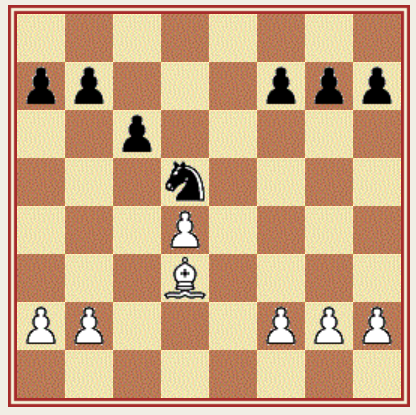
Commonly in isolated Queen-Pawn positions Black has a cramped position and White has chances for attacking the King.
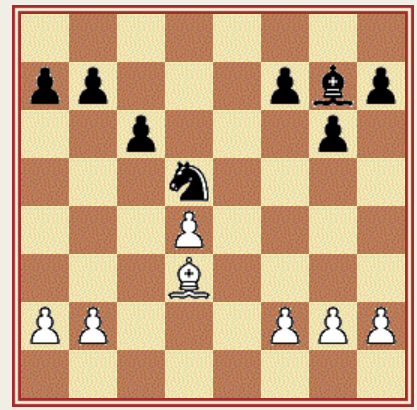
When an IQP faces a fianchetto, Black has two advantages over the standard formation: extra pressure on the isolated Pawn, and an extra-strong defensive phalanx on the light squares.
We can see this in Rubinstein’s line in the Tarrasch Defence. 1. d4 d5 2. c4 e6 3. Nc3 c5 4. cxd5 exd5 5. Nf3 Nc6 6. g3
If the opponent tries to block the long diagonal with Pawns, you can lever open the line again with your own Pawns.
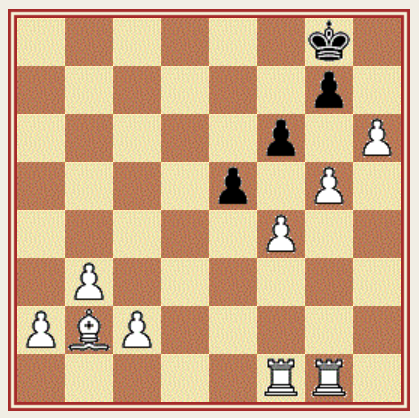
This is a simple plan which can be played by either side. I have played dozens of games like this.
A castled fianchetto position can be a very hard nut to crack – for example, h7 is difficult to get to. The Pawns cover the dark squares and the Bishop covers the light squares.
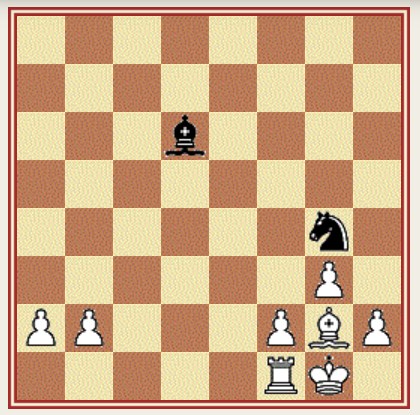
However, there is a recipe for attacking the castled King’s fianchetto position.
The weaknesses created by the g2-g3 move can be used by the opponent to get at the King: either by getting pieces into the holes (f3 and h3), or by using the h-Pawn to lever open the h-file, or some combination of these ideas. If the Bishop is removed, all that will be left is a network of holes.
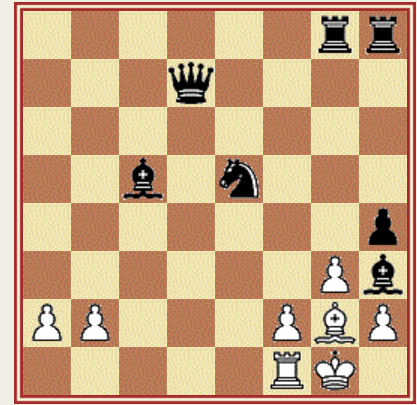
Black has correctly tried to get at the King through the h-file, particularly h3. If White plays Bxh3, the Black Queen will leap onto the doorstep of the White King. Another clever point is: Black has held the Bishop on h3 while advancing the h-Pawn, so White cannot meet …h7-h5 with h2-h4, blockading the h-file.
Here Black should play 1…hxg3 with the idea of 2. hxg3 Bxg2 3. Kxg2 Qh3+ mating.
This attacking scheme is not very quick to set up, but works like clockwork.
“I had won hundreds of five-minute games in similar positions and had it down to a science: lever open the h-file… sac, sac … and mate!” – Bobby Fischer
1.d4 Nf6 2.c4 g6 3.Nc3 Bg7 4.e4 d6 5.f3 0-0 6.Be3 b6 7.Qd2 c5 8.d5 Na6 9.0-0-0 Nc7 10.Bh6 a6 11.g4 b5 12.h4 bxc4 13.Bxc4 Nb5 14.Nge2 Nxc3 15.Nxc3 Bd7 16.h5 Qe8 17.hxg6 fxg6 18.Bxg7 Kxg7 19.Qh6+ Kh8 20.e5 dxe5 21.d6 exd6 22.Rxd6 Qe7 23.Rxf6 Rxf6 24.Nd5 Qg7 25.Nxf6 1-0
1.e4 d6 2.d4 Nf6 3.Nc3 g6 4.Be2 Bg7 5.h4 h6 6.Be3 0-0 7.h5 Kh7 8.hxg6+ fxg6 9.Qd2 Ng8 10.0-0-0 Nc6 11.Nf3 Qe8 12.Rh4 h5 13.g4 Nf6 14.gxh5 gxh5 15.Rdh1 Rh8 16.Nd5 Nxd5 17.Rxh5+ Kg8 18.Rxh8+ Bxh8 19.Rg1+ Bg7 20.exd5 Nd8 21.Bh6 1-0
[Cool Blue Cat says:]
I must emphasise the importance of this plan. There are several standard attacks which you must be able to play – this is one of them – and where it often seems the attack is easier to play than the defence. If you ever intend to play a fianchetto system, your opponents can trot out this plan almost without thinking, and if you get your counterattack wrong you will almost certainly be checkmated. In every opening where there is a King’s-side fianchetto you can expect to find a critical line where the opponent tried to checkmate down the h-file.
Having placed your Bishop on the long diagonal you need to be careful how you place your central Pawns. If they sit about in front of the Bishop they limit its reach until they move; if they become blocked they can choke it for a long while.
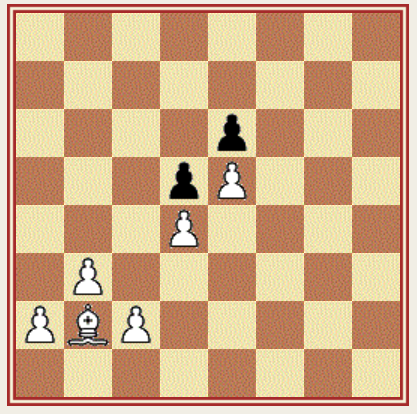
On the other hand, leaving your central Pawns unmoved leaves the centre free for your opponent! So fianchetto openings are difficult to handle, particularly in how you play in the centre. This is part of the attraction of fianchetto systems: they are difficult and so grandmasters can hope for their GM opponents to go astray at some point.
Fianchettoes turn up frequently in closed Queen’s-Pawn openings, and there is a Fianchetto Variation for White in each of the Indian Defences (semi-closed openings).
But the history of the fianchetto is particularly bound up with the history of the flank (hypermodern) openings.
Reti and his contemporaries rejoiced in the fianchetto, arguing that you did not need to occupy the centre as White as long as you controlled it.
The diagram is from Reti-Lasker, New York 1924. We can see that Reti has allowed Lasker to occupy the centre but Rtei has fianchettoed both Bishops to hit back at this, and has even backed up his Bb2 with a Queen on a1!
1.Nf3 d5 2.c4 c6 3.b3 Bf5 4.g3 Nf6 5.Bg2 Nbd7 6.Bb2 e6 7.O-O Bd6 8.d3 O-O 9.Nbd2 e5 10.cxd5 cxd5 11.Rc1 Qe7 12.Rc2 a5 13.a4 h6 14.Qa1 Rfe8 15.Rfc1
This is the outline of the Catalan Opening (1. d4, 2. c4, & g3). White combines a fianchetto with both a central stake on d4 and pressure on Black’s centre with c2-c4. Black can try to reinforce d5 with moves like …e6 and …c6, but this is rather passive.
Black can stop the fight for the d5 point by …d5xc4, but this gives White a central majority and opens up the long light diagonal.
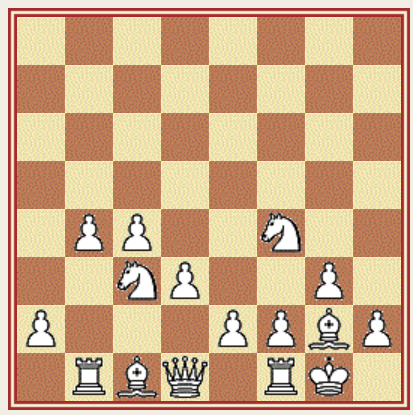
This is a development we often see in the English Opening (1.c4). White uses the pressure of the fianchettoed Bishop to strike at the Black Queen’s-side.
Having plonked a Pawn on c4, it makes sense to let the light-squared Bishop peer around the side of it; we see the same development by Black in many closed Sicilian systems and in the Benoni and Dutch Defences, where Black fianchettoes to avoid the Bishop’s Pawn. In each case the fianchettoed Bishop can used to support a Pawn advance.
The Reti-Barcza system beginning with 1. Nf3 reserves all White’s options.
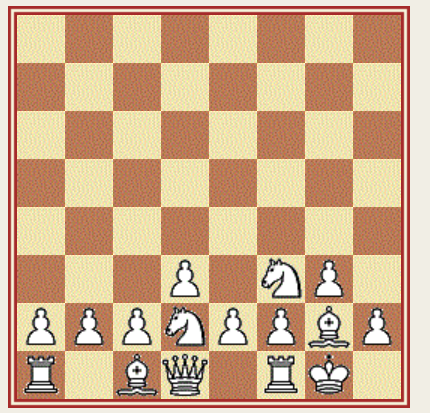
This is a rather slow, subtle opening system which is difficult for all players to handle.
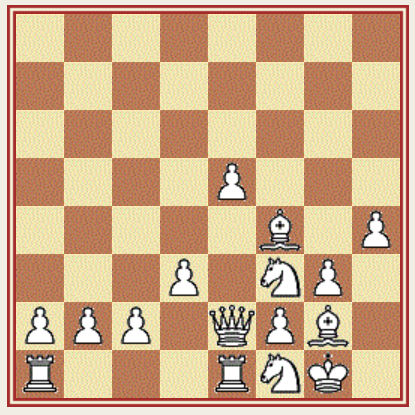
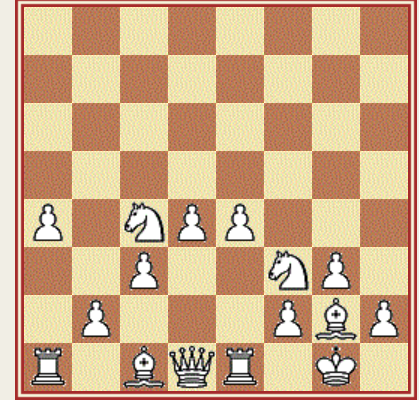
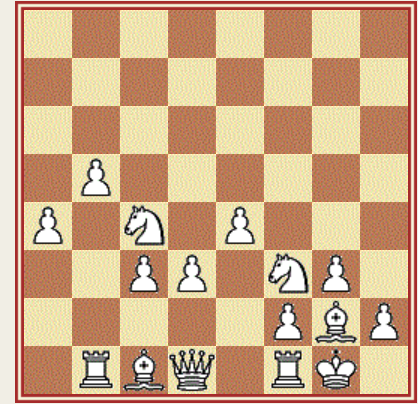
White can expand on the King’s-side, centre or Queen’s-side (west, south-west, south).
The King’s-side expansion is known as the King’s Indian Attack, and is often played by players of 1.e4 against half-open defences like the French. It’s another clockwork attack.
Expansion on the King’s-side
Expansion in the centre
Expansion on the Queen’s-side
The fianchetto can also be tried in e-Pawn games, particularly the half-open defences – we have mentioned the King’s Indian Attack against the French, and the Pirc and Modern Defences are based upon a Black King’s-side fianchetto. White has also tried a fianchetto of the King’s Bishop in many lines of the Sicilian, Open and Closed.
1.e4 c5 2.Nf3 d6 3.d4 cxd4 4.Nxd4 Nf6 5.Nc3 g6
In the open Sicilian, Black may post the dark-squared Bishop on the long diagonal without fear that it may be stifled by Pawns. The Dragon Bishop is a fearsome creature, particularly if White castles Queen’s-side hoping to carry out the clockwork attack against Black’s King’s-side. Black already has a half-open c-file against White’s own King!
The fianchetto is one of the basic building-blocks of chess thinking. Although it is associated with some of the most complex opening systems that are played by GMs, you are bound to come across it, and should at least know how to attack a castled King which is also hiding behind a fianchetto.
|
|
COOL TIP: MEDNIS says ‘good technique’ means:
|
Here’s another trawl of typical mistakes, this time from the first 20 moves of each game of the WECU Minor Championship at Exmouth in Easter 1999.
The games are appended with notes mostly from DR: “out of book” is Fritz’ comment, and Fritz has also blunderchecked the games. Let’s first have a look at which openings were played:
The most common openings were: (1) Hypermodern, (2) Indian, (3) Sicilian, (4) French, (5) Open games, and (6) Stonewall/Colle. I think, for Minor players, these are (1) dubious, (2) difficult, (3) tricky, (4) good, (5) good and (6) dubious. Which is to say, over half the openings played probably aren’t very suitable. I have more to say about this!
King in the middle 10 86 97 103 — Incomplete development 55 70 71 — Time-wasting 24 43 58 103 — Pawn moves 8 46 49 53 60 67 72 84 85 86 96 — Neglect centre 60
It is notable that the single most common fault is in making too many duff Pawn moves. Develop your pieces! (These problems are not unique to Minor players: Tony remarked that the young Nigel Short used to blow away 170-strength opposition by an approach heavily reliant on fast development.)
Inconsistent or muddled 16 19 22 23 31 37 59 62 64 84 — Routine moves 4 11 12 18 47 68 69 — Planless 17 33 35 45 55 101 102 — Passive 39 65 79 89 90 93 97
This is also a serious problem for Minor players – either planless or routine moves. This may be because the openings are not the best choices.
Bishops 21 34 41 93 — Rooks 9 25 28 32 49 51 82
Some of this is in the opening choices, again,
in closed position 50 85 96 — shifting attack with Pawn chains 27 102 96
I think this is both important and easy to cure. See below for specific comments on the Colle and Stonewall. I think these two openings are not greatly to be recommended for White, but when they result in easy victories because Black doesn’t have a clue, they will continue to be played!
Looseness 15 91 — Subtleties 16 78 — Out of book 5 42 47 48 56 — Notice what your opponent has just done 6 49 54 — Creating Holes 32 38 44 79 104 — Unjustified exchange 20 — Exposed Queen 52 73 — Exposed Bishop 71 99
See below for specific comments.
There are many types of mistake listed. I have given examples of all of them, and highlighted the most important.
The whole 20 moves of each game are given: worth playing over are games 12, 32, 42, 55, 64, 90, 96 and 104.
Apologies to all players to whom I have been ungenerous, but the point was to find mistakes!
King in the middle 10 86 97 103
White plays 11.d5!
Incomplete development 55 70 71
Black has got one hope here, being a piece down – that White will distract himself and not do what he should do – complete development, seize key squares, and swap off Black’s remaining pieces.
Time-wasting 24 43 58 103
White played 8.Qxb4, making an exchange Black was clearly seeking. Just develop, 8.Nc3
Pawn moves 8 46 49 53 60 67 72 84 85 86 96
8.h3 here would complete the set! The most common sort of unprovoked Pawn move was:
White’s next move, 4.c3, is unnecessary. Compare with this approach:
Pillsbury – Amateur, Toronto, 1899 1. d4 d5 2. Nf3 e6 3. e3 Nf6 4. Bd3 Nbd7 5. O-O b6 6. Nbd2 Bd6 7.e4
Colle played 4.c3 only in reply to …c5, or to stop …Nb4.
Neglect centre 60
7…a6 is a bit off the main arena.
Inconsistent or muddled 16 19 22 23 31 37 59 62 64 84
7.Nxd4 was played instead of 7.cxd4. What was c3 played for if not to recapture on d4?
Routine moves 4 11 12 18 47 68 69
White has risked nothing but gained nothing.
Planless 17 33 35 45 55 101 102
Black plays 8…b6, when …b5 is where I would expect to find counterplay
Passive 39 65 79 89 90 93 97
Neither side is doing much active. We did see a lot of e2-e3 in the QP openings.
Bishops 21 34 41 93
White would have quite a nice position if only he could get his c1 Bishop into play.
Rooks 9 25 28 32 49 51 82
Woah. Black has not asked himself the question, how am I going to develop my Rooks? Black must play …c5 or …e5 at some point, and having played …Nc6, …Bg4 is now desirable.
in closed position 12 50 85 96
Black is also playing routinely, but with no sense of a plan. White is following a plan, and Black allows him to execute it.
Fine gives the contrasting lines after 1. d4 d5 2. e3 Nf6 3. Bd3 c5 4. c3 Nc6 5. f4
Now play might go:
5… e6 (which doesn’t look quite right, as it blocks the Bc8) 6. Nf3 Bd6 7. O-O O-O 8. Ne5 Qc7 White’s threatening Ne5 needed some response; Black could also try to occupy e4 9. Nd2 Re8 10. g4 with a crushing attack.
This is the ideal Stonewall position.
Instead, we might try for Black 5… Bg4,
and play then might go 6. Nf3 e6 7. Nbd2 Bd6 8. h3 Bh5 9. b3 cxd4 10. cxd4 Rc8 when Black is comfortable
Because Black can see what White is up to, Black can arrange the development to counter it. White’s opening plan is not camouflaged enough to stop Black from seeing what is going on and opposing it, and the opening moves are not flexible enough to try any other plan. This is why you don’t see the Stonewall very often among stronger players.
shifting attack with Pawn chains 27 102 96
6…c4 is a typical mistake, relieving the pressure.
Looseness 15 91
Black is playing actively but is getting overstretched.11.g4! should have been played
Subtleties 16 78
In this RL Steinitz, 6. Bxc6 bxc6 is theory. But after 6. Nxc6, Bxc6 exchanges off another pair of pieces, useful if you have no centre and therefore no space.
Out of book 5 42 47 48 56
In this standard French position, neither 7.Bc2 nor its reply, 7…g6, are really to the point.
Notice what your opponent has just done 6 49 54
4…Nxe4 must not be allowed by White, and must be played by Black if possible.
Creating Holes 32 38 44 79 104
Black has already lost the plot, and now creates some dark-square weaknesses with 4…g6(?). This is why you should stay away from closed games, folks.
Unjustified exchange 20
15.Bxb6 is pretty random.
Exposed Queen 52 73
After 9…Qc7 10.Rc1! Black admitted his mistake with 10…Qd8.
Exposed Bishop 71 99
out of book: this Bishop proves more of a problem than anything – it should support the b4-b5 advance, but this never happens (planless, then, also)
(1) Burt D. F. – Stephens J. K. F. [A06]
WECU Minor (1), 1999
1.Nf3 d5 2.b3 Nc6 3.Bb2 Bf5 4.d3 f6 5.Nbd2 e5 6.e4 dxe4 7.dxe4 Bg6 8.a3 Bd6 9.Bc4 Nge7 10.Qe2 Qd7 11.Nh4 0-0-0 12.Nxg6 Nxg6 13.g3 a6 14.0-0-0 Rhf8 15.Bd5 Nge7 16.Nc4 Nxd5 17.Rxd5 Qe6 18.Nxd6+ Rxd6 19.Rhd1 Rfd8 20.Rxd6 Rxd6 …1/2-1/2
(2) Chamberlain D. – Clarke J. W. [B14]
WECU Minor (1), 1999
1.d4 d5 2.c4 e6 3.Nc3 c5 4.e3 cxd4 5.exd4 Nf6 6.Bg5 Be7 7.Nf3 h6 out of book 8.Bh4 Nc6 9.Bd3 a6 10.0-0 0-0 11.Re1 Nb4 12.Bb1 [-0.53 Fritz 5.00: 12.cxd5 g5 13.Bg3 Nxd3 14.Qxd3 Nxd5 15.Rac1] 12…dxc4 13.Ne5 b5 14.a3 Nbd5 15.Qc2 Nxc3 16.bxc3 g5 17.Ng4 Ne4 [5.19 Fritz 5.00: 17…Re8 18.Nxf6+ Bxf6 19.Qh7+ Kf8 20.Qxh6+ Bg7 21.Qxg5] 18.Qxe4 f5 19.Qxa8 fxg4 20.Qe4 Rf7…1-0
(3) Waters R. G. – Turner R. D. [D04]
WECU Minor (1), 1999
1.d4 d5 2.Nf3 Nf6 3.e3 Bf5 4.Be2 e6 5.0-0 h6 6.Ne5 Nbd7 7.f4 Nxe5 8.fxe5 Ne4 9.Nd2 Be7 10.Nxe4 Bxe4 11.Bd2 0-0 12.Bf3 Bxf3 13.Rxf3 c5 14.Qe2 c4 15.e4 dxe4 16.Qxe4 Qd7 17.Qg4 f5 18.exf6 Rxf6 19.Rxf6 Bxf6 20.c3 g5 …0-1
(4) Ariss J. – Gardiner C. J. [B30]
WECU Minor (1), 1999
1.e4 c5 2.Nc3 Nc6 3.Bc4 e6 out of book, but a perfectly reasonable treatment 4.Nf3 Be7 I might have been more inclined to play for …b5 or …d5 rather than merely developing 5.0-0 d6 6.a3 Nf6 7.d3 a6 8.h3 Often a sign that a player has lost the plot; this makes sense if White wants to play Bc1-e3. 8…b5 9.Ba2 Bb7 10.Re1 0-0 11.Bf4 b4 12.axb4 cxb4 13.Ne2 Nd7 Where’s he off to? 14.Qd2 a5 15.Bb3 e5 16.Bg5 Bxg5 17.Nxg5 h6 18.Nf3 Ne7 19.Ng3 Nc5 20.Bc4 Ba6 …1-0
(5) Foster P. – Wingrove S. [C58]
WECU Minor (1), 1999
1.e4 e5 2.Nf3 Nc6 3.Bc4 Nf6 4.Ng5 d5 5.exd5 Na5 6.Bb5+ c6 7.dxc6 Nxc6 out of book; not rubbish, but loses the initiative [7…bxc6 8.Be2 (8.Qf3) 8…h6 9.Nf3 e4 10.Ne5 Bd6] 8.Qf3 Bd7 [2.03 Fritz 5.00: 8…Qc7 9.Nc3 Bc5 10.Nge4 Nxe4 11.Nxe4 Bd4] 9.Qb3 [1.16 Fritz 5.00: 9.Bc4 Bb4 10.Bxf7+ Ke7 11.Qb3 Rc8 12.Ne6] 9…Qe7 10.Bc4 Nd5 [2.44 Fritz 5.00: 10…Nd8 11.0-0 Rc8 12.Nc3] 11.Bxd5 Qxg5 12.Bxf7+ Ke7 [12…Kd8 is unattractive but may get counterplay] 13.Bd5 [1.28 Fritz 5.00: 13.0-0 Rc8 14.Na3 Nd4 15.Qxb7 Kd8 16.Qxa7 Bxa3 17.Qxa3 Rxc2] 13…Nd4 14.Qxb7 [-0.38 Fritz 5.00: 14.Qa3+ Kf6 15.Qd3 Bf5 16.Be4 Qxg2 17.Bxg2 Bxd3 18.Na3 Bxa3] 14…Rc8 [2.28 Fritz 5.00: 14…Nxc2+ 15.Kd1 Rc8 16.Qxc8 Bxc8 17.Kxc2 Qf5+ 18.d3 Ba6 19.Nc3] 15.Na3 Ke8 [3.28 Fritz 5.00: 15…Rxc2 16.Qxa7 Ke8 17.Rb1 Bxa3 18.Qxa3 Rf8 19.Qe3 Qxe3+ 20.dxe3] 16.c3 Bxa3 17.cxd4 Be7 18.0-0 Rf8 [3.13 Fritz 5.00: 18…exd4 19.Re1 Kd8 20.d3 Qf5 21.Bd2 Bd6 22.Rac1 Bc7 23.Be4] 19.d3 Qf5 20.Be4 Qf6 …1/2-1/2
(6) Freke R. B. – Holmes P. [D02]
WECU Minor (1), 1999
1.d4 d5 2.Nf3 Bf5 3.e3 c6 4.b3 [4.c4 is the only way I can see to create trouble] 4…e6 5.Bd3 Bxd3 6.Qxd3 Nf6 7.Nbd2 Be7 8.0-0 Nbd7 9.e4 dxe4 10.Nxe4 Nxe4 11.Qxe4 Nf6 12.Qe2
I think this sort of position is the reason Minor players ought to steer clear of 1.d4 unless they have a definite plan of campaign. 12…0-0 13.Bg5 h6 14.Bh4 Nd7 15.Bxe7 Qxe7 16.Rad1 Rfe8 17.Rd3 c5 18.c3 cxd4 19.cxd4 Rad8 [19…Rac8] 20.Re3 …0-1
(7) Willis A. R. – Webber S. J. [A00]
WECU Minor (1), 1999
unintelligible …1-0
(8) Aldwin B. – Coates A. E. [A03]
WECU Minor (1), 1999
1.f4 d5 2.Nf3 g6 3.e3 Bg7 4.Be2 c6 5.0-0 Nf6 6.d3 0-0 7.c3 Too many Pawn moves [7.Qe1; 7.Nc3] 7…Nbd7 8.Nbd2 Qb6 9.d4 Ne8 Giving White unnecessary leeway. [9…c5; 9…Re8] 10.e4 dxe4 11.Nxe4 Nef6 12.Bd3 Nxe4 13.Bxe4 Nf6 14.Bc2 Bg4 15.Qd3 Bxf3 Not the best exchange. [15…Bf5] 16.Rxf3 e6 17.h3 Rad8 18.Be3 Nd5 19.b4 If White did not mind the exchange, then h3 may have been unnecessary. 19…Nxe3 20.Rxe3 Qc7…0-1
(9) Collier M. J. – Cuggy M. J. [D07]
WECU Minor (1), 1999
1.d4 d5 2.c4 e6 3.Nc3 Nf6 4.Nf3 Nc6 Questionable. How is Black planning to make use of his Rooks? 5.e3 Bd6 out of book 6.Be2 dxc4 7.Bxc4 a6 8.Bd2 b5 9.Be2 Bb7 10.Rc1 0-0 11.0-0 Ne7 That Knight was indeed misplaced for Black’s opening scheme. 12.Ne1 Nf5 13.Bf3 c6 14.Ne4? [-1.00 Fritz 5.00: 14.Nd3 Qc7 15.h3 Rad8 16.Ne4 Nxe4 17.Bxe4] 14…Nh4? [0.59 Fritz 5.00: 14…Bxh2+ 15.Kxh2 Nxe4 16.Qc2] 15.Nxf6+ gxf6 Odd-looking. Had Black seen the follow-up? [1.44 Fritz 5.00: 15…Qxf6 16.Bxc6 Bxc6 17.Rxc6 Rfd8 18.Qh5 Nf5] 16.Bxc6 Bxh2+ Clever! 17.Kh1 [0.50 Fritz 5.00: 17.Kxh2 Qd6+ 18.Kh3 Bxc6 19.Qc2 Bb7 20.Kxh4 Qh2+ 21.Kg4 Bxg2] 17…Bxc6 18.Rxc6 Qd5 Not so clever, but I enjoyed this game – good spirit after the stodgy beginning. [1.59 Fritz 5.00: 18…Qd7 19.Rc2 Bc7 20.e4 Rfc8 21.Qh5] 19.Qg4+ [0.59 Fritz 5.00: 19.Rc5 Qxa2 20.Kxh2 Qxb2 21.Nd3 Qa3 22.Qg4+ Ng6] 19…Qg5 [2.88 Fritz 5.00: 19…Ng6 20.Qf3 Qxf3 21.Nxf3 Ne7 22.Rcc1 Bd6] 20.Qxg5+ fxg5…1-0
(10) Young A. – Atkins K. [B02]
WECU Minor (1), 1999
1.e4 d5 2.exd5 Nf6 3.Nc3 Nxd5 4.Nxd5 Looks wrong to me. 4…Qxd5 5.d4 Nc6 6.c3 out of book 6…e5 7.Qe2 Asking for trouble! 7…Bf5 8.dxe5 0-0-0 9.Bg5 [-0.88 Fritz 5.00: 9.f4 Be7 10.Nf3 Bg4 11.Bd2 Bh4+ 12.Kd1 Rhe8 13.c4 Bxf3] 9…Nb4 10.f3 [-4.16 Fritz 5.00: 10.Rd1 Nc2+ 11.Qxc2 Bxc2 12.Rxd5 Rxd5 13.Nf3 Rd1+ 14.Ke2 Bc5] 10…Nd3+ 11.Kd2 Nf4+ 0-1 (11 moves!)
(11) Manton P. – Whitfield J. H. [D04]
WECU Minor (1), 1999
1.d4 d5 2.Nf3 Bg4 3.e3 e6 4.Be2 Nf6 5.h3 Bh5 6.0-0 Bd6 7.b3 0-0 8.Bb2 Nbd7 9.Nbd2 c5 10.c4 White’s position is merely solid. 10…cxd4 11.Nxd4 Bxe2 12.Qxe2 dxc4 13.Nxc4 White now looks better! 13…Bc7 14.Rfd1 e5 Not obvious but losing a Pawn. 15.Nf3 Qc8 The trouble is that after Qe7/Qe8 White can pick up the Rook with Ba3. 16.Ncxe5 Nxe5 17.Nxe5 Qe6 18.Nf3 Rfd8 19.Rac1 Rxd1+ 20.Rxd1 …1-0
(12) Soper E. – Eastwick-Field S. R. [D00]
WECU Minor (1), 1999
1.d4 e6 2.e3 out of book 2…Nf6 3.Bd3 d5 4.c3 Routine. Nb1-d2 and f2-f4 were more direct. 4…Be7 5.Nd2 Nbd7 6.f4 0-0 7.Nh3 c5 8.0-0 b6 Black is also playing routinely, but with no sense of a plan. White is following a plan, and Black allows him to execute it. 9.Qf3 Bb7 10.g4 Rc8 11.Nf2 cxd4 12.exd4 a6 13.g5 Ne8 14.Qh3 g6 15.Ng4 f5 16.gxf6 Nexf6 [0.84 Fritz 5.00: 16…Bxf6 17.Nxf6+ Qxf6 18.Qh6 Nd6 19.Re1 Nf5] 17.Nh6+ [-0.16 Fritz 5.00: 17.Ne5 Qe8 18.Qxe6+ Kg7 19.Re1 Nc5 20.Qxb6 Nxd3 21.Nxd3] 17…Kg7 18.Nf3 Ng8 [0.59 Fritz 5.00: 18…Ne4 19.Bxe4 dxe4 20.Ng5 Bxg5 21.fxg5 Rxf1+ 22.Qxf1 Qe7] 19.Nxg8 Rxg8 20.Qxe6 Winning. 20…b5 …1-0
(13) Chapman T. J. – Spink D. K. [B22]
WECU Minor (1), 1999
1.e4 c5 2.c3 d6 3.d4 Nc6 4.Be3 Bd7 5.Nf3 Nf6 6.Bd3 e6 7.h3 Be7 8.e5 dxe5 9.dxe5 Nd5 10.Bd2 If this is the best reply then e4-e5 was a mistake. 10…Qc7 11.Qe2 a6 12.0-0 b5 13.Re1 c4 14.Bc2 0-0 15.Qe4 g6 16.Bh6 Rfe8 17.Ng5 Bxg5 18.Bxg5 Nde7 19.Bf6 Nf5 20.g4 Ng7 …1-0
(14) Patching G. R. – Buckley S. B. [A56]
WECU Minor (1), 1999
1.d4 Nf6 2.c4 c5 3.e3 d5 4.Nc3 Nc6 5.Nf3 Bg4 out of book, but reasonable. 6.Be2 e6 7.0-0 cxd4 8.exd4 Qc7 9.Be3 Bd6 Black may lose both Bishops now. [0.31 Fritz 5.00: 9…Bxf3 10.Bxf3 dxc4 11.Qa4 Bd6 12.g3 Rc8 13.Bxc6+ Qxc6 14.Qxa7] 10.Nb5 Qb8 11.Nxd6+ Qxd6 12.Rc1 0-0 13.c5 Qc7 14.Qd2 Ne4 15.Qc2 Bf5 16.Bd3 [-0.91 Fritz 5.00: 16.Qb3 Rac8 17.Rce1 Na5 18.Qb4 Nc6] 16…Nb4 The biter bit. 17.Qb1 Nxd3 18.Qxd3 Ng3 cute 19.Qd2 Nxf1 20.Rxf1 Rfc8 …0-1
(15) Chapman T. J. – Chamberlain D. [B04]
WECU Minor (2), 1999
1.e4 Nf6 2.e5 Nd5 3.d4 d6 4.Nf3 dxe5 5.Nxe5 Bf5 out of book; looks too straightforward. 6.c4 Nb4 Black will become over-stretched – there is no centre to hold his pieces aloft. 7.Qa4+ N8c6 8.Na3 Missing an opportunity. [-0.47 Fritz 5.00: 8.Nxc6 Nxc6 9.d5 Bd7 10.dxc6 Bxc6 11.Qa5 Qd6 12.Nc3 e5] 8…e6 9.Be3 Be7 10.Rd1 0-0 11.Nxc6 Nxc6 12.Bd3 Bxd3 13.Rxd3 Ne5 14.Rb3 Ng4 15.Rxb7 Nxe3 16.fxe3 Bg5 [1.06 Fritz 5.00: 16…Bxa3 17.bxa3 Qh4+ 18.Kf1 Qe4 19.Qb3 c5 20.dxc5 Rac8 21.Kf2] 17.Nc2 Qf6 18.Qc6 Qf5 19.Qa4 [-2.31 Fritz 5.00: 19.Kd2 Qf2+ 20.Kd3 e5 21.Re1 exd4 22.Re2 Qg1 23.Nxd4 Qb1+] 19…Qe4 20.Rb5 Qxg2 …0-1
(16) Turner R. D. – Collier M. J. [B38]
WECU Minor (2), 1999
1.e4 c5 2.Nf3 d6 3.d4 cxd4 4.Nxd4 g6 5.c4 Bg7 6.Be3 Nf6 7.f3 Bd7 Inconsequent. 8.Nc3 Nc6 9.Be2 a6 10.0-0 0-0 11.Rc1 Rc8 12.Qd2 Nxd4 13.Bxd4 Ne8 14.Bxg7 [14.Be3 is a subtlety of this type of position] 14…Kxg7 15.Kh1 Nf6 16.Rfd1 Qb6 17.b3 Rc7 18.Qe1 Rfc8 19.f4 Qe3 20.Qd2 Qxd2 …1-0
(17) Coates A. E. – Manton P. [B24]
WECU Minor (2), 1999
1.e4 c5 2.Nc3 Nc6 3.g3 g6 4.Bg2 Bg7 5.d3 e6 6.Be3 Nge7 7.Qd2 Chicken. [7.Bxc5 Bxc3+ 8.bxc3 Qa5 9.Be3 Qxc3+ 10.Bd2 Qc5] 7…Nd4 8.Nd1 b6 [8…b5 is where the counterplay will come from.] 9.c3 Ndc6 10.Ne2 Bb7 11.0-0 Ne5 12.h3 d5 13.f4 Nd7 14.e5 Qc7 15.d4 c4 16.Nf2 White has a reasonable attacking position but Black has cleverly avoided providing a target. 16…h5 17.Kh2 Nf5 18.Bf3 0-0-0 19.Kg2 Rh7 20.Rh1 Rdh8 …0-1
(18) Atkins K. – Ariss J. [C01]
WECU Minor (2), 1999
1.e4 e6 2.d4 d5 3.exd5 exd5 4.c4 Nf6 5.Nc3 Be7 6.Nf3 0-0 7.cxd5 Nxd5 8.Bd3 Bg4 out of book 9.h3 Bh5 10.0-0 Nc6 Black is being routine. 11.Bxh7+ Kh8 [11…Kxh7 12.Ng5+ Kg6 (12…Kg8 13.Qxh5) 13.Qd3+ f5 14.Ne6] 12.Bc2 Bxf3 13.Qxf3 Nf6 14.Be3 Nxd4 15.Bxd4 Qxd4 16.Rad1 Qc5 17.Rd5 Qc6 18.Qd3 g6 19.Qd4 Kg8 20.Re5 Rfd8 21.h4 …1-0
(19) Holmes P. – Soper E. [B21]
WECU Minor (2), 1999
1.e4 c5 2.f4 d6 3.Bc4 Nc6 4.c3 [4.Nc3] 4…e6 5.Nf3 Qc7 6.d4 cxd4 7.Nxd4 Inconsistent. [7.cxd4 at least gets the big centre.] 7…Bd7 8.Nf3 Nf6 9.Qc2 a6 10.h3 Rc8 11.Bd3 Nb4 cute 12.Qe2 Nxd3+ 13.Qxd3 Be7 14.Be3 d5 15.e5 Ne4 16.Nbd2 Bc6 17.Qc2 b5 18.Nxe4 dxe4 19.Nd4 Bd5 20.Qd2 0-0…1-0
(20) Buckley S. B. – Willis A. R. [B84]
WECU Minor (2), 1999
1.e4 c5 2.Nf3 d6 3.d4 cxd4 4.Nxd4 Nf6 5.Nc3 a6 6.Be3 e6 7.f4 Be7 8.Be2 Nbd7 out of book but reasonable 9.Qd2 b5 careless, but no great harm comes of it [1.00 Fritz 5.00: 9…Nc5 10.Bf3 e5 11.Nde2 exf4 12.Nxf4 0-0] 10.Nc6 Qc7 11.Nxe7 Kxe7 12.Bf3 Bb7 13.a3 Rac8 14.0-0 Nb6 15.Bxb6 unjustified 15…Qxb6+ 16.Kh1 Rhd8 17.Rae1 Nd7 18.f5 h6 19.Bh5 Ne5 20.Qf4 Rf8 …0-1
(21) Wingrove S. – Burt D. F. [A52]
WECU Minor (2), 1999
1.d4 Nf6 2.c4 e5 3.dxe5 Ng4 4.e4 Nxe5 5.Bf4 Nbc6 6.a3 Be7 7.Bxe5 can’t be right 7…Nxe5 8.Nf3 Bf6 9.Nxe5 Bxe5 10.Nc3 Bxc3+ 11.bxc3 Qf6 12.Qd4 Qxd4 13.cxd4 d6 14.Be2 0-0 15.0-0 f5 16.f3 Bd7 17.Rab1 b6 18.Bd3 Rae8 19.h3 c5 20.d5 White’s Bishop, while not bad, is going off. 20…fxe4 …1/2-1/2
(22) Stephens J. K. F. – Primett A. D. [C01]
WECU Minor (2), 1999
1.e4 e6 2.Nc3 d5 3.exd5 exd5 4.d4 Nf6 5.Bg5 Be6 6.g3 Random. 6…c6 7.a3 Bd6 8.Nf3 Nbd7 9.Qe2 Causes more problems for White than Black. 9…0-0 10.Bg2 h6 11.Bxf6 Nxf6 12.0-0 Re8 13.Qd2 Bf5 14.Nh4 Bh7 15.Rae1 Qd7 16.b4 b5 17.Bf3 a5 18.Rxe8+ Rxe8 19.Na2 axb4 20.axb4 Ra8 …0-1
(23) Mansfield A. C. – Foster P. [D05]
WECU Minor (2), 1999
1.d4 Nf6 2.Nf3 b6 3.e3 Bb7 4.Nbd2 e6 5.Bd3 c5 6.c3 d5 Inconsistent? 7.0-0 out of book 7…Nbd7 8.Qe2 Qc7 9.dxc5 bxc5 10.e4 0-0-0 Very risky. 11.Ba6 Bd6 12.Bxb7+ Qxb7 Overlooks a cheapo. [1.84 Fritz 5.00: 12…Kxb7 13.b4 c4 14.Rd1 Ne5 15.exd5 Nxd5 16.Nxe5 Bxe5] 13.e5 Nxe5 14.Nxe5 Ne4 15.Nxf7 Returns the favour. [1.03 Fritz 5.00: 15.Nxe4 Bxe5 16.f4 dxe4 17.fxe5 h6] 15…Qxf7 16.Nxe4 dxe4 17.Qxe4 Kb8 18.a4 Qh5 19.Bf4 g5 [3.78 Fritz 5.00: 19…e5 20.Bg3 h6 21.b4 cxb4] 20.Bxd6+ Rxd6 21.Qe5 Ka8…1/2-1/2
(24) Whitfield J. H. – Spooner K. C. [D11]
WECU Minor (2), 1999
1.d4 c6 2.Nf3 d5 3.e3 Bf5 4.c4 dxc4 out of book 5.Bxc4 e6 6.Qb3 Qe7 Last square I would have chosen! But I hadn’t seen Black’s idea. 7.0-0 Qb4 8.Qxb4 Time-wasting. 8…Bxb4 9.Bd2 Bxd2 10.Nbxd2 Nd7 11.e4 Bg6 12.Rfe1 Ngf6 13.d5 Good – despite the endgame character of the position, Black is drifting into an attack. 13…cxd5 [1.13 Fritz 5.00: 13…e5 14.Rac1 0-0 15.Nh4 Rac8 16.Nxg6 hxg6 17.Rcd1 cxd5] 14.exd5 b5 15.Bxb5 Nxd5 16.Bc6 0-0-0 17.Bxd7+ [0.19 Fritz 5.00: 17.Rac1 Kb8 18.Bxd5 exd5 19.Nd4 Rc8 20.Nc6+ Kb7 21.Nb3 Rhe8] 17…Rxd7 18.Ne5 Rc7 19.Nxg6 hxg6 20.Rac1 …1/2-1/2
(25) Gardiner C. J. – Freke R. B. [D02]
WECU Minor (2), 1999
1.d4 d5 2.Nf3 Nf6 3.e3 Nc6 out of book – Black may develop a Rook problem. 4.c3 e6 5.Bd3 Bd6 6.Nbd2 0-0 7.0-0 Re8 8.e4 dxe4 9.Nxe4 e5 Black has solved his Rook problem. 10.Nxf6+ [10.Nxd6] 10…Qxf6 [2.25 Fritz 5.00: 10…gxf6 11.dxe5 Nxe5 12.Nxe5 fxe5 13.Qh5 e4 14.Bc4 Qf6 15.Re1] 11.Bg5 Qe6 12.dxe5 [-0.06 Fritz 5.00: 12.d5 Qd7 13.dxc6 Qxc6 14.Qe2 a6 15.Be4 Qb6 16.Rad1 Bg4] 12…Nxe5 13.Nd4 Qd5 14.Bf5 [14.c4 Nxc4] 14…Bxf5 15.Nxf5 Qe6 16.Nxd6 cxd6 17.b3 f6 18.Be3 b6 19.c4 Qd7 20.Qd5+ Kh8 …1-0
(26) Cuggy M. J. – Waters R. G. [A45]
WECU Minor (2), 1999
1.d4 Nf6 2.e3 d6 3.Bd3 e5 4.dxe5 dxe5 5.e4 Be7 6.Nf3 Bg4 Egging White to gain the two Bishops [6…Nc6] 7.Nc3 0-0 8.h3 Bxf3 9.Qxf3 Nc6 10.Be3 Bb4 Waste of time? No harm done and it does give Black something to play with. 11.0-0 Bxc3 12.bxc3 Qd6 13.a4 Nd7 14.Qg3 Nc5 15.Rfd1 Nxd3 16.Rxd3 [16.cxd3 is much better] 16…Qe6 17.Rd5 f5 18.Bc5 Rf7 19.Qd3 fxe4 20.Qxe4 b6 …1-0
(27) Eastwick-Field S. R. – Aldwin B. [D02]
WECU Minor (2), 1999
1.d4 d5 2.Bf4 Nf6 3.e3 e6 4.Nf3 c5 5.c3 Be7 6.Bd3 out of book, but entirely reasonable 6…c4 Wrong: releases tension in the centre. White can build for e3-e4 in comfort, or go for a King’s-side attack without facing counterplay. 7.Bc2 Nc6 8.Nbd2 0-0 9.h3 Re8 10.0-0 Bf8 11.Ne5 g6 12.Qf3 Nxe5 13.Bxe5 Bg7 14.Rfe1 a5 15.e4 Rb8?? [4.84 Fritz 5.00: 15…b5 16.Bxf6 Qxf6 17.Qxf6 Bxf6 18.exd5 e5 19.d6] 16.Bxb8 Nd7 17.Bg3 e5 18.dxe5 Nxe5 19.Bxe5 Rxe5 20.exd5 Rxd5 21.Nf1 b5…1-0
(28) Spink D. K. – Young A. [D00]
WECU Minor (2), 1999
1.d4 Nf6 2.e3 out of book 2…d5 3.Bd3 Nc6 4.c3 Bg4 [4…e5 equalises easily, and Black has to play something like this at some time] 5.f3 Bd7 6.Ne2 e5 Better! 7.0-0 Bd6 8.e4 0-0 9.Bg5 dxe4 10.fxe4 exd4 11.Nxd4 Bxh2+ [1.31 Fritz 5.00: 11…Bc5 12.Bxf6 gxf6 13.Bc4 Be6 14.Bd5 Bxd5 15.Qg4+ Kh8 16.exd5] 12.Kh1 [-1.44 Fritz 5.00: 12.Kxh2 Ng4+ 13.Qxg4 Bxg4 14.Bxd8 Raxd8 15.Nxc6 Rxd3 16.Nxa7 Rfd8] 12…Be5 13.Nf5 Bxf5 14.exf5 Qd5 15.Bxf6 Bxf6 16.Qf3 Qxf3 17.Rxf3 Ne5 18.Rh3 Nxd3 19.Rxd3 Rad8 20.Rh3 [-4.88 Fritz 5.00: 20.Rxd8 Rxd8 21.Na3 h5 22.Re1 Kf8 23.Nc4 b5 24.Na3 Rd2] 20…Rd1+…0-1
(29) Clarke J. W. – Patching G. R. [C25]
WECU Minor (2), 1999
1.e4 e5 2.Bc4 Bc5 3.Nc3 Ne7 out of book 4.d3 0-0 5.Nf3 [5.f4] 5…d6 6.Bg5 Nd7 All looks too passive. [1.34 Fritz 5.00: 6…h6 7.Bxe7 Qxe7 8.Nd5] 7.Nd5 f6?? Hideous. [2.41 Fritz 5.00: 7…Re8 8.0-0 c6 9.Nxe7+ Rxe7 10.Bxe7 Qxe7] 8.Nxe7+ [3.31 Fritz 5.00: 8.Nxc7+ Kh8 9.Nxa8 fxg5 10.d4 exd4 11.Nxd4 Ne5] 8…Kh8 9.Nf5 [-0.13 Fritz 5.00: 9.Nxc8 fxg5 10.Nxd6 Bxd6 11.0-0 c6] 9…fxg5 10.h4 g4 [0.41 Fritz 5.00: 10…Nb6 11.hxg5 d5 12.Bb3 Bxf5 13.exf5 Rxf5] 11.Ng5 Nb6 12.Nf7+ Rxf7 13.Bxf7 Qf8 14.d4 exd4 15.Bh5 Bxf5 [0.47 Fritz 5.00: 15…g6 16.Bxg6 hxg6 17.Nxd4 Nc4 18.c3 Nxb2 19.Qe2] 16.Bxg4 [-2.81 Fritz 5.00: 16.exf5 g3 17.fxg3 Qxf5 18.Qe2 Bb4+ 19.Kd1 Nc4 20.Qxc4 Qxh5+] 16…Bxg4 17.Qxg4 d3 18.0-0-0 [-3.03 Fritz 5.00: 18.0-0 Qf6 19.cxd3 Qxb2 20.Qf4 Kg8 21.Qc1 Qd4 22.Qc2 Re8] 18…dxc2 19.Rd2 Nc4 20.Rxc2 …1-0
(30) Chamberlain D. – Atkins K. [A57]
WECU Minor (3), 1999
1.d4 Nf6 2.c4 c5 3.d5 b5 4.e3 out of book 4…g6 5.b3 Bg7 6.Bb2 0-0 7.Nf3 d6 8.Bd3 bxc4 9.bxc4 Nbd7 10.0-0 Rb8 11.Qc2 [-1.47 Fritz 5.00: 11.Bc3 e6 12.e4 Re8 13.Qc2 exd5 14.exd5 Nb6 15.Nbd2 Bg4] 11…Qb6 [0.03 Fritz 5.00: 11…Rxb2 12.Qxb2 Nxd5 13.Qa3 Nxe3 14.fxe3 Bxa1 15.Qxa7 Ne5 16.Nxe5] 12.Bc3 Nh5 13.Bxg7 Nxg7 14.Nbd2 Qb2 15.Qxb2 Rxb2 16.Rfb1 Rb6 17.a4 Ba6 18.Rxb6 Nxb6 19.a5 [-0.69 Fritz 5.00: 19.Ra3 Rb8 20.Rb3 h6 21.a5 Nd7 22.Rxb8+ Nxb8 23.Ne4 Nd7] 19…Nd7 [0.16 Fritz 5.00: 19…Nxd5 20.Bxg6 Nxe3 21.Bxf7+ Kxf7 22.fxe3 Rb8 23.Kf2 Rb2 24.Ng5+] 20.Rb1 Ne8…1-0
(31) Willis A. R. – Turner R. D. [D66]
WECU Minor (3), 1999
1.d4 d5 2.c4 c6 3.Nc3 Nf6 4.Nf3 e6 5.Bg5 Be7 Inconsistent with the tricky move order, but not a bad move. 6.e3 0-0 7.Rc1 Nbd7 8.Bd3 dxc4 9.Bxc4 b5 10.Bd3 a6 11.0-0 h6 12.Bh4 [-0.19 Fritz 5.00: 12.Bxf6 Nxf6 13.Ne4 Qd5 14.Qc2 Qxa2 15.Qxc6 Qd5 16.Nxf6+ Bxf6] 12…c5 13.b3 out of book 13…cxd4 14.Nxd4 Bb7 15.f3 Rc8 16.e4 Ne5 17.Bb1 Ng6 18.Bf2 Bb4 19.Nce2 Rxc1 20.Qxc1 Qc8…1/2-1/2
(32) Manton P. – Holmes P. [D02]
WECU Minor (3), 1999
1.d4 d5 2.Nf3 Nc6 3.e3 e6 Woah. Black has not asked himself the question, how am I going to develop my Rooks? Black must play …c5 or …e5 at some point, and having played …Nc6, …Bg4 is now desirable. 4.c3 Bd7 More lost plot. …Bd6 would at least support …e5 5.Bd3 g6 And now some dark-square weaknesses. This is why you should stay away from closed games, folks. 6.Nbd2 Bg7 7.e4 dxe4 8.Nxe4 Nge7 9.Bg5 0-0 10.Bf6 Bxf6 11.Nxf6+ Kg7 12.Ng4 h5 13.Ne3 Nd5 14.Qd2 Nxe3 15.Qxe3 Qf6 16.Ne5 Nxe5 17.dxe5 Qe7 18.0-0-0 Bc6 19.Be4 Bxe4 20.Qxe4 b6 21.Kd2…1/2-1/2
(33) Primett A. D. – Coates A. E. [A11]
WECU Minor (3), 1999
1.c4 c6 2.g3 d5 3.cxd5 cxd5 4.Bg2 Nf6 5.Nf3 Bf5 6.d3 out of book 6…Nbd7 7.Qa4 Not suspicious in itself, but forms part of no plan. 7…e6 8.Nc3 Be7 9.Bf4 a6 10.0-0 b5 11.Qd1 0-0 12.Rc1 Rc8 13.Bd2 h6 14.Nd4 Bg4 15.h3 Bh5 16.Qe1 Bc5 17.Nb3 Ba7 18.e4 [-1.25 Fritz 5.00: 18.Be3 Bb8 19.a3 Bd6 20.Bd4 e5] 18…d4 [-0.28 Fritz 5.00: 18…Ne5 ] 19.Ne2 Rxc1 20.Nbxc1 e5…1-0
(34) Burt D. F. – Buckley S. B. [A06]
WECU Minor (3), 1999
1.Nf3 c5 2.b3 d5 3.Bb2 Nc6 4.e3 Bg4 5.Be2 Bxf3 6.Bxf3 e5 7.d3 g6 8.0-0 Bg7 9.e4 d4 Making all the Bishops bad! 10.Nd2 Nge7 11.g3 0-0 12.Bg2 Qd7 13.f4 Qc7 14.f5 f6 15.g4 Bh6 16.Nf3 Be3+ 17.Kh1 b5 18.Bc1 Bf4 19.Bxf4 exf4 20.fxg6 hxg6 …1-0
(35) Webber S. J. – Gardiner C. J. [B22]
WECU Minor (3), 1999
1.e4 c5 2.c3 d5 3.f3 out of book 3…Nc6 4.Bb5 a6 5.Bxc6+ bxc6 6.d4 e6 7.Ne2 All looks a bit random – nothing bad, just incoherent. 7…dxe4 8.fxe4 But after this exchange Black’s Pawns look quite loose. 8…Qh4+ 9.Ng3 Nf6 10.0-0 Ng4 11.h3 Qxg3 12.Qxg4 [-0.72 Fritz 5.00: 12.Bf4 Qh4 13.Qxg4 Qxg4 14.hxg4 cxd4 15.cxd4 c5] 12…Qxg4 13.hxg4 cxd4 14.cxd4 Be7 15.d5 Just a blunder, I guess. [-1.44 Fritz 5.00: 15.g5 ] 15…exd5 16.exd5 Bc5+ 17.Kh1 cxd5 18.Nc3 Be6 19.Re1 0-0-0 20.a3 h6 …0-1
(36) Foster P. – Clarke J. W. [C55]
WECU Minor (3), 1999
1.e4 e5 2.Nf3 Nc6 3.Bc4 Be7 4.c3 Nf6 5.d3 Transposing from the Hungarian to the Two Knights’. 5…d6 6.Ng5 out of book, and has to be premature in this position. 6…0-0 7.f4 h6 8.Nf3 Bg4 9.0-0 d5 Loses a temp but probably a good idea to expose d3. 10.exd5 Nxd5 11.h3 Bh5 But this is a poor move, even if it didn’t make an unsound Pawn sacrifice. 12.g4 Bg6 13.f5 [0.03 Fritz 5.00: 13.fxe5 Na5 14.Bb5 a6 15.Ba4 f5 16.b4 fxg4 17.hxg4 Nc6] 13…Bh7 14.Qe2 Qd6 15.Re1 Bf6 16.Qf1 Rae8 17.Nbd2 Na5 18.Ne4 Qb6+ 19.Kh2 Nxc4 20.dxc4 Nf4 Black is spuddling well against a clockwork White attack. …1-0
(37) Soper E. – Chapman T. J. [D00]
WECU Minor (3), 1999
1.d4 d5 2.e3 out of book 2…Nf6 3.Bd3 Nc6 4.f4 Nb4 Widely recommended. 5.Nf3 Nxd3+ 6.cxd3 [I prefer 6.Qxd3 ] 6…e6 7.Bd2 Bd7 8.Qb3 b6 9.Nc3 c5 10.0-0 Be7 11.Ne5 cxd4 12.exd4 White’s d4 Pawn may become a target, but Black prefers to pursue other aims. 12…0-0 13.Qd1 Rc8 14.Qf3 It’s not clear what White has achieved over on the Queen’s-side. 14…Rc7 15.a3 Bc8 16.Rac1 a6 17.Na4 Rxc1 18.Rxc1 b5 [2.00 Fritz 5.00: 18…Bb7 19.Qd1 Ba8 20.Qb3 b5 21.Nc5 Qb6 22.Qc2 Rc8 23.b3] 19.Nc6 Qe8 20.Nxe7+ Qxe7 Both Bishops are bad: White’s would improve after f4-f5 …1-0
(38) Collier M. J. – Wingrove S. [A56]
WECU Minor (3), 1999
1.d4 Nf6 2.c4 c5 3.dxc5 e5 out of book, and rightly so, for Black has a shocking hole on d5. 4.Nc3 Bxc5 5.e3 d6 6.g3 Be6 7.Bg2 Qd7 8.b3 Nc6 9.Nf3 h6 [I’m not sure Black can get away with 9…d5 10.cxd5 Nxd5 11.Nxe5 Nxe5 12.Nxd5 Rd8] 10.0-0 Rd8 11.Bb2 0-0 12.Na4 Qc7 13.Qc1 Nd7 14.Rd1 a6 15.a3 Ba7 16.Nc3 Ne7 17.Qc2 Bf5 18.e4 Be6 19.Rd2 Nf6 20.Rc1 Nh7 21.c5 Unthematic! [-0.25 Fritz 5.00: 21.Nd5 Qd7 22.Nxe7+ Qxe7 23.Nh4 g6 24.Rcd1 Ng5 25.Qd3 Nh3+] 21…dxc5…1-0
(39) Spooner K. C. – Mansfield A. C. [A18]
WECU Minor (3), 1999
1.c4 Nf6 2.Nc3 e6 3.e4 d6 Passive if solid; Black gets the worst of it, but White finds nothing concrete later. 4.d4 Be7 5.Nf3 b6 6.Be2 Bb7 7.Qc2 c5 8.d5 exd5 9.exd5 0-0 10.Bd3 Re8 11.0-0 Nbd7 12.Bf4 Nf8 13.Ng5 g6 14.Nf3 Bc8 15.h3 Bd7 16.Rae1 a6 17.b3 b5 18.Re2 b4 19.Ne4 Nxe4 20.Bxe4 Bc8 …1/2-1/2
(40) Young A. – Cuggy M. J. [A04]
WECU Minor (3), 1999
1.Nf3 Nc6 2.d3 e5 3.g3 f5 out of book; Black plays the White side of a Pirc with vigour and is rewarded with some attacking chances. White does not seem to understand what to do about the Black activity. 4.Nbd2 d5 5.e4 Nf6 6.exd5 Qxd5 7.Bg2 Bc5 8.0-0 Be6 9.Ng5 Qd7 10.Nxe6 Qxe6 11.Nf3 0-0-0 12.Qe2 h6 13.Be3 Nd4 [0.91 Fritz 5.00: 13…Bxe3 14.fxe3 g6 15.Nd2 Nd5 16.Nc4 Rhe8] 14.Bxd4 Bxd4 15.Nxd4 Rxd4 16.Rfe1 Nd7 17.Qe3 Qb6 18.c3 Rd6 19.Qxb6 Rxb6 20.Re2 g5 …0-1
(41) Waters R. G. – Aldwin B. [E11]
WECU Minor (3), 1999
1.d4 Nf6 2.Nf3 e6 3.c4 Bb4+ 4.Bd2 Bxd2+ 5.Nbxd2 0-0 6.e3 b6 The other plan is to go for …e5; after …b6 White can try to blot it out with d4-d5 7.Bd3 Bb7 8.0-0 d6 9.e4 Nbd7 out of book 10.Qc2 e5 11.d5 Just so. But neither Bishop looks wonderful now. 11…a5 12.Nh4 Nc5 [Fritz ignored 12…Nxe4 13.Bxe4 Qxh4] 13.f4 [-1.06 Fritz 5.00: 13.Nf5 Nh5 14.Nb3 Nxb3 15.Qxb3 Nf4 16.Bc2 Qf6 17.Rfe1 Bc8] 13…Ng4 14.Nf5 g6 15.h3 gxf5 16.hxg4 fxe4 [0.47 Fritz 5.00: 16…fxg4 17.Be2 Qh4 18.fxe5 dxe5 19.Rf5 f6 20.Qc3 Bc8 21.g3] 17.Bxe4 Qh4 18.Bf5 Bc8 19.Bxc8 Raxc8 20.Qf5 f6 …0-1
(42) Ariss J. – Eastwick-Field S. R. [C02]
WECU Minor (3), 1999
1.e4 e6 2.d4 d5 3.e5 c5 4.c3 Nc6 5.Nf3 Qb6 6.Bd3 Bd7 7.Qb3 out of book: White should know this key French position. 7…h5 Black does not play thematically either. [0.47 Fritz 5.00: 7…Qxb3 8.axb3 cxd4 9.cxd4 (9.0-0 dxc3 10.bxc3 Bc5 11.Rd1) 9…Nb4 10.Ke2 Nxd3 11.Kxd3 Bb5+ 12.Ke3 Nh6] 8.0-0 Nh6 9.Re1 g6 10.Be3 c4 11.Qxb6 axb6 12.Bc2 Nf5 13.Bg5 Be7 14.Bf6 Bxf6 15.exf6 Nh6 16.Ne5 Nxe5 17.dxe5 b5 18.Nd2 Bc6 19.Nf3 Nf5 20.Bxf5 gxf5 …1/2-1/2
(43) Whitfield J. H. – Stephens J. K. F. [D02]
WECU Minor (3), 1999
1.d4 d5 2.Nf3 Nc6 3.e3 a6 out of book: total waste of time. 4.Bd3 Bg4 5.Nbd2 f6 (wince) 6.c4 e6 7.Qb3 Nge7 [0.84 Fritz 5.00: 7…Nb4 8.Be2 c5 9.cxd5 Qxd5 10.Bc4 Qd7] 8.a3 [0.19 Fritz 5.00: 8.Qxb7 If you aren’t playing this, why play Qb3? 8…Qb8 9.Qxb8+ Rxb8 10.a3 Bxf3 11.gxf3 a5 12.Rg1 g6] 8…Nf5 9.cxd5 exd5 10.h3 Bxf3 11.Nxf3 Nh6 12.Qc2 g6 13.0-0 f5 14.Bd2 Qf6 15.Qa4 Nf7 16.Bc3 Bd6 17.Bb5 Nfd8 18.Bxc6+ Nxc6 19.Qb3 Ne7 20.Qxb7 0-0 21.Qb3 Rab8 …1/2-1/2
(44) Freke R. B. – Patching G. R. [A46]
WECU Minor (3), 1999
1.d4 Nf6 2.Nf3 e6 3.e3 Be7 4.Bd3 b6 5.Nbd2 out of book 5…d5 6.c3 a5 7.0-0 Ba6 8.Bxa6 Nxa6 9.Re1 0-0 10.Ne5 Nb8 11.e4 dxe4 12.Nxe4 Nxe4 13.Rxe4 Bf6 14.Bf4 Bxe5 15.Bxe5 f6 wince 16.Bg3 f5 Circumstances have changed. 17.Rxe6 f4 18.Qe2 [-0.50 Fritz 5.00: 18.Qf3 Na6 19.Bxf4 g5 20.Bxg5 Qxg5 21.Qe2 Rf7 22.Re5 Qh4] 18…fxg3 19.hxg3 Nd7 20.Re1 Rf7 …1-0
(45) Turner R. D. – Chamberlain D. [B02]
WECU Minor (4), 1999
1.e4 Nf6 2.e5 Nd5 3.Nc3 Nb6 [3…Nxc3] 4.f4 d6 5.d4 dxe5 6.fxe5 Bf5 7.Nf3 e6 8.Bd3 Bg6 9.Bxg6 hxg6 10.Qd3 No point. 10…Nc6 11.a3 Qd7 12.Bg5 Be7 13.Bxe7 Nxe7 14.0-0-0 0-0-0 15.Rhf1 Ned5 16.h3 Qe7 17.Nxd5 [17.Ne4] 17…Nxd5 18.Rd2 Nf4 19.Qe3 Nd5 20.Qd3 …1/2-1/2
(46) Holmes P. – Primett A. D. [C01]
WECU Minor (4), 1999
1.e4 e6 2.d4 d5 3.exd5 exd5 4.Bf4 [4.Bd3 may give Black a problem with the QB.] 4…Nf6 5.Nd2 Bf5 6.Ngf3 Nbd7 7.c3 White’s only slack move in this opening – the rest are fine. 7…Nh5 8.Bg5 Be7 9.Qe2 f6 10.Nh4 fxg5 11.Nxf5 g6 12.Qxe7+ Qxe7+ 13.Nxe7 Kxe7 It’s a shame White has no better reward for his vigour. 14.g3 Rhf8 15.Bg2 Nhf6 16.0-0 Rae8 17.Rae1+ Kd8 18.c4 Rxe1 19.Rxe1 Nb6 20.b3 g4 …1/2-1/2
(47) Willis A. R. – Manton P. [D58]
WECU Minor (4), 1999
1.d4 d5 2.c4 e6 3.Nf3 Nf6 4.Bg5 Be7 5.Nc3 h6 6.Bh4 0-0 7.e3 b6 8.Rc1 Not theory, I think. White plays automatically, with level play. [8.cxd5] 8…Bb7 9.Bd3 Nbd7 10.0-0 c5 11.cxd5 Nxd5 12.Bxe7 Qxe7 13.Qe2 cxd4 14.Nxd4 Nc5 15.Bb1 Rfd8 16.Qc2 Nf6 17.f3 a6 18.b4 Ncd7 19.a3 Rac8 20.Qe2 Ne5 …1-0
(48) Atkins K. – Burt D. F. [D00]
WECU Minor (4), 1999
1.e4 d5 2.d4 dxe4 3.Nc3 Nf6 4.f3 Bf5 5.Bc4 out of book [5.fxe4; 5.g4] 5…Nbd7 6.fxe4 Bxe4 7.Nxe4 Nxe4 8.Qh5 Nd6 9.Bb3 Nf6 10.Qe2 c6 11.Nf3 e6 12.0-0 Qd7 13.Ne5 Qe7 Yeuch. [13…Qc7] 14.Bf4 Nd5 15.Rae1 0-0-0 16.c4 Nf6 17.c5 [-1.19 Fritz 5.00: 17.Qf3 Nde8 18.Bc2 h6] 17…Nde4 18.Ba4 [-1.84 Fritz 5.00: 18.Qe3 h6 19.Bc2 Ng5 20.Qf2 Rd5] 18…Rxd4 19.Bxc6 Nxc5 20.Qb5 [-2.59 Fritz 5.00: 20.Be3 Rb4 21.Rc1 bxc6 22.Rxc5 Qxc5] 20…a6 …1-0
(49) Gardiner C. J. – Soper E. [D02]
WECU Minor (4), 1999
1.d4 d5 2.Nf3 Nf6 3.e3 Nc6 Eric plays the line he just faced with the Stonewall against the Colle, but here White is not committed to Bd3. 4.c3 [4.c4 looks much better, but White ploughs on ignoring his opponent.] 4…Bf5 5.Qb3 Rb8 6.a4 White has no hopes for an advantage, having ignored all the guidelines. 6…h6 7.Qd1 e6 8.Bd3 Bxd3 9.Qxd3 Bd6 10.Nbd2 Ne7 11.e4 dxe4 12.Nxe4 Nxe4 13.Qxe4 Nd5 14.0-0 Qf6 15.Re1 0-0 16.Ne5 Bxe5 17.dxe5 Qf5 18.Qxf5 exf5 19.Be3 Nxe3 20.Rxe3…1-0
(50) Cuggy M. J. – Foster P. [D05]
WECU Minor (4), 1999
1.d4 Nf6 2.e3 b6 3.Bd3 Bb7 4.Nf3 e6 5.Nbd2 d5 Almost inconsistent, and allows White to proceed with his clockwork attack unhindered. [5…c5] 6.Ne5 out of book 6…Nbd7 7.f4 Ne4 8.Qh5 g6 9.Qf3 Nd6 10.g4 Qh4+ 11.Qg3 Qxg3+ 12.hxg3 Nxe5 13.fxe5 Nc4 14.Nf3 c5 15.Ng5 h6 16.Nf3 g5 [0.53 Fritz 5.00: 16…Rc8 ] 17.b3 Na5 18.Nd2 Rc8 19.c4 [-3.50 Fritz 5.00: 19.Bb5+ Nc6 20.c4 Bg7 21.Ba3 a6 22.Ba4] 19…dxc4 20.Be4 c3…0-1
(51) Mansfield A. C. – Ariss J. [D02]
WECU Minor (4), 1999
1.d4 Nf6 2.Nf3 d5 3.e3 Nc6 out of book: not such a hot idea against the Colle. 4.c3 Bg4 5.Nbd2 e6 6.Bd3 Bd6 7.0-0 0-0 8.e4 Nd7 Allowing White too much leeway. [8…dxe4] 9.e5 Be7 10.Qc2 f5 11.exf6 Nxf6 12.Re1 Qc8 13.Ng5 Bf5 14.Bxf5 exf5 15.Ne6 Rf7 16.Nf3 Ne4 17.Nf4 Qd7 18.Nd3 Raf8 [1.84 Fritz 5.00: 18…Bf6 19.Nfe5 Nxe5 20.dxe5 Bh4 21.g3 Be7 22.f3 Nc5 23.Nxc5] 19.Nde5 Nxe5 20.Nxe5 Qe8…1/2-1/2
(52) Clarke J. W. – Spooner K. C. [B13]
WECU Minor (4), 1999
1.e4 c6 2.d4 d5 3.exd5 cxd5 4.c4 e6 5.Nf3 Nf6 6.Bd3 out of book 6…Bb4+ 7.Bd2 Bxd2+ 8.Nbxd2 Nbd7 9.0-0 Qc7 Too early: the reproof follows! 10.Rc1 Qd8 11.c5 g6 12.Re1 White’s position looks good, although Black is solid he is very undeveloped. 12…0-0 13.Nf1 Nh5 14.Ng3 Nxg3 15.fxg3 White has lost the plot a little. 15…Qf6 16.g4 Qg7 17.h4 f6 18.Rxe6 Nxc5 19.Rd6 Nxd3 20.Qxd3 Bxg4 21.Qf1 The remaining moves were not recorded[-1.16 Fritz 5.00: 21.Rxd5 Qf7 22.Ra5 b6 23.Ra4 Bxf3 24.Qxf3 Rac8 25.Re1 Rc2] …1/2-1/2
(53) Wingrove S. – Chapman T. J. [D37]
WECU Minor (4), 1999
1.d4 d5 2.c4 e6 3.Nc3 Nf6 4.Nf3 Be7 5.Bf4 0-0 6.e3 c5 7.cxd5 exd5 I feel an IQP coming on. 8.Be2 Nc6 9.0-0 Be6 10.Ne5 Rc8 11.Bf3 cxd4 12.Nxc6 bxc6 13.exd4 c5 Black immediately exchanges the backward Pawn. 14.Be5 c4 15.Qa4 Qb6 16.Qc2 Rfd8 17.Ne2 g6 I thought I would have nothing to object to in this game, but this doesn’t seem to have much point. 18.Rfd1 Bf5 19.Qd2 Ne4 20.Bxe4 Bxe4 …1-0
(54) Coates A. E. – Freke R. B. [C55]
WECU Minor (4), 1999
1.e4 Nc6 2.Nc3 e5 3.Nf3 Nf6 4.Bc4 d6 [4…Nxe4 Must be played if allowed, I believe.] 5.h3 [0.00 Fritz 5.00: 5.Ng5 d5 6.exd5 Na5 7.Bb5+ c6 8.dxc6 bxc6 9.Qf3 Bb7] 5…Be7 6.0-0 0-0 7.d3 [7.d4] 7…Na5 8.Qe2 out of book (I’m curious! By what moves are the sides expected to arrive at this position?) [8.Bb3 looks more in tune] 8…Nxc4 9.dxc4 b6 10.Nd5 Bb7 An unpromising diagonal? 11.Re1 c6 12.Nxf6+ Bxf6 13.b3 Re8 14.Bb2 Re6 15.Qd3 a5 a bit random – Black should build up behind the d-Pawn 16.Rad1 Qe7 17.Ba3 Rd8 18.Qe3 Qc7 19.Rd3 d5 20.Nd2 d4 …0-1
(55) Aldwin B. – Young A. [A03]
WECU Minor (4), 1999
1.f4 Nf6 2.e3 d5 3.Nf3 Nc6 out of book 4.Be2 Bf5 5.0-0 Qd7 6.d3 0-0-0 A logical system of development by Black. 7.Ne5 This has an evil tactical point which Black misses. 7…Nxe5 8.fxe5 Ng4 9.Rxf5 e6 10.Rf1 Nxe5 Black has got one hope here, being a piece down – that White will distract himself and not do what he should do – complete development, seize key squares, and swap off Black’s remaining pieces. 11.d4 Ng6 12.c4 Bd6 13.c5 Be7 14.Rxf7 This move, while not a mistake in terms of variations, betrays a faulty attitude. 14…Rdf8 15.Rxf8+ Rxf8 16.Nc3 Nh4 17.e4 Qe8 [3.03 Fritz 5.00: 17…dxe4 18.Nxe4 Nf5 19.Bc4 Rd8 20.Bg5 Nxd4 21.Bxe7 Qxe7 22.Qh5] 18.exd5 Qf7 19.Qf1 [-0.91 Fritz 5.00: 19.Be3 this move is much more to the point 19…exd5 20.Bd3 Qe6 21.Qe2 Nf5 22.Re1 Bh4 23.Bf2 Bxf2+] 19…Qg6 20.Qxf8+ Bxf8 …0-1
(56) Buckley, S.J. – Webber S. J. [C02]
WECU Minor (4), 1999
1.e4 e6 2.d4 d5 3.e5 c5 4.c3 Nc6 5.Nf3 Qb6 6.Bd3 Bd7 7.Bc2 out of book – not a good move, but Black must play accurately to show why it is not good. 7…g6 [7…Nh6] 8.0-0 0-0-0 Black is developing rather than playing the French. 9.dxc5 Bxc5 10.b4 Be7 11.Be3 Qc7 12.a4 White however, now has a plan, and sets a trap. 12…Nxe5 [2.66 Fritz 5.00: 12…f6 13.exf6 Bxf6 14.b5 Na5 15.Bd4 Nc4 16.Bxf6 Nxf6 17.Qd4] 13.Nxe5 Qxe5 14.Bd4 Qg5 15.Bxh8 f6 16.Bg7 e5 17.Nd2 [2.81 Fritz 5.00: 17.Qxd5 Bxa4 18.Qa2 Bc6 19.g3 a6 20.Rd1 Kb8 21.Rxd8+ Bxd8] 17…Bh3 18.Qf3 Qxd2 [4.47 Fritz 5.00: 18…Bxg2 19.Qxg2 Qxd2 20.Bb3 Kb8 21.Rfd1 Qxc3 22.Bxd5 Qxb4 23.Rab1] 19.Qxh3+ f5 20.Bxf5+ gxf5 …1-0
(57) Eastwick-Field S. R. – Collier M. J. [A00]
WECU Minor (4), 1999
unintelligible …1-0
(58) Spink D. K. – Whitfield J. H. [D00]
WECU Minor (4), 1999
1.d4 d5 2.Bf4 Nf6 3.e3 e6 4.Bd3 out of book 4…Bd6 5.Bg3 Bxg3 6.hxg3 g6 7.c3 Nc6 8.f4 Ne7 9.Nd2 Nf5 10.Bxf5 Undeveloping. [-0.31 Fritz 5.00: 10.Qf3 Nd6 11.g4 Nd7 12.g5 c5 13.0-0-0 Qa5 14.Kb1 f6] 10…exf5 11.Ngf3 Ng4 12.Nf1 Qe7 13.Ne5 Nxe5 14.dxe5 c6 15.Qd4 Be6 16.Nh2 b5 17.b4 Rc8 18.Qc5 Qxc5 19.bxc5 Ke7 20.Nf3 h6…1/2-1/2
(59) Patching G. R. – Waters R. G. [A51]
WECU Minor (4), 1999
1.d4 Nf6 2.c4 e5 3.Nf3 out of book 3…exd4 4.Nxd4 d5 5.Nd2 [5.cxd5 Nxd5 6.Nb5 a6? 7.Qxd5] 5…Bc5 6.e3 White looks to be in a right muddle, and has nothing to show for his first move. 6…Qe7 7.N4b3 Bd7 8.Nxc5 Qxc5 9.Bd3 dxc4 10.Bc2 [10.Nxc4 is OK] 10…0-0 11.0-0 Nc6 12.Nf3 Rad8 with obvious intent – not obvious to White, sadly. 13.e4 [-1.94 Fritz 5.00: 13.Qe2 Rfe8 14.Rd1 Nb4 15.Bb1 c3 16.bxc3 Bb5 17.Qe1 Rxd1] 13…Bg4 14.Qe2 Nd4 15.Be3 [-10.91 Fritz 5.00: 15.Qe3 Bxf3 16.gxf3 Rd7 17.Bd1 Rfd8 18.f4 b6 19.Re1 a6] 15…Nxe2+ 16.Kh1 Qh5 [-14.41 Fritz 5.00: 16…Qb5 17.e5 Nd5 18.Be4 Bxf3 19.Bxf3 Nxe3 20.fxe3 Rd2 21.Rad1] 17.h3 [-#3 Fritz 5.00: 17.Ng1 Rfe8 18.Rfe1 Nxe4 19.Nxe2 Bxe2 20.Bxa7 Bd3 21.Ba4 b5] 17…Bxf3 …0-1
(60) Chamberlain D. – Willis A. R. [E60]
WECU Minor (5), 1999
1.d4 Nf6 2.c4 g6 3.b3 Bg7 4.Bb2 0-0 5.Nf3 d6 6.e3 Nbd7 7.Bd3 a6 Time-consuming, and largely ignores the centre. I would prefer going for …e5. 8.Qc2 c6 9.0-0 b5 10.Nbd2 Bb7 11.Rfe1 Rc8 12.Rac1 Qc7 Missing one. 13.cxb5 axb5 14.Bxb5 Nd5 15.Bc4 Nb4 16.Qb1 d5 17.Be2 f5 18.a3 Na6 19.Ng5 Qd6 20.Rc2 f4 …1-0
(61) Foster P. – Turner R. D. [C54]
WECU Minor (5), 1999
1.e4 e5 2.Nf3 Nc6 3.Bc4 Bc5 4.c3 Nf6 5.b4 Be7 out of book 6.d3 d6 [6…d5 when White looks loose.] 7.0-0 0-0 8.a4 Bg4 9.h3 Bh5 Not sure about this – g4 may bury it. 10.Be3 a6 11.Nbd2 d5 12.exd5 Nxd5 13.Qb3 Nxe3 14.fxe3 Bg6 15.Ne4 Bxe4 16.dxe4 Bd6 17.Rad1 Qe7 18.Rd2 g6 19.Rdf2 White has been building nicely throughout this game. 19…Kg7 20.Nh2 Nd8 21.Rf5…1-0
(62) Primett A. D. – Atkins K. [A24]
WECU Minor (5), 1999
1.c4 Nf6 2.Nc3 g6 3.g3 d6 4.Bg2 Bg7 5.Nf3 Nbd7 6.0-0 0-0 7.d3 e5 8.Rb1 Nh5 9.e4 Nb6 Where’s he off to? 10.Be3 f5 The action is on the other side! 11.c5 The Knight is a target, not an asset. 11…f4 12.cxb6 fxe3 13.bxc7 exf2+ 14.Rxf2 Qxc7 15.Qb3+ [15.Nd5] 15…Qf7 16.Qxf7+ Rxf7 17.Nd5 Bh6 18.Re1 Be6 19.Nc3 a6 20.Kh1 Raf8 …0-1
(63) Holmes P. – Gardiner C. J. [B21]
WECU Minor (5), 1999
1.e4 c5 2.f4 d5 3.exd5 Nf6 4.Bc4 Bg4 5.Ne2 Nxd5 6.Bb5+ Bd7 7.Bxd7+ Nxd7 8.0-0 g6 9.d4 Qb6 10.c4 N5f6 11.b3 cxd4 12.Qxd4 Qxd4+ 13.Nxd4 Bg7 Black has no problems. 14.Nb5 0-0 15.Bb2 a6 16.N5a3 Nc5 17.Nd2 Rad8 18.Nf3 Nd3 19.Be5 [19.Bc3] 19…Nxe5 20.fxe5 Ne4 …1/2-1/2
(64) Burt D. F. – Mansfield A. C. [A05]
WECU Minor (5), 1999
1.Nf3 Nf6 2.b4 d5 3.Bb2 e6 4.a3 Nbd7 5.d4 Not terrible, but inconsistent. 5…b6 6.e3 Bb7 Black imitates White’s misjudgement. 7.Nbd2 Be7 8.c4 dxc4 9.Bxc4 0-0 10.Bd3 c5 11.bxc5 bxc5 12.0-0 Rc8 13.Qe2 cxd4 14.exd4 Burying the Bishop again. 14…Nd5 15.Ne4 Nf4 16.Qd2 Nxd3 17.Qxd3 Bd5 18.Nfd2 Rc7 19.Rfc1 Rxc1+ 20.Rxc1 Qb8 …1-0
(65) Collier M. J. – Freke R. B. [D37]
WECU Minor (5), 1999
1.d4 d5 2.c4 e6 3.Nc3 Nf6 4.Nf3 Be7 5.e3 Passive. 5…Nbd7 6.cxd5 exd5 7.Be2 c6 8.0-0 0-0 9.a3 Re8 10.b4 Ne4 11.Bb2 Ndf6 12.b5 a6 [12…cxb5] 13.bxa6 bxa6 14.Nxe4 Nxe4 15.Ne5 Qd6 [15…c5] 16.Rc1 Bb7 17.Qc2 White has been allowed a lot of play from a pretty unpromising position. 17…Rac8 18.Bg4 Rc7 19.Qe2 f6 20.Nd3 Bc8 …1-0
(66) Spooner K. C. – Cuggy M. J. [C00]
WECU Minor (5), 1999
1.c4 e6 2.e4 d5 3.exd5 exd5 4.cxd5 Qxd5 out of book 5.Nc3 Pick a square. 5…Qc6 [5.28 Fritz 5.00: 5…Qe6+ 6.Be2 Nf6 7.d4 Bd6 8.Nf3 c6] 6.Bb5 Qxb5 7.Nxb5 Na6 8.Nf3 Bc5 9.0-0 Ne7 10.d4 Bd7 11.Nxc7+ Nxc7 12.dxc5 Rd8 13.Qc2 0-0 14.Be3 Bg4 15.Nh4 h6 16.h3 Bh5 17.g4 Bg6 18.Nxg6 fxg6 19.Rad1 Ncd5 20.Qb3 …1-0
(67) Young A. – Wingrove S. [C30]
WECU Minor (5), 1999
1.e4 e5 2.f4 Nc6 3.Bc4 Nf6 4.d3 Bc5 5.Nf3 d6 After a little fiddle we have arrived in a fairly normal KGB position. In the KGD White would have preferred to meet an early Nc6 by Bb5, but no harm done. 6.f5 Too early. 6…h6 7.a3 Too slow. 7…a6 Pointless here: after Nc3 White may play Na4, but is that White’s plan after f4-f5? 8.Nc3 Nd4 9.Nxd4 Bxd4 10.Ne2 Ba7 11.Ng3 d5 Play on the wing met by play in the centre. 12.exd5 Qd6 Curious. 13.Qf3 b5 14.Bb3 Bb7 15.c4 c6 16.Ne4 Nxe4 17.Qxe4 Rd8 Black is ignoring material in favour of development – excellent. 18.cxb5 axb5 19.Qg4 Qf6 20.dxc6 Bxc6 …0-1
(68) Soper E. – Buckley S. B. [A45]
WECU Minor (5), 1999
1.d4 Nf6 2.e3 g6 3.c3 Harmless. 3…d5 4.Bd3 Bg7 5.Nd2 0-0 6.f4 c5 7.Ngf3 Nc6 8.0-0 Bg4 9.h3 Bh5 10.Qe1 [10.g4 surely!] 10…c4 11.Bc2 Bxf3 12.Rxf3 [12.Nxf3] 12…b5 13.Qe2 b4 14.e4 Good. 14…e6 15.Rf2 [15.e5] 15…Qa5 16.cxb4 Creating an opening. 16…Nxb4 17.Bb1 Nd7 18.Nf3 Rfe8 19.Bd2 Qb5 20.Bc3 Nb6 …0-1
(69) Stephens J. K. F. – Clarke J. W. [C20]
WECU Minor (5), 1999
1.e4 e5 2.c3 out of book 2…Nf6 3.d3 Be7 4.Be3 d6 5.Nd2 Ng4 6.Qe2 Nxe3 7.Qxe3 White has risked nothing but gained nothing. 7…f5 [7…Bg5] 8.Ngf3 f4 9.Qe2 0-0 10.Qd1 Nc6 11.d4 exd4 12.cxd4 a6 13.h3 b5 14.a3 Bf6 15.Nb3 Ne7 Sadly, this cuts off the Bishop’s retreat. [1.88 Fritz 5.00: 15…Re8 Absolutely! White’s uncastled King must be addressed.] 16.Bd3 [0.28 Fritz 5.00: 16.e5 Nd5 17.exf6 Re8+ 18.Be2 Qxf6 19.0-0] 16…Ng6 17.0-0 Bb7 18.Qc2 Nh4 19.Nbd2 Rc8 20.Nxh4 Bxh4 …1/2-1/2
(70) Chapman T. J. – Aldwin B. [C64]
WECU Minor (5), 1999
1.e4 e5 2.Nf3 Nc6 3.Bb5 Bc5 I like this defence, although White probably has a route to the advantage. 4.c3 Nf6 5.d4 exd4 6.cxd4 out of book 6…Bb4+ 7.Nc3 Nxe4 8.0-0 Nxc3 9.bxc3 [-1.47 Fritz 5.00: 9.Qe1+ Ne4 10.Qxe4+ Qe7 11.Qc2 0-0 12.d5 Ne5 13.Qxc7 Nxf3+] 9…Bxc3 10.Ba3 Having grabbed material, Black must keep lines closed and complete development. 10…Bb4 11.Bxb4 Nxb4 12.Re1+ Kf8 13.Qb3 Nd5 oops [3.34 Fritz 5.00: 13…Nc6 14.Re2 d6 15.d5 Na5 16.Qc3 c6 17.dxc6 bxc6 18.Bxc6] 14.Qxd5 c6 15.Qd6+ Kg8 16.Bc4 g6 17.Ne5 Qf8 18.Nxf7 Qxd6 19.Nxd6+ Kg7 20.Re7+ Kf6 …1-0
(71) Coates A. E. – Whitfield J. H. [D12]
WECU Minor (5), 1999
1.d4 d5 2.Nf3 Nf6 3.e3 Bf5 4.c4 Good – showing flexibility. 4…c6 5.Qb3 Qb6 6.Qxb6 axb6 7.Nc3 e6 8.cxd5 out of book (I’m interested to know we were still in one! But White should develop) 8…exd5 9.Nd2 Bb4 10.Be2 0-0 11.0-0 Re8 12.Nf3 Nbd7 13.Bd2 Bd6 14.g3 Bg4 15.Rfe1 Bf5 [0.00 Fritz 5.00: 15…b5 16.Bc1 b4 17.Nb1 Ra7 18.a3 Rea8 19.Kg2 bxa3 20.bxa3] 16.Nh4 Be4 17.f3 Bg6 18.Nxg6 hxg6 19.Kf2 Re7 20.Bd3 Rae8 …1/2-1/2
(72) Manton P. – Eastwick-Field S. R. [D05]
WECU Minor (5), 1999
1.d4 e6 2.Nf3 d5 3.e3 Nf6 4.Bd3 Be7 5.Nbd2 out of book 5…Nbd7 6.c3 You really shouldn’t play this unless there is a positive reason to. 6…0-0 7.e4 Too early, I reckon. 7…dxe4 8.Nxe4 Nxe4 9.Bxe4 f5 [9…Nf6] 10.Bc2 b6 11.Qe2 Nf6 12.Bb3 Gotcha. 12…Kh8 [12…Nd5] 13.Ng5 h6 14.Nxe6 Bxe6 15.Qxe6 Qd7 16.Qxd7 Nxd7 17.Be6 Rad8 18.Bf4 Bd6 19.Bxd6 cxd6 20.0-0-0 Rf6…1-0
(73) Ariss J. – Spink D. K. [B30]
WECU Minor (5), 1999
1.e4 c5 2.Nc3 Nc6 3.Nf3 d6 4.Bc4 e6 out of book 5.a3 Be7 6.0-0 Nf6 7.d3 a6 [7…d5] 8.h3 Qc7 Just castle, or play one of the Pawn moves b5/d5 9.Re1 b5 10.Ba2 Bb7 11.Bf4 e5 12.Bg5 Nd7 13.Nd5 Qd8 14.Qd2 Nf6 15.Bh4 [-0.94 Fritz 5.00: 15.Be3 Nd4 16.Bxd4 cxd4 17.Nxf6+ Bxf6 18.Bd5 Bxd5 19.exd5 0-0] 15…h6 [0.31 Fritz 5.00: 15…Nxd5 16.exd5 Bxh4 17.dxc6 Bxc6 18.Qf4 Bf6 19.d4 cxd4 20.Nxd4] 16.c3 [-0.50 Fritz 5.00: 16.Bg3 Nd4 17.Nxd4 cxd4 18.Nxf6+ Bxf6 19.Bd5 Bg5 20.Qb4 Bxd5] 16…g5 17.Bg3 Nxd5 18.Bxd5 [0.19 Fritz 5.00: 18.exd5 Na7 19.d4 exd4 20.cxd4 c4 21.Qb4 Bxd5 22.Bxd6] 18…Rb8 [1.06 Fritz 5.00: 18…h5 19.d4 g4 20.dxe5 gxf3 21.Qf4 Rh7 22.exd6 Bf8] 19.Kh1 Bf6 20.Bh2 Ne7…1/2-1/2
(74) Webber S. J. – Waters R. G. [B22]
WECU Minor (5), 1999
1.e4 c5 2.c3 d5 3.exd5 Qxd5 4.Bb5+ out of book 4…Bd7 5.Bxd7+ Nxd7 White has lost a clear tempo. 6.Nf3 Ngf6 7.d4 cxd4 8.Qxd4 Qxd4 [8…e5] 9.Nxd4 a6 10.Be3 e5 11.Nf3 Bd6 12.0-0 0-0 13.Nbd2 Ng4 Time-wasting. 14.Nc4 Nxe3 15.Nxe3 Bc5 16.Nc4 e4 17.Nfd2 Rfe8 18.Rfe1 Rad8 19.Nxe4 Ba7 [1.44 Fritz 5.00: 19…b5 20.Na5 f5 21.Ng3 f4 22.Nh5 f3 23.Nb7 Rc8 24.Nxc5] 20.Rad1 …1/2-1/2
(75) Foster P. – Chamberlain D. [C41]
WECU Minor (6), 1999
1.e4 Nf6 2.Nc3 d6 3.d4 Nbd7 4.Bc4 e5 5.Nf3 Be7 6.0-0 [6.dxe5 is an interesting line.] 6…0-0 7.Bg5 c6 8.Bb3 [8.a4] 8…exd4 [8…b5 grabs useful space.] 9.Qxd4 Nc5 10.Rad1 White logically builds up pressure on d6. 10…Nxb3 11.axb3 Bg4 12.Rd3 Ne8 13.Bf4 Bxf3 14.gxf3 Yeuch. [14.Rxf3] 14…Bf6 15.Qb4 Qe7 16.Bxd6 Nxd6 17.Qxd6 Qxd6 18.Rxd6 Rfd8 19.Rfd1 Rxd6 20.Rxd6 Rd8 …0-1
(76) Atkins K. – Manton P. [B21]
WECU Minor (6), 1999
1.e4 c5 2.d4 cxd4 3.c3 dxc3 4.Nxc3 Nc6 5.Nf3 e6 6.Bc4 a6 7.0-0 Be7 8.Bf4 d6 9.Qe2 Qc7 10.Rfd1 [0.53 Fritz 5.00: 10.Rac1 b5 11.Bd3 b4 12.Nd1 Nf6] 10…Ne5 11.Bxe5 dxe5 12.Rac1 Qb8 13.Bb5+ Kf8 out of book (again, I had no idea it went this far! Is Black supposed to take the Bishop?) 14.Bd7 [-0.34 Fritz 5.00: 14.Na4 b6 15.Bc6 Ra7 16.Qe3 b5 17.Nb6 Rc7 18.Nxe5 Nf6] 14…f6 [0.88 Fritz 5.00: 14…Bxd7 15.Rxd7 Nf6 16.Rdd1 b5 17.Nb1 Bd8 18.Nc3 Bb6 19.Qd3] 15.Bxc8 Qxc8 16.Na4 [16.Nd5] 16…Qe8 17.Nb6 Rd8 18.Rxd8 [0.03 Fritz 5.00: 18.Rc7 Qb5 19.Rxd8+ Bxd8 20.Qxb5 axb5 21.Rxb7 g5 22.Nd7+ Ke8] 18…Bxd8 19.Rc8 Ke7 [1.00 Fritz 5.00: 19…Qe7 20.Qd3 Ke8 21.b4 Nh6 22.b5 a5 23.Qc3 Kf7 24.a3] 20.Qd3 [0.31 Fritz 5.00: 20.Qd2 Nh6 21.Nc4 Qd7 22.Qb4+ Ke8 23.Nd6+ Kf8 24.Nxb7+ Kf7] 20…Nh6 …1-0
(77) Gardiner C. J. – Willis A. R. [A48]
WECU Minor (6), 1999
1.d4 Nf6 2.Nf3 g6 3.e3 Bg7 4.Bd3 0-0 5.Nbd2 d6 6.0-0 Nbd7 7.e4 e5 8.c3 a6 9.Re1 b5 10.a4 exd4 11.Nxd4 Inconsistent. [11.cxd4] 11…bxa4 12.Qxa4 The rest of the score is unintelligible …0-1
(78) Turner R. D. – Holmes P. [C62]
WECU Minor (6), 1999
1.e4 e5 2.Nf3 Nc6 3.Bb5 d6 4.d4 exd4 5.Nxd4 Bd7 6.Nxc6 [6.Bxc6] 6…bxc6 [6…Bxc6 exchanges another pair of pieces, useful if you have no central space] 7.Ba4 Nf6 8.0-0 Be7 9.Nd2 0-0 10.Re1 c5 11.Bxd7 Qxd7 12.Nf3 Rad8 [12…Rab8] 13.c4 h6 14.b3 Rfe8 15.Bb2 Qc6 16.Qc2 Nh7 17.Rad1 Ng5 [17…Bf6] 18.Nxg5 Bxg5 19.f3 Rd7 20.Rd5 Rde7 …0-1
(79) Spooner K. C. – Burt D. F. [A34]
WECU Minor (6), 1999
1.c4 Nf6 2.Nc3 c5 3.e4 Nc6 4.f3 Bleah. 4…g6 5.d3 Bg7 6.Nge2 d6 7.Bd2 e6 8.a3 0-0 9.Ng3 b6 Slow – White has been so passive that Black might play more ambitiously than this. 10.Be2 d5 11.cxd5 exd5 12.Bg5 dxe4 13.fxe4 Qd4 14.Qd2 Na5 15.Be3 …1/2-1/2
(80) Buckley S. B. – Primett A. D. [C02]
WECU Minor (6), 1999
1.e4 e6 2.d4 d5 3.e5 c5 4.c3 Nc6 5.Nf3 Bd7 6.Bd3 cxd4 7.cxd4 Nb4 8.Nc3 Nxd3+ 9.Qxd3 Ne7 10.Bg5 Qb6 11.0-0 Ng6 12.a4 a6 No need for this. 13.Nd2 h6 14.Be3 Bb4 15.f4 Bxc3 16.bxc3 0-0 17.Rfb1 Qc7 18.Nb3 Ne7 19.Nc5 Bc6 20.g4 Qc8 …1/2-1/2
(81) Clarke J. W. – Collier M. J. [B77]
WECU Minor (6), 1999
1.e4 c5 2.Nf3 d6 3.d4 cxd4 4.Nxd4 g6 5.Be3 Bg7 6.Nc3 Nf6 7.f3 Bd7 8.Qd2 Nc6 9.Bc4 Rc8 10.Bb3 0-0 11.h4 Nxd4 out of book: no complaints about the opening, then! 12.Bxd4 a6 13.0-0-0 Qa5 14.h5 Rfe8 [0.78 Fritz 5.00: 14…Nxh5 15.Bxg7 (15.g4) 15…Kxg7 16.g4 Nf6 17.g5 Ne8] 15.hxg6 hxg6 16.g4 Be6 17.Bxe6 fxe6 18.g5 Nh5 19.Bxg7 Kxg7 20.Kb1 Qe5…1-0
(82) Wingrove S. – Ariss J. [D35]
WECU Minor (6), 1999
1.d4 Nf6 2.c4 d5 3.Nc3 e6 4.Bf4 Nc6 out of book: that tempting Nc6 move is not to recommended 5.e3 Bb4 6.Bd3 dxc4 7.Bxc4 0-0 8.Nge2 [8.Rc1; 8.Nf3] 8…Qe7 9.0-0 Bd6 10.Bxd6 Qxd6 11.e4 Good. 11…Qe7 12.Qc2 a6 13.a3 b5 14.Ba2 Bb7 15.f3 Not convinced about this. 15…Rad8 16.Rad1 h6 17.Bb1 Nh7 18.e5 g6 19.Qd2 [-0.16 Fritz 5.00: 19.Ne4 Ba8 20.Nc5 Nb8 21.f4 (21.Nf4) 21…Qh4 22.b3 Bd5 23.Nc3 Rfe8] 19…Kg7 20.Ne4 [-0.69 Fritz 5.00: 20.Qe3 Na5 21.Ba2 Nc4 22.Bxc4 bxc4 23.Ne4 f6 24.Nc5 Rb8] 20…Nxe5 …1-0
(83) Mansfield A. C. – Chapman T. J. [D02]
WECU Minor (6), 1999
1.d4 d5 2.Nf3 Nf6 3.Nbd2 c5 4.c3 Nc6 5.e3 Qc7 6.Bd3 e5 A logical system against the Colle, although Fine says it is over-ambitious. 7.e4 Be7 out of book 8.dxc5 Bxc5 9.0-0 0-0 10.Qc2 Be6 11.exd5 Bxd5 12.Ne4 Nxe4 13.Bxe4 Bxe4 14.Qxe4 h6 Perhaps unnecessary. [14…Rad8 15.Ng5 g6 16.Qh4 f5] 15.Re1 Qb6 16.Re2 f5 17.Qd5+ Kh7 18.b4 Qa6 [1.09 Fritz 5.00: 18…e4 19.Ng5+ hxg5 20.bxc5 Qa6 21.Re1 Rad8 22.Qb3 g4 23.Qe6] 19.Qd1 [-0.13 Fritz 5.00: 19.Re1 Bb6 20.b5 Qa5 21.Qb3 e4 22.bxc6 exf3 23.cxb7 Rab8] 19…Rad8 20.Qc2 Bd6…0-1
(84) Freke R. B. – Young A. [D04]
WECU Minor (6), 1999
1.d4 d5 2.Nf3 Bf5 3.e3 Nf6 4.Bd3 Bxd3 5.cxd3 Not great. [5.Qxd3] 5…e6 6.a3 c5 Gives White a chance to undo a possible mistake. 7.dxc5 Bxc5 8.d4 Bd6 9.Nbd2 Nc6 10.b4 0-0 11.Bb2 Rc8 12.0-0 Rc7 13.Rc1 Qe7 14.Ne5 Rfc8 15.f4 Nb8 16.Qe2 Rxc1 17.Rxc1 Rxc1+ 18.Bxc1 Qc7 19.Qd1 Black has a small plus: forward! 19…Be7 [19…Nbd7] 20.Bb2 Nbd7 …0-1
(85) Waters R. G. – Coates A. E. [D04]
WECU Minor (6), 1999
1.d4 d5 2.Nf3 Nf6 3.e3 Bf5 4.Bd3 out of book 4…Bxd3 5.Qxd3 e6 6.Ne5 [-0.09 Fritz 5.00: 6.Qb5+ The greedy computer of course grabs a Pawn. 6…Nbd7 7.Qxb7 c5 8.0-0 Bd6 9.dxc5 Bxc5] 6…Bd6 7.f4 0-0 8.0-0 Nbd7 9.Nd2 c5 10.c3 g6 No need here: Black need to get some counterplay organised. 11.Qe2 Rc8 12.g4 cxd4 13.exd4 Qc7 14.g5 Ne8 15.Ndf3 Ng7 16.Nxd7 Qxd7 17.Ne5 Qc7 18.Bd2 Nf5 19.Qg4 Kg7 20.h4 h5 …1/2-1/2
(86) Cuggy M. J. – Whitfield J. H. [D00]
WECU Minor (6), 1999
1.d4 d5 2.e3 out of book 2…Nf6 3.Bd3 e6 4.f4 g6 5.Nd2 Bg7 6.Ngf3 Nc6 7.c3 a6 8.Ne5 Nxe5 9.fxe5 Nh5 10.Nf3 Bh6 [1.75 Fritz 5.00: 10…f5 11.0-0 Bd7 12.b3 0-0 13.Ba3 Re8 14.c4 dxc4 15.bxc4] 11.g4 Ng7 12.h4 g5 Too many Pawn moves! Both of you! Get castled! [3.31 Fritz 5.00: 12…Nf5 13.gxf5 exf5 14.h5 Qe7 15.hxg6 hxg6 16.e4 dxe4 17.Bxh6] 13.e4 By now, White has been allowed a little coup. 13…f6 14.exf6 Qxf6 15.hxg5 Bxg5 16.Nxg5 h6 17.Qf3 Rf8 18.Qxf6 Rxf6 19.Nh7 Rf3 20.Ke2 Rg3 …1-0
(87) Eastwick-Field S. R. – Stephens J. K. F. [D00]
WECU Minor (6), 1999
1.d4 d5 2.Bf4 Nc6 out of book 3.e3 a6 Not convinced. 4.Nf3 Nf6 5.c3 Bg4 Better than a previous occurrence of this line. 6.Nbd2 [6.h3 solves two problems: the pin and the retreat of the Bf4] 6…Nh5 7.Bg3 Nxg3 8.hxg3 f6 9.Qc2 g6 10.Bd3 f5 11.Ng5 Bh5 [1.72 Fritz 5.00: 11…e5 12.Ne6 Qd7 13.Nxf8 Rxf8 14.f3 Bh5 15.0-0-0 0-0-0 16.dxe5] 12.Bxf5 gxf5 13.Rxh5 Qd7 14.0-0-0 h6 15.Rdh1 e6 16.Qd1 0-0-0 17.Qf3 Qe7 18.Nh3 Bg7 19.Nf4 Qf7 20.R5h2 Ne7…1-0
(88) Spink D. K. – Soper E. [D00]
WECU Minor (6), 1999
1.d4 d5 2.Bf4 Nf6 3.e3 Bf5 out of book 4.c3 e6 5.Nf3 h6 6.h3 Be7 [6…Bd6] 7.g4 Bh7 8.Nbd2 Both sides understand the basics of this opening. 8…Ne4 9.Nxe4 Bxe4 10.Bg2 Nd7 11.Qb3 Rb8 12.Rg1 [12.0-0] 12…0-0 13.Nd2 Bxg2 14.Rxg2 b6 15.c4 dxc4 16.Nxc4 Rc8 17.h4 [-0.59 Fritz 5.00: 17.Rd1 Bg5 18.Bg3 Bf6 19.e4 a6] 17…Bxh4 18.e4 Bg5 19.Qe3 Re8 20.e5 Nf8…0-1
(89) Patching G. R. – Webber S. J. [D10]
WECU Minor (6), 1999
1.d4 d5 2.c4 c6 3.Nc3 Nf6 4.e3 g6 5.Nf3 Bf5 out of book 6.Bd3 Bxd3 7.Qxd3 Bg7 8.0-0 Nbd7 9.Ne5 Oops. 9…Nxe5 10.dxe5 Ng4 11.Qd4 [-1.47 Fritz 5.00: 11.f4 ] 11…Nxe5 12.Qf4 [12.cxd5] 12…Nxc4 13.e4 Be5 14.Qh6 e6 15.f4 Bd4+ 16.Kh1 Ne3 [-1.50 Fritz 5.00: 16…Qf6 17.exd5 cxd5 18.Nb5 Bb6 19.Qg5 Qg7 20.Rd1 h6 21.Qg3] 17.Rf3 [-3.59 Fritz 5.00: 17.Bxe3 Bxe3 18.Rad1 Qc7 19.Rd3 Bc5 20.exd5 cxd5 21.Qg7 0-0-0] 17…dxe4 18.Nxe4 [-7.06 Fritz 5.00: 18.Bxe3 exf3 19.Rd1 fxg2+ 20.Kxg2 Bxe3 21.Rxd8+ Rxd8 22.Ne4 Bd4] 18…Qd5 Natural aggression but missing a trick: White’s weak back rank. [0.53 Fritz 5.00: 18…Bg7 19.Nf6+ Kf8 20.Qxg7+ Kxg7 21.Nh5+ gxh5 22.Bxe3 h4 23.f5] 19.Ng5 [-7.59 Fritz 5.00: 19.Rxe3 ] 19…Ng4 [-3.50 Fritz 5.00: 19…Bg7 20.Bxe3 Bxh6 21.Rf2 Qf5 22.Rd1 f6 23.Bd4 Rd8] 20.Nh3 [-11.53 Fritz 5.00: 20.Qh3 f5 21.Rf1 h6 22.Nf3 Nf2+ 23.Rxf2 Bxf2 24.Bd2 Rd8] 20…Nxh6 …0-1
(90) Chamberlain D. – Holmes P. [D12]
WECU Minor (7), 1999
1.d4 d5 2.c4 c6 3.e3 Unambitious. 3…Nf6 4.Nc3 Bf5 5.Nf3 e6 6.Nh4 Bg4 7.Be2 Bxe2 8.Qxe2 I’ve seen so many of these do-nothing solid d4 set-ups for White. Get some muscle in it for Ford’s sake. 8…Be7 9.Nf3 Nbd7 10.0-0 0-0 11.b3 Bb4 12.Bd2 Bxc3 13.Bxc3 Ne4 14.Bb4 Re8 15.Nd2 Nxd2 16.Bxd2 Nf6 17.f3 e5 18.dxe5 Rxe5 19.Bc3 d4 20.Bd2 dxe3 …1/2-1/2
(91) Willis A. R. – Atkins K. [A31]
WECU Minor (7), 1999
1.d4 Nf6 2.c4 c5 3.Nf3 g6 4.Bg5 out of book 4…Bg7 5.e3 cxd4 6.exd4 Ne4 7.Be3 Nc6 8.Be2 Qa5+ 9.Nbd2 d6 10.0-0 Bf5 Black is playing actively but is getting over-stretched. [1.59 Fritz 5.00: 10…Nxd2 11.Bxd2 Qf5 12.d5 Nd4 13.Nxd4 Bxd4 14.Qb3] 11.Nb3 [0.38 Fritz 5.00: 11.g4 Nxd2 12.Bxd2 Qb6 13.gxf5 Nxd4 14.Nxd4 Bxd4 15.Qa4+ Kf8] 11…Qd8 12.Nh4 Bd7 13.f4 e6 14.Nf3 d5 15.Ne5 f6 16.Nf3 a5 17.cxd5 exd5 18.Rc1 0-0 19.Nc5 Re8 20.Nxb7 Qb6 …1-0
(92) Primett A. D. – Foster P. [A23]
WECU Minor (7), 1999
1.c4 Nf6 2.Nc3 e5 3.g3 c6 4.Bg2 g6 Inconsistent. 5.d3 Bg7 6.Nf3 d6 7.0-0 Bg4 8.h3 Bxf3 9.Bxf3 0-0 10.e4 Having acquired the two Bishops, don’t bury one! 10…Nbd7 11.Be3 a6 12.b4 b5 13.Bg2 Nb6 14.c5 dxc5 15.Bxc5 Re8 16.Qc2 Bf8 17.a4 Nbd7 18.Bxf8 Kxf8 19.a5 Kg7 20.Ne2 …1/2-1/2
(93) Manton P. – Wingrove S. [D06]
WECU Minor (7), 1999
1.d4 d5 2.Nf3 Nf6 3.e3 Bf5 4.c4 Right. 4…e6 5.Nc3 Ne4 6.Qb3 b6 7.cxd5 Nxc3 8.Qxc3 exd5 9.Bb5+ Bd7 10.Bxd7+ Qxd7 White would have quite a nice position if only he could get his c1 Bishop into play. 11.0-0 Nc6 12.a3 Bd6 13.Bd2 0-0 14.Rfc1 Ne7 15.Rc2 Rac8 16.b4 c5 17.dxc5 bxc5 18.bxc5 Rxc5 19.Qd3 Rxc2 20.Qxc2 Rc8 …1/2-1/2
(94) Buckley S. B. – Gardiner C. J. [B50]
WECU Minor (7), 1999
1.e4 c5 2.Nf3 Nc6 3.b3 d6 4.Bb2 Nf6 5.Nc3 e6 6.Bb5 out of book 6…Bd7 7.0-0 Be7 8.Qe2 0-0 9.Rad1 a6 10.Bxc6 Bxc6 11.d4 cxd4 12.Nxd4 Qc7 OK so far for White but what next? Black has absorbed what little pressure White has created. 13.f4 e5 14.Nf5 Bb5 15.Nxb5 axb5 16.a3 Rfd8 17.Qxb5 Nxe4 18.Qd3 Nc5 19.Qg3 Bf6 20.fxe5…1-0
(95) Collier M. J. – Spooner K. C. [D94]
WECU Minor (7), 1999
1.d4 Nf6 2.c4 g6 3.Nc3 d5 4.e3 Bg7 5.Nf3 0-0 6.Bd2 c6 7.cxd5 out of book [7.b4 is the consistent plan, but I don’t know the book.] 7…Nxd5 8.a3 Bg4 9.Be2 e6 10.Nxd5 exd5 11.Rf1 Odd – perhaps a failed attempt at castling, Rook first? 11…Nd7 12.Bb4 Re8 13.Bd6 Re6 14.Bg3 Bxf3 15.Bxf3 Nf6 [0.06 Fritz 5.00: 15…Qb6 16.Bg4 f5 17.Be2 Rae8 18.Qc2 Bxd4 19.0-0-0 Bg7] 16.b4 Qe8 17.Qb3 Ne4 18.Bxe4 Rxe4 19.Rb1 [-1.38 Fritz 5.00: 19.Kd2 Qd7 20.Rac1 a6 21.Qc3 Rae8 22.h3 Qe6] 19…a6 [-0.59 Fritz 5.00: 19…Rxd4 20.Rc1 Qe4 21.Ke2 Re8 22.b5 Qg4+ 23.f3 Qe6 24.Rc5] 20.a4 [-1.50 Fritz 5.00: 20.Kd2 Qe7 21.Kc1 h5 22.Qd3 Re8] …1/2-1/2
(96) Soper E. – Turner R. D. [D00]
WECU Minor (7), 1999
1.d4 d5 2.e3 Nf6 3.Bd3 e6 4.c3 [4.f4 may save a move one day] 4…c5 5.Nd2 Nbd7 6.f4 c4 A typical mistake, relieving the pressure. 7.Bc2 Be7 8.Nh3 0-0 9.0-0 b6 10.Qf3 b5 11.g4 Eric’s in gear, Black’s in trouble. 11…h6 12.e4 I’d leave the centre closed. [12.g5] 12…Bb7 13.Nf2 dxe4 14.Ndxe4 Rb8 15.Qe2 Nh7 16.Ng3 Bd5 17.Bd2 g6 18.Be4 Nhf6 19.Bxd5 exd5 20.Qf3 Nb6 …1-0
(97) Chapman T. J. – Cuggy M. J. [B22]
WECU Minor (7), 1999
1.e4 c5 2.c3 d6 3.d4 cxd4 out of book [3…Nf6] 4.cxd4 Nf6 5.Nc3 g6 6.h3 Bg7 7.Be3 0-0 8.Nf3 The GMs have been playing like this recently, but it looks passive for Black to me. 8…b6 9.Bd3 Nc6 10.Rc1 [10.0-0] 10…Nb4 11.Bb1 Ba6 Bingo. 12.a3 Nc6 13.Bd3 Qc8 [2.38 Fritz 5.00: 13…Bxd3 14.Qxd3 Rc8 15.d5 Na5 16.0-0 Nc4] 14.0-0 [0.69 Fritz 5.00: 14.Nd5 Bxd3 15.Qxd3 Re8 16.Nxf6+ exf6] 14…Qb7 15.Re1 Rac8 16.Qd2 Na5 17.Qd1 Bxd3 18.Qxd3 Nc4 19.Rc2 Rc7 [1.84 Fritz 5.00: 19…Nxe3 20.Rxe3 Rc7 21.Re1 Rfc8 22.Rec1 d5] 20.Nb5 …1-0
(98) Young A. – Clarke J. W. [C30]
WECU Minor (7), 1999
1.e4 e5 2.f4 Nf6 3.Bc4 out of book [3.Nf3; 3.fxe5] 3…d5 Right. 4.exd5 Nxd5 5.Qf3 [-0.84 Fritz 5.00: 5.Qh5 Nc6 6.fxe5 Nd4 7.Bd3 Nf4] 5…Nxf4 6.Ne2 Qh4+ 7.g3 Ng2+ 8.Qxg2 Qxc4 lucky 9.Nbc3 Bd7 [-0.59 Fritz 5.00: 9…Qc6 10.Qxc6+ Nxc6 11.d3 Bc5 12.Bg5 Be6 13.Rf1 h6 14.Bh4] 10.Qxb7 Qc6 11.Qxc6 Bxc6 12.Rf1 Be7 13.d3 h5 14.Be3 a5 15.Kd2 Na6 16.Ne4 Rd8 17.Ng5 Bxg5 18.Bxg5 f6 19.Be3 Nb4 20.a3 Nd5 …1/2-1/2
(99) Webber S. J. – Ariss J. [A21]
WECU Minor (7), 1999
1.c4 e5 2.Nc3 g6 3.d3 d6 4.g3 Bg7 5.Nf3 Nf6 6.Bg2 0-0 7.Be3 out of book: this Bishop proves more of a problem than anything – it should support the b4-b5 advance, but this never happens. 7…Nc6 8.Qd2 Ng4 9.Bg5 f6 10.Bh4 Nh6 [10…g5] 11.Ng5 Nd4 12.Nh3 [-1.22 Fritz 5.00: 12.0-0 c6 13.Nge4 Nhf5 14.e3] 12…Nf7 [-0.06 Fritz 5.00: 12…Bxh3 13.Bxh3 g5] 13.0-0-0 g5 14.f4 gxh4 15.fxe5 fxe5 16.gxh4 Qxh4 17.Nd5 [-5.56 Fritz 5.00: 17.Ng1 Ng5 18.Qe1 Qxe1 19.Rxe1 c6 20.h4 Nge6 21.Nf3 Nf4] 17…Bxh3 18.Bxh3 Qxh3 19.Rdg1 Kh8 20.e3 c5 [-4.28 Fritz 5.00: 20…Nf3 21.Qg2 Nxg1 22.Rxg1 Qxg2 23.Rxg2 Bh6 24.Rg3 c6 25.Nc7] 21.exd4 [-9.06 Fritz 5.00: 21.Rg3 Qd7 22.Rxg7 Kxg7 23.exd4 cxd4 24.Rg1+ Kh8 25.Qf2 Ng5] 21…Bh6 …0-1
(100) Stephens J. K. F. – Freke R. B. [C44]
WECU Minor (7), 1999
1.e4 Nc6 2.c3 e5 3.Nf3 Nf6 4.d3 d5 5.Nbd2 Bd6 out of book 6.b3 A bit random. 6…Bg4 7.Be2 0-0 8.0-0 d4 9.cxd4 exd4 10.Bb2 Bc5 11.h3 Be6 12.Rc1 Bb6 13.a3 Qd6 14.b4 Ne5 [0.88 Fritz 5.00: 14…a6 15.Nc4 Bxc4 16.dxc4 Qf4 17.c5 Ba7 18.e5 Nd7 19.Nxd4] 15.Nxe5 Qxe5 16.Nf3 Qf4 17.Bxd4 Bxd4 18.Nxd4 Rad8 19.Nxe6 fxe6 20.Qc2 Rd7 21.Qa4 c6 …1-0
(101) Whitfield F. H. – Waters R. G. [A46]
WECU Minor (7), 1999
1.d4 Nf6 2.Nf3 e6 3.e3 c5 4.Bd3 cxd4 5.exd4 Nc6 6.0-0 b6 7.c3 Bb7 8.Bg5 Be7 9.Nbd2 Rc8 10.Re1 0-0 11.Qe2 d5 Black has played this opening soundly but without a plan in mind, as we can tell because the Bb7 has just been smothered. 12.Ne5 Nxe5 13.dxe5 Ne8 14.Bxe7 Qxe7 15.Nf3 f6 16.Nd4 f5 Always the problem with …f6! 17.Ba6 Rc7 18.Bxb7 Rxb7 19.f4 g6 20.Rf1 Ng7 …1/2-1/2
(102) Burt D. F. – Eastwick-Field S. R. [A05]
WECU Minor (7), 1999
1.Nf3 Nf6 2.b4 d5 3.Bb2 e6 4.a3 Be7 5.e3 Nbd7 6.c4 c6 7.c5 Often wrong. 7…b6 8.d4 bxc5 9.dxc5 a5 Picking a fight where White is strong: Black should finish developing, then perhaps go for …e5. 10.Nbd2 0-0 11.Bd3 Ba6 12.Qe2 Bxd3 13.Qxd3 axb4 14.axb4 Rxa1+ 15.Bxa1 Qa8 16.0-0 Qb7 17.Rb1 Ra8 18.e4 Black should have the centre, not White. 18…dxe4 19.Nxe4 Nxe4 20.Qxe4 Rb8 …1/2-1/2
(103) Mansfield A. C. – Spink D. K. [D04]
WECU Minor (7), 1999
1.d4 d5 2.Nf3 Bf5 3.e3 Nf6 4.Bd3 out of book 4…Bg6 5.c4 dxc4 6.Bxc4 Black seems to have wasted a lot of time: White has two moves visible which Black lacks. 6…e6 7.Nc3 c6 8.0-0 Nbd7 9.Re1 Bd6 10.e4 Right plan. 10…Bc7 11.d5 Right idea again with Black uncastled, but may lead to no advantage with best play by Black. 11…0-0 [0.81 Fritz 5.00: 11…Ne5 12.Nxe5 Bxe5 13.dxe6 fxe6 14.Bxe6 Nxe4 15.Nxe4 Qxd1 16.Rxd1] 12.dxe6 Ne5 13.Nxe5 Bxe5 14.Qb3 Qe7 15.exf7+ Bxf7 16.Bxf7+ Rxf7 17.Be3 Kh8 18.Rad1 b6 19.h3 Raf8 20.Re2 [0.28 Fritz 5.00: 20.Bg5 h6 21.Be3 Re8 22.Bd4 Bxd4] 20…Qc7 [1.09 Fritz 5.00: 20…Bxc3 21.Qxc3 Nxe4 22.Qc2 Re8 23.Rde1 Qf6] …1-0
(104) Aldwin B. – Patching G .R. [A02]
WECU Minor (7), 1999
1.f4 e5 2.fxe5 d6 3.Nf3 Nd7 out of book: not in the maximising spirit of the From. 4.d4 c5 5.c3 b6 6.g3 (Wince.) 6…Bb7 7.Bg2 Bxf3 [1.28 Fritz 5.00: 7…dxe5 This is what White should have seen coming – and Black! 8.dxe5 Nxe5 9.0-0 Nd7 10.Bg5 Ngf6 11.Nbd2] 8.exf3 [0.34 Fritz 5.00: 8.Bxf3 Rc8 9.exd6 Bxd6 10.0-0 cxd4 11.Qxd4 Ndf6] 8…dxe5 9.Qe2 Qc7 [0.84 Fritz 5.00: 9…cxd4 10.cxd4 Qe7 11.d5 Rc8 12.Nc3 Qd6] 10.f4 f6 Unlikely to be right, even if it didn’t hang the Rook! [3.81 Fritz 5.00: 10…Rd8 11.dxe5 Be7 12.Na3 Nf8 13.Bd2 Qd7 14.0-0-0 Ne6 15.Nc4] 11.Bxa8 Bd6 12.Bg2 Ne7 13.0-0 0-0 14.dxe5 fxe5 15.fxe5 Bxe5 16.Rxf8+ Nxf8 17.Bf4 Bxf4 18.gxf4 Nd5 [8.00 Fritz 5.00: 18…Nfg6 19.Qc4+ Kh8 20.Na3 Nxf4 21.Nb5 Qb8 22.Re1 Ng8 23.Qf7] 19.Bxd5+ Kh8 20.Qe4 h6 …1-0
