About DrDave

Retired player, current chess coach, organises chess events in Devon with a group of like-minded elves.

Three results

29th_June_2010: Three results

Charlie suffered a bit in the last round and wondered if he could fight harder when he was losing.  IM Douglas Bryson once said that in every game he wins there is one point where he loses control and the likely result of the game wobbles for a moment.  That should tell us that in our games there may be opportunities to strike back: we can still hope for a draw or even a win when we are losing.  This is part of a more general problem of getting the right result for you in a game.  Jonathan Rowson talks about playing for two results as opposed to three, or even one…  If you aim at a win and miss, you might draw, but if you aim for a draw and miss?

We often talk about winning a won game, or indeed losing one.  I thought about making some notes on

Winning…   …won  
Drawing… a …drawn …game.
Losing…   …lost  

Things are rarely so identifiable: I know when I’m worse, but the transitions between worse and losing and lost may pass me by.

Let’s consider:

  Winning Drawing Losing
Won      
Better      
Drawn      
Worse      
Lost      

And putting a bit of meat on the bones, some advice, some good examples, some horrible examples, some master games, some club games:
 

  Winning Drawing Losing
Won EG:

  • Botvinnik – Szilagyi [A07]

Botvinnik-Szilyagi
EG:

  • Regis D. – Dale H. [A18]

Regis-Dale
EG:

  • Regis D. – Anderson P. [A14]

Regis-Anderson

  • Control the game
  • Vigilance at all times
  • Keep your eye on the ball
  • Strike when necessary
EG:

  • Regis D. – Knox S. [D33]

Regis-Knox

  • Faint heart
  • Fear of losing
  • Fear of opponent
  • Vagueness
  • Letting critical moment pass
  • Lack of technique
EG:

  • Regis D. – Walton E. [A08]

Regis-Walton
EG:

  • Regis D. – Paulden T. [A40]

Regis-Paulden
EG:

  • Royle J. – Marsh B. [C42]

Royle-Marsh

  • Losing control
  • Losing concentration
  • Losing interest
  • Not in the moment
  • Your opponent changes gear and you don’t react properly
  • Hope Chess
Better EG:

  • Botvinnik – Kann [E21]

Botvinnik-Kann
EG:

  • Ditmas H. – Regis D. [C07]

Ditmas-Regis
EG:

  • Brusey A. – Regis D. [C02]

Brusey-Regis

  • As above
  • Keep up pressure
  • Cashing in
  • One wobble (Bryson) 
EG:

  • Regis D. – Greet A. [A08]

Regis-Greet
EG:

  • Blackmore – Isaac [C48]

Blackmore-Isaac
EG: Morgan
 

  • (As above)
EG:

  • Regis D. – Lubrook M. [A26]

Regis-Lubrook
EG:

  • Brusey A. – Regis D. [C02]

Brusey-Regis

  • As above; also:
  • Carrying on in the hope that your better position reappears
Drawn EG:

  • Miles A. – Webb S.

Miles-Webb
EG:

  • Regis D. – Hewson B. [A20]

Regis-Hewson
EG:

  • Gurevich M. – Short N. [C01]

Gurevich-Short

  • Persistence
  • Patience
  • Suitable modesty
  • Accumulation of advantages
EG:

  • Richmond J. – Regis D. [C12]

Richmond-Regis

  • Patience/Stubbornness
  • Don’t make concessions
  • Keep active
  • Exchange with caution
EG:

  • Regis D. – Jamieson I. [A00]

Regis-Jamieson
EG:

  • Menchik V. – Capablanca J. [A47]

Capablanca-Menchik

  • Trying too hard to win!
  • Trying too hard to draw!
  • Making unnecessary concessions 
  • Not making necessary concessions
  • Going passive
  • Trying to force the issue
  • Wanting the game over
  • Panicking
Worse EG:

  • Gosling B. – Regis D. [A48]

Gosling-Regis
EG:

  • Pope S. – Regis D. [C02]

Pope-Regis

  • Avoid concessions
  • Avoid exchanges
  • Keep active
  • Don’t lose
  • Keep going
  • Create threats
  • See The Swindle
EG:

  • Regis D. – Sedgwick D. [A28]

Regis-Sedgwick
EG:

  • Waley J. – Keen C. [A55]

Waley-Keen

  • Be realistic
  • Recognise trouble
  • Do something before it’s too late
  • Don’t panic
  • Keep going
  • Don’t lose!
EG:

  • Waley J. – Keen C. [A55]

Waley-Keen
EG:

  • Regis D. – Anderson P. [A14]

Regis-Anderson

  • Sleepwalking to the graveyard
  • Losing interest
  • Lashing out
  • Lack of technique
Lost EG:

  • Annetts I. – Regis D. [C02]

Annetts-Regis
EG:

  • Stean M. – Webb S. [D44]

Stean-Webb

The Swindle:

  • You need an accident to happen to your opponent
  • Eliminate losing options quickly
  • Force game out of usual channels
  • Randomising moves (chaos)
  • Keep enough pieces on
  • Keep enough pieces active
  • Make threats
EG:

  • Regis D. – Greet A. [A26]

Regis-Greet
EG:

  • Waters S. – Regis D. [A85]

Waters-Regis

  • Perpetual check
  • Bluff
  • Sieze the carp
  • Elimination method
EG:

  • Brusey A. – Regis D. [C02]

Brusey-Regis

  • Let events take their course
  • Leave flaws in your position unmended
  • Let game proceed normally
  • Haste
  • Blunder in a bad position


Several of these squares complement each other (highlighted): if you are trying to win a better game, your opponent should be at least trying to avoid losing!

Let’s start with Charlie’s initial bleat: how to avoid losing. EG:

Waley-Keen.  

Well, there was certainly the moment when White lost control, right at the end, and perhaps the way to find the best line for Black was the process of elimination (41…Kb5?? loses to two fairly obvious checks, so that’s a hint to play 41…Kb7).

Working backwards, and with the help of Fritz, we can find some improvements for Black.  

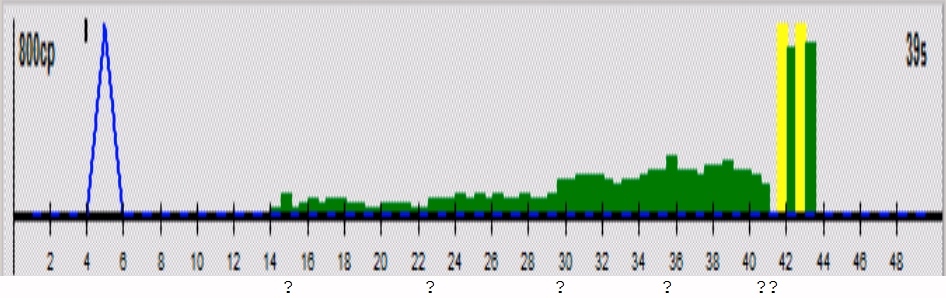
Chart of game evaluation at each move

However, I can’t find a move that gives Black any counterplay.  In fact, Black’s attempts at getting some play (22…f5? and 36…b5) just make things worse!  

So this was one of those unpleasant games where Black just has to avoid making the situation worse, and find small ways to make things better (22…f6 and 23…Kf7 doesn’t save the game for Black, but improves the position a little).  Karpov was the master at this sort of thing, whether he was better or worse!

However, that is a pretty miserable way to play chess, so I’m going to point the finger at 8…exd4?!, making a concession for no good reason, and also 3…Be7, which rather says that Black is making things up as they go along — which I had a lot to say about last time.

Click […] for list of games

Making Tactics Work

1. A chess tactic is an unstoppable threat.  Often you can Avoid, Block, Capture or Defend your way out of a threat, but if you can’t, you’re probably on the receiving end of a tactic.

2. Tactical themes include:

  • jumps, mates, forks, nets, pins & ties

A fuller list of tactical themes might be:

  • Jumps: discovered attack (unmasking), discovered check, double check (which is always also a discovered check)
  • Mates: back rank mate, Greek Gift sacrifice, double Bishop sacrifice, smothered mate, stalemate, perpetual check
  • Forks: knight fork, pawn fork, queen fork, really any double attack
  • Nets: no retreat, trap
  • Pins: pin, skewer, X-ray attack, X-ray defence
  • Ties: removing the guard, undermining, overloading, decoy, deflection, interference
  • Pawn breakthrough, passed pawn, promotion, obstruction

[You Just Might Find a Nifty Powerful Tactic]

There are examples of all these at the start of the Canon

3. A combination is: a sequence of forcing moves, possibly involving a sacrifice, leading to a material advantage.

The punchline to a combination is an unstoppable threat (or double threat).


4. The things that make a combination work are forcing moves (checks > captures > threats).  Purdy calls them smites: “Examine moves that smite!”


5. The clues that a tactic is available are:

  • Loose pieces
  • Unsafe King
  • Geometry

EXAMPLE showing all three: 1.Kxh2 e4+ is no good for White, but put together the other loose B on a4, the unsafe King on g8 and the attack on g7, find the meeting point of the fourth rank and the g-file and play 1.Qg4! winning.

6. The way you make a tactical combination work is:

  • combining ideas
  • trying moves in a different order
  • in-between moves
  • once in a while, you might need a quiet move [EXAMPLE]

We’ve seen a few already this summer:

  • Charlie’s Knight forks
    The Tarrasch Trap – one long sequence of tactical threats, which exhausts Black’s defences [EXAMPLE]

7. The ways you get better at using tactics include:

    • reading about tactical ideas and rehearsing them in your mind – there are books at all levels of difficulty
    • testing yourself with puzzles – in particular, ones which are hard for you but not impossible
    • habitually looking for tactics at each move in a game [EXAMPLE] – not just for you, but also for your opponent – every tactic found is also a tactic missed by the victim!
    • leaving yourself time to look in a game
    • be aware of hard moves to spot

8. Preparing for combinations

      • Put your pieces in strong advanced central positions
      • Build up pressure against your opponent’s weak points
      • Occupy open lines with your Rooks and Bishops
      • Break open lines for your Rooks and Bishops
      • Open up lines of attack against your opponent’s King

…and the combinations will come!

“The master places a Knight on e5; mate follows by itself” – TARTAKOWER

In particular, learn about the combinations that turn up in your openings.  Do you usually park your Bishop on c4, on the diagonal leading to f7, or on d3, which points at h7?  Peter Lane studied the typical French Defence sacrifices against f2, played into the relevant lines, and they started turning up in his games.

9. There are lots of books to rehearse and test your tactics, of various levels of difficulty.

Online resources include:

Attacking the Two Knights’ Defence

There are three main ways you can try to attack against the Two
Knights’ Defence.

(A) 4.Ng5 is the most obvious, but I don’t recommend it. 
White
can win a pawn, but if Black knows the book moves, you will have to
defend against very active Black pieces.

e.g. 4.Ng5 d5! 5.exd5 b5!? 6.Bxb5 Qxd5

4.d4 is the move I recommend.

(B) There is a fun line which Black can equalise against but it’s
White who is attacking: Max Lange Knight Variation

4.d4 exd4 5.O-O Nxe4 6.Re1 d5! 7.Bxd5! Qxd5 8.Nc3! e.g. 8..Qa5
9.Nxe4 Be6 and now 10.Neg5 or 10.Bd2

(C) Max Lange Attack: This is another fun line which is very sharp
and both sides are under attack!  Black may even be better in the
long main line…

Smerdon,D – Heidenfeld,M [C55]
Australian Open Canberra
AUS
(11), 09.01.2001


1.e4 e5 2.Nf3 Nc6 3.Bc4 Nf6 4.d4 exd4 5.0-0 Bc5 6.e5 d5 7.exf6 dxc4
8.Re1+ Be6 9.Ng5 Qd5 10.Nc3 Qf5 11.Nce4 0-0-0 12.g4 Qe5 13.Nxe6 fxe6
14.fxg7 Rhg8 15.Bh6 d3 16.c3 d2 17.Re2 Rd3 18.Qf1 Qd5 19.Rd1 Be7 20.Qg2
Ne5 21.Rexd2 Nf7 22.g5 Nxh6 23.Rxd3 cxd3 24.gxh6 Qh5 25.Rxd3 Qxh6
26.Rg3 Bh4 27.Rg4 Qc1+ 28.Qf1 Qh6 29.Qc4 Rxg7 30.Nc5 Qf6 31.f3 e5
32.Rxg7 Qxg7+ 33.Kf1 Qe7 34.Qg4+ Kb8 35.Nd7+ Ka8 36.Nf6 1-0

…but often loses long before:

1.e4 e5 2.Nf3 Nc6 3.Bc4 Nf6 4.d4 exd4 5.O-O Bc5 6.e5 d5 7.exf6
dxc4
8.Re1+ Be6 9.Ng5 Qxf6? 10.Nxe6 fxe6 11.Qh5+ Qf7 12.Qxc5

When your opponents all know the long main lines of the Max Lange,
you can turn to the Modern Variation:

(D) 4.d4 exd5 5.e5

4.d4 exd5 5.O-O Bc5 6.e5 d5 7.Bb5

This is a calmer way to play for a win, badgering Black about weak
pawns.

e.g. Doghri,N -Matsuo,T [C56] Yerevan (7), 1996
1.e4 e5 2.Nf3 Nc6 3.Bc4 Nf6 4.d4 exd4 5.e5 d5 6.Bb5 Ne4 7.Nxd4 Bc5
8.Be3 Bd7 9.Bxc6 bxc6 10.Nd2 Qh4 11.Nxe4 Qxe4 12.O-O Bb6 13.Re1 Qg6
14.Nb3 O-O 15.Bc5 Rfe8 16.a4 Bf5 17.Rc1 Rab8 18.Re3 Bxc5 19.Nxc5 Rxb2
20.Qd4 Rxc2 21.Rxc2 Bxc2 22.h3 a5 23.Kh2 Bf5 24.Rg3 Qh6 25.f4 g6 26.Nb3
Ra8 27.Rc3 Qh4 28.Rxc6 Rb8 29.Nxa5 Qe1 30.Rc5 Be4 31.e6 c6 32.Nxc6 Re8
33.Ne7+ Kf8 34.Rc8 1-0

Excuses for losing

This is what started it all:
Excuses for losing
Dan Scoones wrote:
Here is my off-the-cuff top ten list:

  1. Dog ate scoresheet;
  2. Dead batteries in hidden transmitter;
  3. Went outside for fresh air, forgot about tournament;
  4. Disturbed by own reflection in opponent’s sunglasses;
  5. Still despondent over 1964 death of Fred Reinfeld;
  6. Inexplicably confused ECO A29 line 13 note 87c with ECO A13
    line note 87c; lost queen;
  7. Unlucky pairing with historical nemesis G. Kasparov;
  8. During play, pondered both sides of ICC controversy; lost on
    time;
  9. Studied book *How to Beat Bobby Fischer*; was unprepared for
    other opponents;
  10. After making move, accidentally punched opponent instead of
    clock.

Having started, they came thick and fast:

“What went wrong with your plan?”
“He didn’t follow it!
”
— Post mortem by participants after a Korchnoi simul.

“The player who plays best in a tournament never
wins first. He finishes second behind the guy with the most
luck.
”
— Savielly TARTAKOWER

“I have never had the satisfaction of beating a
completely healthy opponent.
”
— Amos BURN

“Analysis: irrefutable proof that you could have
won a game that you lost
.”
— Boden

“I can see the combinations as well as Alekhin,
but I cannot get into the same positions
”
— Rudolf SPIELMANN

Subject: Re: Best Excuses for Losing a Game
From: rook@islandnet.com (Dan Scoones)
A few spares:

  1. Adopted Alekhin’s training methods; developed uncontrollable
    DT’s;
  2. “I’m not gonna pay a lot for these chess lessons!”;
  3. Two words: opponent’s breath.

Dan

  • I forgot to bring my favorite pencil which always brings me
    luck.
  • My opponent did not stick to the book.
  • The low Elo-rating of my opponent deceived me.

Martin Unger (h8150875@idefix.wu-wien.ac.at)

“I became confused of all the bad moves my opponent
made, and that`s the reason I lost the game.
”
— Nils J Schjelderup

  • He was scowling at me (if he is twice your size)
  • He had a bulge under his armpit ( if he is wearing sunglasses
    and a suit – might be carrying a gun )
  • She looked like she was going to cry ( a pretty girl )
  • I was trying so hard not to laugh ( at his stupid blunders )
    that I did not notice his trap.
  • It’s not fair! It was a trap!
  • It was a cheapo.

Calvin Loh [lohwengk@iscs.nus.sg (Loh Weng Keong Calvin)]
I find that I am often distracted by my opponent’s time
pressure.
–Duif
If “even a bad plan is better than no plan,” does that mean that
even a poor excuse is better than none? 😉

“j’adoube”
[Made by an opponent of mine when he picked up a piece, then
realised he had to move another one]

[all of these i have heard used (or used myself)]
I was put off by my opponents T-shirt
[The complainant later won his state’s title at the age of 16]
I got confused over which piece was guarded
[made by the same person, when a total of 6 pieces were left on the
board]
I had a won position until I blundered.
I had a won position! It’s in my notebook!
[used by guess who?]
He shouldn’t have played on in a lost position
The tournament director got the draw wrong, I should have played
xxx.
The tournament director got the draw wrong, I should have had
white.
I wasn’t taking the game seriously because it was only a club
match.
I wasn’t taking the game seriously because I couldn’t win a
prize.
I thought it was a different time control.
I don’t like short time controls.
I didn’t want to adjourn.
I’m playing a “swiss gambit”
I was playing for a draw

[and finally a selection which should meet any need…]
too noisy
too quiet
too hot
too cold
too busy to study opening books
too poor to afford ECO
too dark
too bright

all these from Peter Ballard
pballard@radlogic.com.AU Fri Nov 24 05:26:06 1995
And lastly, one of my very own:
“I wanted to adjourn but he made me play a
move.”

Think twice … at least!

As part of a chess program on television an extract from Kotov’s book ‘The White and the Black’ was shown. The scene depicts Alekhin giving a simultaneous display against 30 German officers of the General staff in occupied Prague in 1943. The last game to finish is against Obersturbannfuhrer Spak. ‘I resign’, declares the German officer:


Alekhin turns the board round, and takes the Black pieces himself, and says ‘Play on!’ Two moves follow and the German again declares that, believe it or not, he must resign as White’s game is hopeless.

Alekhin again turns the board around and now announces mate in three on White’s behalf.

Clearly apocryphal in my view but sincere H/T Red October and Benzol on chessgames.com

http://www.chessgames.com/perl/chessplayer?pid=10240%3Ekpage=20

Chess and PCCS

[Not the Peterborough Correspondence Chess Society] [NSFW]

Chess has well-known links to mathematics and music, but what about believing six impossible things before breakfast?

Just finished watching the Bobby Fischer film, and how sad it was to see him in the grip of paranoid delusions.  Ironically, this son of a Jewish mother and probably a Jewish father, and one of the most creative minds over the chessboard, came to be obsessed by the most dismal and commonplace fantasies of Jewish conspiracy.

I guess it shows that being intelligent doesn’t stop you believing daft things.  Being insane helps, but even among the sane, we have other exhibits:

  • James Plaskett’s lonely campaign to convert Guardian readers to creationism e.g. http://www.guardian.co.uk/discussion/comment-permalink/10755207
    • I had a long and fruitless email exchange with him about this, which I abandoned after I learned he was clinging to a definition of ‘species’ about a century out of date.
  • Nigel Davies entertaining the idea that some Indian faker can survive without food for decades: http://tigerchess.wordpress.com/2010/04/30/prahlad-jani/ and practically accused me of racism for questioning it [rats, he’s pulled up the ladder since…]
  • Jeremy Silman’s indulgence of (belief in?) astrology: http://jeremysilman.com/astrology/celestial_chess_2.html
    • The personality of the chess player is greatly influenced by the astrological sign of the zodiac under which he was born. This sign generates a subconscious pattern of responses producing a chessic style, which is unique. Knowing your or an opponent’s sign yields precious information you can immediately use. Below are some clues to the 12 zodiac chess personalities.

      The ARIES Chess Player (Mar.21-Apr.19). True to form the Aries is aggressive, impulsive and a sheer dynamo in life as well as over the chessboard. He is full of enthusiasm for his opening favorites, though that changes from game to game. Always looking for that killer first or second move, he basks in the confusion that his innovations present to his opponent. Is the Aries’ luminescence a wave or a particle? Both. One minute his play pulsates with surprises and tempo gaining moves; next in a series of swift exchanges, a pawn advantage materializes before the opponent realizes his miscalculation. Trigger happy, he has a military leader’s instinct to notice weaknesses in the foe’s game before they are obvious on the board. Focusing his pieces on that spot, the Aries checkmates faster than any other sign. The Aries bravura intimidates before, during and after the game. His air of impenetrability; his highly charged personality; and the way he grips the pieces, especially when capturing, present a formidable challenge. He salivates when playing those in a higher category and like a wolf in sheep’s clothing he’ll act ever so humble before the game begins. But his desire to win can only be masked for so long and soon he is plundering his foe, keeping him off guard with very aggressive, maybe even reckless, moves. His momentum is so powerful that the opponent may be swept under by its sheer force, acting and playing at the Aries’ pace rather than his own. The Aries reserves his most splendid, come from behind, themes for players who have in some way disparaged him in the past. Is the Aries’ playing style one of fury or time pressure an opponent may ask? Does it matter? For in that one nanosecond of doubt the Aries foe capitulates.


      The TAURUS Chess Player (Apr.20-May 20). Tempted by the great pleasures of life, the Taurus is a bon vivant whose greatest gratification comes from pricking the egos of others. Picture a confectioner handing out free habit-forming, spiked candy to a chocoholic. That’s the way the Taurus slyly embeds his games with his own distinctive playing style: one of seduction. Taurus is an earth sign and these people tend to play life, and chess, close to the vest. They have their own standards for playing and don’t exhibit the die-hard need to vanquish an opponent… openly. Lulling an opponent with solid, well-known opening lines he’ll often choose variations popular in the 1950s and 1960s. Around moves 13, 14 and/or 15 though, his lullaby turns into a death march as he rolls out a new move for his opening, considered in the past to be unplayable. He is a used bookstore devotee, collecting rare and antiquated chess material with a knowledgeable eye. Obscure, but superb Taurean preparation, often using very old variations challenges his foes to put aside their study and use up precious minutes as the opponent tries to find over the board moves to refute this novelty. A Taurean uses time as if they had a 17th piece on the chessboard. Hoarding, then rushing; dilly-dallying, then slamming the clock with the ferocity he’d like to pummel his opponent with, the Taurus is most inventive when he is in time pressure. Threaten him with just seconds to go and the Taurean’s personal chess muse subconsciously helps him choose the winning move. Taureans have the ability to pull last minute victories from what look like drawn positions. When the sword of Damocles hangs over them they automatically move into an intellectually superior zone and this tension gives them a second wind. They then play with masterly skill, relishing last-minute complications and sacking material as they suck their foes into a deadly, mating whirlpool.


      The GEMINI Chess Player (May 21-June 21). Affable, chatty, and with charm dripping from every pore, the Gemini chess player knows instinctively how to work a room, a chess club or a major tournament. Geminis play their opponents far more than they play the board. They notice body language, nervous ticks, etc. and even the way his foe lines up his score sheet and pieces. The Gemini mind is a black hole absorbing all this minutiae and little by little they sense an opponent’s vulnerability. Like a fencer his first moves are meant to mislead, as he feigns one opening and then transposes to another. Geminis adore unusual openings, probably because they have tried so many of them themselves. Solid players bore the Gemini who likes to live by his wits. His impatience alone could rattle the most stoic foe. A tactical genius, the Gemini is known for playing outrageous, lesser-known gambits. Sacking material and setting costly traps the Gemini style features a very peripatetic queen. He loves open positions and again will give away material if this gives him the position his steel-trap mind has planned. In across the board play notice that he will slowly take over more space on the playing table itself, crowding his opponent who doesn’t quite realize why he is feeling cornered both physically and mentally. Action is his middle name and even when doing the deepest middle game analyses, he’ll jump out of his seat, get some water, check his chess bag and look as if he didn’t have anything on his mind. The Gemini is symbolized by the symbol of the twins in astrology, so it can be no surprise that he can do two things at once. What may come as a surprise to his opponents is that he often has Plan A and Plan B in his mind at all times. Just when you think you can squiggle out of his Plan A, his Plan B comes into play and the Gemini’s opponent has to choose Plan R: resignation.


      The CANCER Chess Player (June 22-July 22). Endowed with the most natural chess sense of all the signs, the Cancer’s combination of positional memory and sheer tenacity makes him formidable at any age. His repertoire is classical spiced up with a bit of chicanery. Nothing pleases him more than to beat an opponent using the opponent’s favorite opening or gambit. His play is enthralling and foes are torn between admiration and intense dislike. One of the three water signs his hunches are guided by his natural sense of direction. While a foe may joust on one side, the Cancer understands and quietly ridicules this silly, time-wasting ruse. A magus when it comes to brewing up an attacking pattern combining two or more different themes, he’ll strive to keep the position mobile, daring his opponent to close the center. With his hands tied behind his back, he actually covets cramped quarters knowing how to play them to his own advantage. He wants to bait his foe into prematurely tasting victory, though before his opponent has had a chance to smack his lips, the Cancerian’s maneuver becomes all too evident. Cancers play on their own timetable, thinking forever over seemingly no-brainer moves and striding out of the playing room to pace by themselves. You’ll notice a Cancer’s arrival because he’s usually carrying lots of his personal paraphernalia: water, drinks, snacks, pens and/or a box of Kleenex. That a Cancerian has his moods is no surprise, since his ruling body is the moon, ruler of sensation. He’ll either appear very happy or depressed. When he doesn’t emit strong emotions it’s because he’s learned to hide them with an inscrutable, robotic countenance. A chess historian he not only insists on mating his opponent, but in doing so with a position reminiscent of some great game of the past. While making a bit of history for himself.


      The LEO Chess Player (July 23-Aug.22). A swashbuckling amalgamation of Luke Skywalker and James Bond, the Leo’s larger-than-life personality diminishes everything in its path including the chess pieces themselves. He poses, he strides, he prevails with seemingly effortless ease. The sign of royalty the Leo feels it is his divine right to win. He hates to watch others, or wait for them as he craves the action of the game. He can actually taste victory, swilling it around in his mind as a wine connoisseur does with a prize vintage. The satisfaction the Leo gets from mating anyone, patzer or master is sublime yet with noblesse oblige he is extremely generous with advice, explaining his chess theories to anyone who will pay him homage. The symbol for Leo is the lion. So, as congenial as the Leo is, as playful, as appealing, as cuddly, he is king of the jungle and will go for the jugular in an instant. Like the big cats he may “toy” with his prey allowing his opponent to make bold moves in the center while he prepares a delicious maneuver. A theatrical player the Leo wants drama. With officials, foes, and by-standers he may flaunt the rules, or challenge them but it is really for show. Actually he is stage managing the game and bringing to bear both chess and psychological weaponry. Anything that turns the limelight on the match thrills him, for he thrives under tense conditions while most foes are rattled. When the position is complicated or unclear he chortles inside, enjoying it when he has to claw his way to a kill. Always the performer, the Leo wraps things up with a flourish. And once again the spotlight falls on this virtuoso proving that he is, indeed, the king.


      The VIRGO Chess Player (Aug.23-Sept.22). Deep in the recesses of the Virgo mind lies a binary computer evaluating everything in terms of whether it is something good or bad, positive or negative. The Virgo’s instant, non-stop calculation gives him an analytical edge because this activity is so much a part of his being. Clean, methodical, deceptively simple early play serves as a canvas for him to try out his well-researched ideas. His craft comes to light when he slowly, but steadily chooses subtle space-expanding moves from his palette of options. The Virgo slips in and out of a self-induced hypnotic state, confounding opponents who think they can read the faces of their adversaries. During a match, when the position gets interesting the Virgo starts to fall in love with the game before him. But he is a jealous lover, and at this point he lustfully moves to monopolize and own the game. Suddenly his passions are roused and a friendly game becomes one in which he must annihilate his opponent. Several, long deep breathes signal the Virgo is activating his chi energy, though some may foolishly think he is in retreat. The Virgo motto is: Get me to the end game. He hums through the tricky computations as his foe starts experiencing a Prozac cool down. Whether playing aggressively or strategically, he must control the action. He hates conformity and lives to keep his opponents off-balance often exchanging pieces at what seems an awkward moment. His mating style is one where he entices his opponent into thinking that a lost or difficult position still has winning chances. Betting against a Virgo’s strength at this point is a losing proposition. By the time the Virgo’s wizardry unfolds, and the mating trap is sprung, his opponent should just cash in his chips and vanish.


      The LIBRA Chess Player (Sept.23-Oct.23). Spilling charm, class and bonhomie the Libran player turns any chess match into a special occasion. When he shows up, even if playing online, the other players now regard a game, or a tournament as significant. And the Libra? If he’s over the age of ten he always has his personal “to do” list in mind: Look for women; find out if any other women are expected; see if his pals have any women near them; and only then, crush, mangle and annihilate his opponent because his foe might have a woman waiting for him. Fairness is very important to him, afterall his symbol is the scales of justice. He’ll always make the tough, ethical choice and decries any commercialization of the game itself. “Where are your standards?” he’ll declare. His chess toolkit includes the most massive repertoire of drawing maneuvers, and he knows the perfect juncture to make an offer that will be accepted. His tendency to create harmonious, or equal positions may entice his opponent to shake things up a bit more than is safe. Though always an admirer of woman, he’ll swap queens faster and/earlier than any of the other signs. At that point he takes the gloves off turning the game into head to head combat. With the authority of a judge handing down a death sentence he starts to control the show. In the end game he turns into a contrarian player, selecting positions others would shy away from. Many times when it looks as if the Libra is one move away from defeat, he unfurls an avalanche of chess jurisprudence requiring game experts to add a codicil to their notes. His secret strength is the gnarly way he uses his bishop. No one is better. Before you are mislead into thinking this dapper dude is a pushover, don’t forget that he has a hormone-driven agenda and a limbic system hard wired to produce tangible results. Swiftly, the neurons fire off in his brain and the collateral damage to his opponent is lethal.


      The SCORPIO Chess Player (Oct.24-Nov.21). Ruled by the planet of power, Pluto, the Scorpio’s nickname could be “the dictator.” And the chess scene presents the perfect backdrop for exercising this birthright. The Scorpion tenacity, calm and venom work together to poison an opponent’s game before the knights come off the first rank. First the Scorpio anesthetizes his quarry with slow play, employing well-analyzed lines and/or leaving the board to look at some other game in progress. Then he surgically and painfully removes whatever scintilla of self-esteem remains. By mocking his foe he causes his victim to think more about him than about the game before them. As he penetrates into enemy territory, a foe will start to see what looks like smokescreen rising from the Scorpio’s side of the board. Beware: the Scorpio’s kundalini life force coiled at the base of his spine in the serpent chakra has awakened, bringing sudden enlightenment about the current position. The opposing player should assiduously avoid making any sound or jarring the Scorpio out of his reverie for this will incite the Scorpio’s anger, which has an impossibly long half-life. The image of the phoenix rising from the dead is another emblem of the Scorpio’s invincibility. If the Scorpio gets in a tough position, he will find the one move that turns the game around. Sudden-death playoffs are his forte. Call him the comeback kid. He prefers to keep the center fluid as he gets a high from the tension of the game. Then before you know it he has blockaded an opponent’s pieces and plucks the foe’s best-placed men with laser precision. Seconds before the post-mortems begin the Scorpio starts staring at his foe’s throat. His eagle eyes notice the almost imperceptible gulps before the opponent chokes conceding the game. At that moment he is no longer the dictator, but the terminator.

      The SAGITTARIUS Chess Player (Nov.22-Dec.21). A mental giant, the Sagittarian springs to life when an almost impossible challenge in thrown down before him. He is a thoroughbred racehorse with a stable of chess knowledge that is more diverse than any other sign. A visionary and intellect, often self-taught, he takes the road less traveled. Not for the Sag are the safe lines and the equal openings. The Sagittarius is at the chessboard for two reasons: to have fun and to upgrade his chess skill. Winning? That’s just a by-product for him, unless… someone rudely throws down a gauntlet. This fire sign and speed demon floors the accelerator and rams into his opponent’s territory with lightning speed. The Sag forces his foe to hydroplane from one side of the board to another, each skid unraveling his opponent’s position. In life Sagittarians love to wander. They get enormous pleasure when they venture into foreign territories and this is especially so when playing chess. One trick they use as a matter of course, is from move one they assume that the foe’s side of the board belongs to them. You’ll notice the Sag placing his pieces on the seventh, or using his bishops, and of course his knights, to attack a foe from behind. The Sagittarian memory is unsurpassed, so he learns very quickly but usually solidifies his knowledge by teaching others. He is deceptively open about discussing what he intends to play. But he’ll keep one small, pivotal move to himself and thus stack the deck in his own favor. Sagittarians love to discuss chess unless there’s an obnoxious motor-mouth nearby. The Sag’s command of the language (and often several languages) and his rapier-like wit can quiet a room and/or deflate an opponent leaving no prisoners. When push comes to shove in his chess game, he’ll concentrate in a very unique way. He can envision the chess position in 3 -D and suddenly his mind will become a multiplex unspooling all the possibilities in infinite detail on individual screens. The Sagittarius end game sparkles with a diamond’s incandescence and is as hard to shatter as this precious gem; while his opponent is revealed as a mere zircon bowing to his mastery.


      The CAPRICORN Chess Player (Dec.22-Jan.19). The Capricorn is known for being the power behind the throne, the person pulling the strings. His planning is extraordinary, so clever and devious that an opponent doesn’t have the energy to both play and psych him out at the same time. In back rooms, outdoor ventures and/or over the internet Capricorns presents a laid-back style. But, ambition is his middle name. Though the Capricorn admires the chess notables he saves his fealty for Machiavelli. In every great chess player’s individual chart, the planet, Saturn –the destroyer in astrology, is prominent. This celestial body which also gives the Capricorn an especially retentive memory rules Capricorns. Thus Capricorns have an edge when it comes to remembering unusual openings and tough-to-decipher end game positions. He’s the consummate entrepreneur and while playing chess he always has some sideline business or secret, parallel goal in mind. “How can I use this situation?” he asks referring to the chess game and life itself. Practical and precise they do not suffer fools easily. His highly evolved sense of the ridiculous allows him to find humor in everything. From childhood this mirth has been used to put a positive spin on his ruthlessness. At first he seems like the Tooth Fairy or Santa to his opponent, but near or after move 15, his foe sees that the Capricorn has been transformed into a greedy, grabby IRS agent. Each game becomes a case study so how he wins really matters to him. A solid state physicist, not a theoretical one he favors the concrete over the artful. He’s known for resuscitating old, even archaic openings, updating them with a slight hyper-modern twist. His zodiac icon is the mountain goat. Thus a Capricorn is a climber. It’s his nature to walk a tightrope. A climber, it is his nature to walk a tightrope. When pushed to the wall he becomes exhilaratingly imaginative and actually enjoys having to dig himself out. His self-composure comes from his belief, that when it comes to chess, his foe is a parasite and he the host. By marginalizing his opponent this way, his storehouse of energy is unleashed, turning his foe into a tired, chess playing, Sisyphus as once again the Capricorn celebrates victory at the top of the mountain.


      The AQUARIUS Chess Player (Jan.20-Feb.18). Sui generis. The iconoclast of the chess world. This maverick futurist is the stuff that myths are made of. It’s no surprise that there are more Aquarians in the Hall of Fame, than any other sign. Simply put: They are standouts at everything they do, especially when it comes gaming. But this is no common Boy Scout for the Aquarian’s curiosity gets him into arenas that less intrepid seekers would avoid. A great improviser he loves chess positions that are completely new to him, relishing the fresh analysis he must do over the board. He instinctively knows and understands game theory and often flirts with other board games as well. For the Aquarian the twists and turns when the initiative switches between him and his foe are thrilling. But mid-game something clicks and he mentally tweaks the two-dimensional chessboard into one continuous Mobius strip where there is only one side: His. Although the most popular sign of all twelve, the Aquarian can be a bit of a snob regarding chess. His low threshold for boredom combined with his disdain for sloppy play makes him very particular, when possible, when choosing his opponents. God forbid if he has to mingle with the hoi polloi, preferring more genuine street people. Everything in chess is about “high-concept” to the Aquarian (the term was probably coined by this sign). At the beginning of the game the Aquarian is an endearing, nonconforming cowboy, eliciting quiet admiration from his foe. The Aquarian doesn’t rush to crush his opponent, preferring to wrangle him to the ground limb by limb. Remember he is the Teflon combatant, nothing gets in his way when he smells blood. In the end game the Aquarian will usually start teasing his opponent, prolonging a mate and letting his foe dangle. But he is a cowboy afterall and if necessary he will use his six-shooter.

      The PISCES Chess Player (Feb. 19-Mar. 20). Let it be known that the Pisces has a guardian angel in his corner. Is it good karma or slick maneuvering which propels him through the trickiest of traps? He lies in wait for his opponent to mismanage a critical position. When he’s pushed the envelope a bit too far leaving a piece en prise the fates step in an save him. Ruled by the planet governing miracles, Neptune, the Pisces pulls victory from the jaws of defeat repeatedly. He exudes compassion, empathy and sympathy… away from the chessboard, but when facing those 64 squares he uses these emotive skills to “become” his foe. He can time travel into the opponent’s brain and pick up the themes and future ideas that his foe is contemplating. Many Pisceans find that they have a special affinity for math, computers, music and chess, as the logic in these disciplines is similar. Thus a Piscine uses chess programming with creative panache; inventing or modifying programs faster than others can learn them. Pisceans simply have to be in the presence of titled players to improve. Natural mimics, when they fixate on the chess style of a great master they can elevate their play almost instantaneously. Atmosphere is everything. Through osmosis he can view another game in progress, and immediately he absorbs the nuances of that position and applies them to his own. The symbol for Pisces is “the two fishes” each swimming in opposite directions, so subterfuge is his most lethal device. He’ll confuse his opponents into oblivion. Some days the Pisces will trot out an opponent’s favorite opening and use it against him. Other days the Pisces will make several moves — which look like outright blunders — to psychologically bait his foe into overreaching and under protecting his pieces. The Pisces is known for his prophylactics which more risky players may discount much to their own peril. For the Pisces will sum up his victorious methodology in one word: preparation.

    • (I’m not convinced those aren’t parodies… Poe’s Law in action)

    Does chess drive players mad, or, as Bill Hartston suggests, keep the madness at bay?  Either way, it is little insulation against Procto-Cranial Colocation Syndrome…

Queen sacrifices

Meanwhile, here are three games from Gandalf which explore the
wilder shores of compensation for a Queen (83,84,85)

Click […] for list of games

Club games: Mark Blackmore on a roll

Annotations by the dead chuffed MB, interruptions by DR

Coburn – Blackmore, Mark (142) East Devon
Major, 1996

1. d4 Nf6 2. Nf3 e6 3. g3 Be7 4. Bg2 d5 5. O-O O-O 6.
a4


tSlD-Tj+
XxX-LxXx
-+-+xS-+
+-+x+-+-
p+-P-+-+
+-+-+nP-
-Pp+pPbP
RnBq+rK-

I’ve never seen this before or since. Maybe he felt safe playing
something different because of my lower grade. It was an advantage,
I think – it’s so much easier to beat someone if they refuse to
take you seriously.

[6. c4 Nbd7 Catalan main line.]

6… Nbd7 7. c3 a5 8. Na3 c6 9. Qc2
Bxa3


t+lD-Tj+
+x+s+xXx
-+x+xS-+
X-+x+-+-
p+-P-+-+
L-P-+nP-
-Pq+pPbP
R-B-+rK-

Aggression being the better part of valour, I thought I’d get my
queenside advance in first.

[Impertinent note from typesetter: I thought giving
up this Bishop was very risky]

10. Rxa3 b5 11. Bf4 Nb6 12. axb5 cxb5 13. Ne5 Nc4
14. Nxc4 bxc4 15. Rfa1 Bd7


t+-D-Tj+
+-+l+xXx
-+-+xS-+
X-+x+-+-
-+xP-B-+
R-P-+-P-
-Pq+pPbP
R-+-+-K-

This is the good bit. My Bishop, currently attracting Norris
McWhirter’s attention as the world’s worst piece, is about to
become Man of the Match.

16. b3 Bb5 17. e4 cxb3 18. Qxb3 Bc4 19. Qc2 Nxe4
20. Bxe4 dxe4 21. Qxe4 Bd5


t+-D-Tj+
+-+-+xXx
-+-+x+-+
X-+l+-+-
-+-PqB-+
R-P-+-P-
-+-+-P-P
R-+-+-K-

Ha! However, Bishop aside, I felt that White still had the edge.
But those light squares will eventually prove fatal.

22. Qd3 Qb6 23. c4 Bb7 24. Bd2 Qc6 25. f3 a4 26.
Kf2 Rfc8 27. c5


t+t+-+j+
+l+-+xXx
-+d+x+-+
+-P-+-+-
x+-P-+-+
R-+q+pP-
-+-B-K-P
R-+-+-+-

Now, I’m well aware that I’m more of a tactician than a strategist,
but this struck me as a terrible positional error. Now those pawns
are going nowhere, and the light squares are mine to do with as I
please.

[Impertinent note from typesetter: Mark is clearly
more of a strategist than his opponent! the rest of the game is a
nice illustration of the strategical principle that
opposite-coloured Bishops are a powerful factor in favour of the
attacking side]

27… Ba6 28. Qe4 Bb5


t+t+-+j+
+-+-+xXx
-+d+x+-+
+lP-+-+-
x+-Pq+-+
R-+-+pP-
-+-B-K-P
R-+-+-+-

I’d have welcomed a Queen-swap – the b-file would be mine, so my
passed Pawn would be quicker, I hoped. But to be fair, Coburn
clearly agreed.

29. Bf4 Rd8 30. Bd6


t+-T-+j+
+-+-+xXx
-+dBx+-+
+lP-+-+-
x+-Pq+-+
R-+-+pP-
-+-+-K-P
R-+-+-+-

Looks impressive, but I was more concerned with making sure I could
challenge on the b-file.

30… Ra7 31. Qg4 Kh8 32. Qe4 Rb7 33. Ke3 Qa6 34.
Qc2 Bc6 35. f4


-+-T-+-J
+t+-+xXx
d+lBx+-+
+-P-+-+-
x+-P-P-+
R-+-K-P-
-+q+-+-P
R-+-+-+-

And the King’s starting to look draughty.

35… Rb4 36. h4 Qb5 37. Qd3 Qb7


-+-T-+-J
+d+-+xXx
-+lBx+-+
+-P-+-+-
xT-P-P-P
R-+qK-P-
-+-+-+-+
R-+-+-+-

Too late now.

38. Kf2 Rb2+ 39. Kg1 Bb5

  I liked this better than …Bh1.

40. Qf3 Bc6 41. Qe3 Rg2+ 42. Kf1 Qb2 43. R3a2
Qb5+ 44. Re2 Bd5 45. Ke1 Qb4+


-+-T-+-J
+-+-+xXx
-+-Bx+-+
+-Pl+-+-
xD-P-P-P
+-+-Q-P-
-+-+r+t+
R-+-K-+-

Some people are on the pitch! They think it’s all over!

46. Kf1 Rxe2

  He’s dropping a Rook (at least). Possibly my best game,
if only because it’s the sort of position in which I’m usually
convincingly outmanoeuvred.

0-1


Blackmore, Mark – Dean (140) East Devon
Major, 1996

1. e4 c6 2. d4 d5 3. e5 Bf5 4. Nf3 e6 5. Bd3


tS-DjLsT
Xx+-+xXx
-+x+x+-+
+-+xPl+-
-+-P-+-+
+-+b+n+-
pPp+-PpP
RnBqK-+r

I know this probably isn’t the best, but I’ve had good results with
this and feel more comfortable with it.

5… Bxd3 6. Qxd3 Qa5+ 7. c3 Qa6


tS-+jLsT
Xx+-+xXx
d+x+x+-+
+-+xP-+-
-+-P-+-+
+-Pq+n+-
pP-+-PpP
RnB-K-+r

And Black equalises, Dean told me afterwards. A little optimistic,
I felt.

8. Qxa6 Nxa6 9. Be3 c5 10. Nbd2 Rc8 11.
O-O

[11. Ke2]

11… Ne7 12. Nb3 b6 13. Rac1 Nc6 14. a3 Be7 15.
Ng5


-+t+j+-T
X-+-LxXx
sXs+x+-+
+-XxP-N-
-+-P-+-+
PnP-B-+-
-P-+-PpP
+-R-+rK-

At this point, Dean said, he became convinced I had no idea I was
doing. He was probably right.

15… h6 16. Nh3 Nab8 17. f4 Nd7


-+t+j+-T
X-+sLxX-
-Xs+x+-X
+-XxP-+-
-+-P-P-+
PnP-B-+n
-P-+-+pP
+-R-+rK-

[17… f5 I thought was better.]

18. f5 Nd8 19. g4 h5 20. g5


-+tSj+-T
X-+sLxX-
-X-+x+-+
+-XxPpPx
-+-P-+-+
PnP-B-+n
-P-+-+-P
+-R-+rK-

Charge!

20… exf5 21. Rxf5 g6 22. Rf2 Ne6 23. Rcf1 O-O
24. Rg2 Nb8 25. Nf4 Nxf4 26. Rxf4 Nc6 27. h4 c4 28. Nc1 b5 29. Rgf2
a5 30. R4f3 Nd8 31. Ne2 Ne6 32. Bd2 a4


-+t+-Tj+
+-+-Lx+-
-+-+s+x+
+x+xP-Px
x+xP-+-P
P-P-+r+-
-P-BnR-+
+-+-+-K-

You think you’re bored? Imagine how I felt!

[Impertinent note from typesetter: Black deprives
himself of his only active plan, namely …b4, with this
move]

33. Ng3 Kg7 34. Nf1 Rcd8 35. Ne3 Rd7 36. Kh2
Rdd8


-+-T-T-+
+-+-LxJ-
-+-+s+x+
+x+xP-Px
x+xP-+-P
P-P-Nr+-
-P-B-R-K
+-+-+-+-

If there is a way through it was beyond me. Besides, I could feel
myself slipping into a coma.

[The White dark-squared Bishop can put no pressure on
the f6/f7 points. – DR]

1/2-1/2


Dobber, P – Blackmore, Mark (136) East Devon
Major, 1996

1. e4 e5 2. Nf3 Nc6 3. Bb5 a6 4. Bxc6 dxc6 5. O-O Bg4 6. h3
h5 7. d3


t+-DjLsT
+xX-+xX-
x+x+-+-+
+-+-X-+x
-+-+p+l+
+-+p+n+p
pPp+-Pp+
RnBq+rK-

Here my knowledge of theory ran out, and I was wary of arsing it up
and dropping my Bishop.

7… Bxf3 8. Qxf3 Qd7 9. Be3 O-O-O 10. Nd2 f6 11.
Nb3 g5 12. Rad1 g4


-+jT-LsT
+xXd+-+-
x+x+-X-+
+-+-X-+x
-+-+p+x+
+n+pBq+p
pPp+-Pp+
+-+r+rK-

Even at the time I was thinking ‘this can’t work, look at my
development’, but I’m damned if I can find the refutation. It was
worth it just to see the look on Dobber’s face, anyway.

13. Qg3

[Impertinent note from typesetter: in these
opposite-side castling situations, unless there is an obvious coup
in the centre, the medals go to the side who succeeds with an
attack on the King. Black’s pieces are actually all on the
King’s-side, where they belong, whereas White’s pieces and
especially Pawns do not look as though they are ready to attack on
the opposite wing]

13… Bd6 Now d3-d4 is ruled out. 14. f4 Nh6 15.
f5 gxh3 16. Qxh3 Ng4 17. Kh1 Rdg8 18. Bg1 h4


-+j+-+tT
+xXd+-+-
x+xL-X-+
+-+-Xp+-
-+-+p+sX
+n+p+-+q
pPp+-+p+
+-+r+rBk

While this was fun, I couldn’t actually find a spectacular win
despite the position seeming to beg for one. I decided to get rid
of his key defensive piece, after which which the threats from my
Knight would be overwhelming.

19. Nd2 Qe7 20. Rf3 Bc5 21. Rdf1
Bxg1


-+j+-+tT
+xX-D-+-
x+x+-X-+
+-+-Xp+-
-+-+p+sX
+-+p+r+q
pPpN-+p+
+-+-+rLk

22. Kxg1

[22. Rxg1 Qc5]

22… Qc5+ 23. Kh1 Qxc2 24. Nc4 b5 25. Ne3 Nxe3
26. Rxe3 Qxb2 27. Qh2 Qxa2 28. Qg1 h3 29. g3 h2 30. Qf2 Qxf2 31.
Rxf2 a5


-+j+-+tT
+-X-+-+-
-+x+-X-+
Xx+-Xp+-
-+-+p+-+
+-+pR-P-
-+-+-R-X
+-+-+-+k

Afterwards Rh3 was suggested to me, which I’d missed, but in
retrospect I’m glad I did. White would eventually pick up the Black
f-pawn, and I’m more than capable of making a mess of that kind of
position.

32. Rxh2 Rxh2+ 33. Kxh2 a4 34. Re2 Kd7 35. Ra2
Kd6


-+-+-+t+
+-X-+-+-
-+xJ-X-+
+x+-Xp+-
x+-+p+-+
+-+p+-P-
r+-+-+-K
+-+-+-+-

0-1


Blackmore, Mark – Pittman (145) East Devon
Major, 1996

1. e4 e6 2. d4 d5 3. e5 c5 4. c3 Nc6 5. Nf3 Qb6 6. Bd3 Bd7
7. Bc2 h6


t+-+jLsT
Xx+l+xX-
-Ds+x+-X
+-XxP-+-
-+-P-+-+
+-P-+n+-
pPb+-PpP
RnBqK-+r

To prevent Ng5 after …O-O-O.

8. O-O O-O-O 9. a3 g5 10. b4?


-+jT-LsT
Xx+l+x+-
-Ds+x+-X
+-XxP-X-
-P-P-+-+
P-P-+n+-
-+b+-PpP
RnBq+rK-

Oops. I spent bloody ages working out why Pittman couldn’t play
…Nxd4 after …g4, Ne1, completely forgetting that he could play
…Qxd4 instead and my Rook is hanging. Desperate measures are now
required.

10… cxd4 11. cxd4 g4 12. b5

[12. Ne1 Nxd4

[12… Qxd4]

13. Be3]

12… Na5 13. Ne1 Bxb5 14. Bd3 Qxd4 15. Qc2+
Bc4


-+jT-LsT
Xx+-+x+-
-+-+x+-X
S-+xP-+-
-+lD-+x+
P-+b+-+-
-+q+-PpP
RnB-NrK-

Letting me off the hook.

[15… Nc4 stops Bb2]

16. Bb2 Qc5 17. Nd2 Kb8 18. Rc1 Rc8 19. Bxc4 Nxc4
20. Nd3 Qc7 21. Qa4?!


-Jt+-LsT
XxD-+x+-
-+-+x+-X
+-+xP-+-
q+s+-+x+
P-+n+-+-
-B-N-PpP
+-R-+rK-

21… Nxb2

[21… Nxd2 may have been better]

22. Nxb2 Qd8 23. Nd3 Rxc1 24. Rxc1
h5


-J-D-LsT
Xx+-+x+-
-+-+x+-+
+-+xP-+x
q+-+-+x+
P-+n+-+-
-+-N-PpP
+-R-+-K-

Even with two extra Pawns, Black now looks distinctly unhealthy.
Still, the choice was fairly stark: win it now, or get stuffed in
the endgame.

25. Nb3 Ne7 26. Nbc5 Nc8


-JsD-L-T
Xx+-+x+-
-+-+x+-+
+-NxP-+x
q+-+-+x+
P-+n+-+-
-+-+-PpP
+-R-+-K-

I could hardly sit still at this point. Cheapo ahoy!

27. Nd7+ Ka8 28. Rxc8+ Qxc8 29. Nb6+ Kb8 30. Nxc8
Kxc8 31. Qe8+


-+j+qL-T
Xx+-+x+-
-+-+x+-+
+-+xP-+x
-+-+-+x+
P-+n+-+-
-+-+-PpP
+-+-+-K-

More luck than judgement, admittedly.

[Typesetter again: but there were some grown-up
decisions taken to throw the game out of a particular ‘natural’
continuation]

1-0


Spiegel, Jack – Blackmore, Mark (144) East
Devon Major #5, 1996

1. e4 e5 2. Bc4 Nc6 3. Nf3 Be7

[3… Nd4 The Shilling Gambit was tempting, but with
150 pounds at stake I felt it wasn’t really the game.]

4. d3

[4. d4]

4… Nf6 5. Be3 O-O 6. c3 d6 7. Nbd2 Be6 8. O-O
h6 9. Qe2 Bxc4 10. dxc4


t+-D-Tj+
XxX-LxX-
-+sX-S-X
+-+-X-+-
-+p+p+-+
+-P-Bn+-
pP-NqPpP
R-+-+rK-

Some people would say that this move is an intelligent attempt to
induce strategic weaknesses in my position. I, however, would say
that this move is a pile of pants.

10… Nh7 11. Rad1 f5


t+-D-Tj+
XxX-L-Xs
-+sX-+-X
+-+-Xx+-
-+p+p+-+
+-P-Bn+-
pP-NqPpP
+-+r+rK-

Hey, I never claimed to be subtle.

12. exf5 Rxf5 13. Ne4 Qc8 14. c5 Qe6 15. cxd6
cxd6 16. c4 Rf7


t+-+-+j+
Xx+-LtXs
-+sXd+-X
+-+-X-+-
-+p+n+-+
+-+-Bn+-
pP-+qPpP
+-+r+rK-

So I can play …Nf6 without stranding my Rook.

17. Ne1

[Impertinent note from typesetter: White starts to
drift. He should pick a plan and go for it hard. This is what Black
did, and is why Black won.]

17… Nf6 18. Nc3 Raf8 19. Nd5 Ng4


-+-+-Tj+
Xx+-LtX-
-+sXd+-X
+-+nX-+-
-+p+-+s+
+-+-B-+-
pP-+qPpP
+-+rNrK-

Viking Chess

20. Nxe7+ Rxe7

[20… Nxe7]

21. Nf3 Ref7


-+-+-Tj+
Xx+-+tX-
-+sXd+-X
+-+-X-+-
-+p+-+s+
+-+-Bn+-
pP-+qPpP
+-+r+rK-

It’s hard not to laugh at my transparency, but at the same time
route one seems to be fairly effective. Spiegel, certainly, was a
nervous wreck at this point. 22. b3 Nxe3 23. Qxe3
Rf4


-+-+-Tj+
Xx+-+-X-
-+sXd+-X
+-+-X-+-
-+p+-T-+
+p+-Qn+-
p+-+-PpP
+-+r+rK-

He offered me a draw at this move. I politely declined.

24. Rd5 Qg4 25. Ne1 e4


-+-+-Tj+
Xx+-+-X-
-+sX-+-X
+-+r+-+-
-+p+xTd+
+p+-Q-+-
p+-+-PpP
+-+-NrK-

The final insult. White’s whole plan has been based around winning
my d-pawn, and I don’t even have the decency to defend it.

26. Qg3

[26. Rxd6]

26… Qe2 27. Qc3 Rxf2


-+-+-Tj+
Xx+-+-X-
-+sX-+-X
+-+r+-+-
-+p+x+-+
+pQ-+-+-
p+-+dTpP
+-+-NrK-

And that was that.

0-1

Get your eye in — basic practice in noticing attacks

Chess is the art of noticing…

  1. On an empty chess board, put all the white pieces (not the pawns) on a chess board so that all the pieces are defended by at least one other piece. Easy — even I could do it!
  2. On an empty chess board, put all the white pieces (not the pawns) on a chess board so that all the pieces are defended by at least one other piece and are also defending at least one other piece
  3. On an empty chess board, put all the white pieces (not the pawns) on a chess board so that all the pieces are defended by EXACTLY one other piece and are also defending EXACTLY one other piece. Tricky!
  4. On an empty board, add as many black pieces as you can so that no black piece is defending any other black piece. The diagram just uses one set; how many pieces can you add from another set? Try the king or knights first!
  5. Try again, but you can use any pieces you want from any set, and you can leave out the queen (so you could have a whole rank full of knights!)
  6. Put all the white pieces from one set on the board so they attack as many squares as possible
  7. Put all the white pieces from one set on the board so they attack as FEW squares as possible
  8. On an empty chess board, and using one set, put as many white and black pieces (no pawns) on the same chess board as you can, so that every black piece is being attacked and no black piece is being defended, while no white piece is being attacked, and every white piece is attacking at least one black piece.

That time I managed 7 Black and 8 white — Can you find an arrangement including the black queen?

  1. Now, can you find one with all the pieces from one set where all the white pieces are attacking AND all defended AND not attacked, and the black ones all attacked and undefended?

Nearly Finished: lessons from the chess endgame

[First published in The Vacuum]

&nbsp

“Finished, it’s finished, nearly finished, it must be nearly finished.” – Samuel Beckett, Endgame


Sometimes, after the initial emergence of the armies onto the field and their first battles, there is not yet a checkmate, nor even a likely winner. Perhaps the Queens have been swapped, and some other pieces also exchanged, and the forces available to each side are equal, or approximately so; then we enter a new phase, the endgame. The armies have each suffered too many losses for there to be the possibility of a direct attack on the king, but the game can still be won. The goal now is to recruit extra troops, by promoting a pawn to a Queen; perhaps a pawn can already see a route through to the touchdown, but more usually the side with the advantage must adopt a slower approach, jockeying for position and seeking to create a combination of threats that cannot all be met at once.


“If you have any doubt what to study, study endgames. Openings teach you openings. Endings teach you chess.“

— Stephan Gerzadowicz, Thinker’s Chess.


“Well, hmmm, endgames, yes, they are important, Yaaaaawwwwnnnnn!”

— Norbert Friedrich


The normal values of chess are transformed in the endgame. Pawns that may be cheerfully offered in a gambit in the opening phase are now carefully shepherded. The King, who until now has been hiding fretfully in his castle while the fearsome Queens stalk the board, now ventures out and takes a full share of the battle, being more effective in the attack, it is said, than a Bishop or a Knight. Formerly, speed and accuracy were essential to success, but now, there is no need for hurry.


The endgame is often deprecated by club players, who often regard an exchange of queens with a shrug and the expectation of an early trip to the bar. But this neglect and disdain is unjustified. In some respects the endgame is chess in its pure form. It’s a long way from any help from prepared moves in opening books, a long way from the thud-and-blunder of the middlegame. The simplified positions of the endgame allow for much deeper analysis, more exact judgements, a greater role for logic. There are chess endgame studies, a branch of chess where composed endgame positions show the full potential of the chess pieces in carefully contrived set pieces of analytical geometry, and show the beauty inherent in the rules of chess in a way that a routine tournament game may not. It is also the phase where the differences between players of different levels are said to be seen most sharply.


 In order to improve your game, you must study the endgame before everything else, for whereas the endings can be studied and mastered by themselves, the middle game and the opening must be studied in relation to the endgame.

– Jose Raul Capablanca, World Champion 1921-1927

 A characteristic of this kind of endgame is the switching of the attack from wing to wing. This is not a random thing. The broad pattern of this game is that White (Capablanca) first draws Black’s (Kupchik’s) King and Rook over to defend the Queen’s-side; Black’s King’s-side is then less well-defended; so White switches his attack to the King’s-side; in trying to defend himself there too, Black becomes disorganised; White finishes with a two-pronged attack on both wings.

– David Hooper


The rules of chess limit the longest game that is possible. A draw can be claimed if 50 moves (50 each by White and by Black) care made without a pawn being moved or a piece being taken. So, the longest chess game theoretically possible is 5949 moves, but in fact the longest game actually played was a mere 269 moves, contested between Nikolic and Arsovic at Belgrade in 1989. This monster is quite the exception; most games, even games featuring an endgame phase, reach some sort of decision long before then.


The greatest player of chess endgames was also perhaps the greatest ever player of chess, a Cuban genius called José Capablanca, World Champion from 1911-1927. He learned the game at four years old by watching his father play, and revealed his grasp of the game by laughing when he saw an illegal move made. His claim to understand how to play was at once challenged, and he promptly won the game. He was a truly natural player; someone once said, “chess was his mother tongue”. Some like it hot… Capablanca was always supernaturally cool. His play has been variously described as deft, subtle, accurate, intuitive. How did Capablanca approach the endgame? His naturally calm and elegant style was ideally suited to this phase of the game. He was never in a hurry; he seemed always immediately to understand what to do, always in control; he played quickly and confidently, making moves that seemed quiet and even slow, but which collectively were irresistible.

  Suddenly Capablanca came into the room. Learning the reason for the dispute the Cuban bent down to the position, said ‘Si, si,’ and suddenly redistributed the pieces all over the board to show what the correct formation was for the side trying to win. I haven’t exaggerated. Don Jose literally pushed the pieces around the board without making moves. He just put them in fresh positions where he thought they were needed.

 Suddenly everything became clear. The correct scheme of things had been set up and now the win was easy. We were delighted by Capablanca’s mastery…

— Alexander Kotov, Think Like a Grandmaster


 Whether this advantage is decisive or not does not interest Capablanca. He simply wins the ending! That’s why he is Capablanca!

— Max Euwe , World Champion 1935-37


The things that came so easily to Capablanca come rather harder to the rest of us but are to be sought after – perhaps not just in the realm of chess. Capablanca not only understood how to play the chess but also the man. From a grasp of the overall position comes a plan, and the plan can be implemented in a number of steps… Perhaps the steps must be taken in a particular order, and at once, but more often there is time to play slowly. One can feint, delay, undo and then repeat manoeuvres… The psychological difficulties inherent in defending a slightly inferior position against an opponent who is in no hurry to press matters should never be underestimated. The books on the chess endgame may emphasise theoretical considerations, technical recipes that some players repeat like magic charms: “in an endgame with just kings and a rook each with a rook’s pawn for one side, the game is drawn if the pawn has advanced to the seventh rank, but may be won if the pawn is no further than the sixth…”. Theoretically marginal positions account for a small proportion of endgames actually played. The practical endgame is more often decided by judgement and character than a prior consultation with a book of spells.


There are players who specialise in the endgame; then comes the phase where they renew their focus, and new opportunities to play for a win present themselves. Perhaps the position is equal, but likewise, we believe, is the start position of a game of chess, and that is worth playing: so, let us play some more chess, and I will play better than you… This type of game is sometimes disparagingly referred to as an “endgame grind”, but this doesn’t give proper respect to the skill that professional players bring to garnering points late in a session. They can find ways of making life difficult for their opponents even in the most placid of positions, their pieces drift into slightly better places, you find your options becoming more and more restricted until finally you die of asphyxiation or lash out through boredom or frustration. If you want to win tournaments, particularly the unforgiving “weekend Swiss”, every possible half-point must be harvested; there are no prizes for conceding draws against undistinguished opposition. The killer instinct of a top player is never more clearly shown than in the endgame: it is the instinct of a cat with a mouse. Simon Webb once wrote about playing a “dead drawn” position against Tony Miles in this sort of mood: he described being in turn puzzled, frustrated, impatient… he lost.


 … I was surprised to see that Capablanca did not initiate any active manoeuvres and instead adopted a waiting game. In the end, his opponent (Ragozin) made an imprecise move, the Cuban won a second Pawn and soon the game.

 ‘Why didn’t you try to convert your material advantage straight away?’ I ventured to ask the great chess virtuoso. He smiled indulgently: ‘It was more practical to wait’.

— Mikhail Botvinnik, World Champion 1948-63

 It was night. I went home and put my old house clothes on and set the chessmen out and mixed a drink and played over another Capablanca. It went fifty-nine moves. Beautiful, cold, remorseless chess, almost creepy in its silent implacability.

When it was done I listened at the open window for a while and smelled the night. Then I carried my glass out to the sink sipping it and looking at my face in the mirror.

‘You and Capablanca,’ I said.


— Raymond CHANDLER, The High Window, final sentences.


What can we learn from chess? Lessons from life, perhaps, but also lessons about ourselves. Shallowness, muddle-headedness, vagueness, haste, unfounded hopes and fears; all are rapidly exposed and punished on the chess board. Benjamin Franklin wrote how chess can teach us “foresight, circumspection, and caution”; EM Forster regarded the chessboard as “a forcing house where the fruits of character can ripen more fully than in life”, and these two sides of the coin are surely both true. Poker is said to reveal personality, but how much more starkly does the game of chess, where nothing is hidden, in the end.

Samuel Beckett’s Endgame can be read at samuel-beckett.net/endgame.html

P.S. Endgamers do Endgame: https://www.youtube.com/watch?v=K52vD4WBdLw&t=5534s